
KUALA LUMPUR – It may seem that the prime minister and heads of state governments have a free hand at the country’s coffers, but this is not the case according to provisions in the federal constitution.
Article 101 of the constitution stipulates that the government is still bound to answer to Parliament over its use of funds in excess of the approved budget.
This effectively means the Perikatan Nasional administration is accountable for the utilisation of any sum of money under the latest ordinance.
Speaking to The Vibes, former federal counsel Prof Datuk Salleh Buang said while the ordinance allows easier access to funds, the government cannot use it for personal or political gains, including funding parties ahead of the election.
“As a supplementary budget, it can (only) be used to meet operation or development costs.
“Later, once the emergency is over and Parliament is in session, everything will have to be accounted for," he said.

Salleh however said any legal challenge against the ordinance will most likely fail, as Article 150(6) of the constitution clearly states that the validity of an ordinance promulgated under the emergency cannot be questioned even if they are inconsistent with any constitutional provision.
On how the public can ensure the check and balance of the utilisation of any additional funding before Parliament reconvenes, he said all quarters must monitor the government.
In its latest gazette on the emergency ordinance, the prime minister and heads of state governments can now pass supplementary budgets and use consolidated funds without the nod from Parliament and state assemblies during the state of emergency.
The ordinance also grants power to bypass paragraph 4(b) of the Government Funding Act 1983 and paragraph 2(2)(b) of the Treasury Bills (Local) Act 1946 on needing Dewan Rakyat approval for the spending of consolidated funds.
“In other words, it makes things easier for the government to act during this emergency with no complicated procedures to comply with at all,” said Salleh.
Various quarters have since expressed their concern and dismay, claiming the move will give room to government abuse.
Constitutional provisions already allow emergency use of funds
The Institute for Democracy and Economic Affairs (Ideas) said Article 101 of the federal constitution – which allows the government to spend money before tabling the supplementary supply bill when Parliament sits — proves exactly why the latest ordinance is unnecessary.
It also noted that Article 102 mandates Parliament to authorise spending before the passing of a supply bill in an event of unusual urgency.
“Completely abandoning the relevant constitutional provisions under the emergency period is unnecessary as it already provides flexibility that allows the government to use the parliamentary process even during urgent times,” it said.
Either way, Ideas pointed out that the message in the constitution on use of excess funds remains clear, that the government must be accountable to Parliament if they wish to use the rakyat’s money.
Ideas chief executive officer Tricia Yeoh said the flexibility under the constitution shows there is no need for the ordinance to be promulgated or to completely sideline Parliament in decision-making processes.
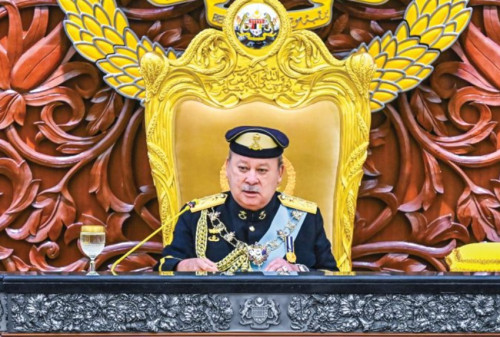
“Besides, the Agong has allowed Parliament to sit during the emergency period.
“The government should utilise this opportunity to seek parliamentary approval for financial policies and prove that they will handle this health crisis with accountability,” she said. – The Vibes, April 2, 2021