
KUALA LUMPUR - New Zealand’s highly popular method of advance voting played a pivotal role in easing its recent general elections process which was held amid the current Covid-19 pandemic, the country’s former chief electoral commissioner revealed.
Robert Peden, the Chief Executive and Chief Electoral Officer of New Zealand's Electoral Commission, said by polling day on October 17, 69.9 % of the country's electoral roll had its advance votes which began two weeks earlier on October 3.
The option to do so, Peden said, was a “good way to disperse crowding” at its voting centres throughout the country.
“New Zealanders like the flexibility of being able to vote early. And the Electoral Commission has sought to place advance voting places in convenient locations where New Zealanders are reminded of the elections,” Peden said.
“In this election (2020), the commission promoted strongly the idea of voting early to mitigate the risk of voting during another outbreak.”
Peden shared the details of the country's recent elections during the Wacana Bersih#12 discussion with Bersih 2.0 chairperson Thomas Fann, which was live-streamed on the Malaysian election watchdog's Facebook page last night.
Peden said advance voting in New Zealand had been an increasing feature of its elections since 2005, which saw a dramatic increase in uptake among voters in the 2011 and 2014 elections.
In this election, Peden said the numbers of people casting their ballots were spread out over a greater period so as to ensure social distancing.
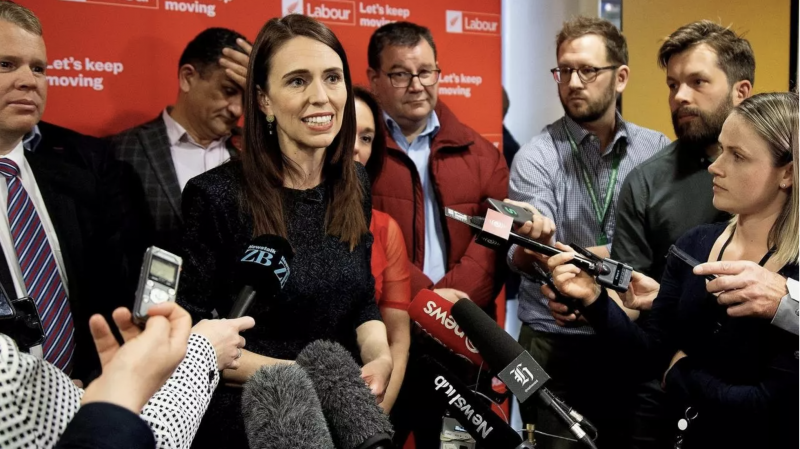
Preliminary results of New Zealand's latest election saw Prime Minister Jacinda Arden, who leads the labour party returning to office after obtaining 49.9% of the national vote, and securing 53.3% of votes for the house of parliament.
The official results were due on November 6, but Peden said the long period between polling day and the final tally allowed the commission to rigorously count the votes and detect anomalies in ballots.
“The time to make results official is also to confirm people voted once. Anyone who tries it (vote more than once) is found out because we compare those votes. The votes are also scrutinised by parties and candidates,” he added.
Apart from advance voting, Peden said New Zealanders could also make “special votes”, allowing them to cast their ballots at any polling station. About 17% or 448,000 voters had made special votes
“That makes voting very accessible, and you don't need to go to a particular location to vote,” he said, adding voters in this instance needed to sign a declaration in the presence of a witness.
Special votes, he noted, are not counted on election night but within the period before the official results are announced.
On the electoral roll, Peden said in this year’s election, unregistered voters could do so on polling day itself and their votes would still be accepted, but this presented some challenges.
“It's a bit of an administrative nightmare and significant burden (for election workers) because on election day, anyone who enrolls last-minute needs to be verified to ensure that their enrolment was proper,” he said.
With a population of just above five million, New Zealand has 3.5 million registered voters, of which 2.9 million (82.5%) had voted in this election.
Peden noted, however, that New Zealand was “fortunate” to be able to conduct the election as the entire country, except for Auckland, was at a level 1, or lowest threat stage, of the Covid-19 outbreak when it was conducted. This meant that there were no restrictions on gathering.
Those who voted ordinarily during the election were also provided hand sanitisers and could bring their own pencils or pens to fill in ballot papers.
On other arrangements, the commission also sent voting teams that collected votes from people who were housebound such as those with disabilities, or who were stationed under quarantine.
Others, such as those who were visually impaired, were also allowed to vote via telephone call through a specialised dictation service, Peden said.
On the possible postponement of an election in the event of a major outbreak, Peden said the country's constitution did not provide for an indefinite delay in the polls, but it could still be done if parliament passed legislation on the matter. – The Vibes, October 28, 2020