KUALA LUMPUR – Malaysia is proposing the adoption of the Kuala Lumpur Joint Statement on Tiger Conservation to recover and boost the tiger population in potential habitats within Southeast Asia, said Prime Minister Datuk Seri Ismail Sabri Yaakob.
He said the 13-point joint statement would support the implementation of actions within the Southeast Asia Tiger Recovery Action Plan (STRAP) based on agreed priorities.
“The adoption of the Kuala Lumpur Joint Statement, STRAP, and Resource Mobilisation Strategy will provide Tiger Range Countries a means to set realistic actionable targets in their bid to achieve tiger recovery goals,” he said when officiating at the Fourth Asia Ministerial Conference (AMC4) on Tiger Conservation held virtually today.
Ismail Sabri also called on Tiger Range Countries and partners to work together in the spirit of a “world family” to save the species as the loss of tigers knows no geographical, cultural or political bounds.
Meanwhile, the Financial Resource Mobilisation Assessment is to be further deliberated by member countries as it would include financing plans for tiger conservation that Southeast Asian countries may use when implementing tiger conservation efforts, he said.
Ismail Sabri said as tiger conservation is costly to execute, it is crucial for resource mobilisation and sustainable financial mechanisms to be put in place to ensure effective implementation.
He said the federal government has introduced the Ecological Fiscal Transfer for Biodiversity Conservation (EFT) to incentivise state governments to protect and expand tiger habitats, with a total of RM130 million having been disbursed to state governments through EFT since 2019.
On the international front, Malaysia takes its commitment to tiger conservation and biodiversity conservation seriously.
“We are proud to be a party to an extensive list of biodiversity-related multilateral conventions, including the Convention on Biological Diversity and Convention on International Trade in Endangered Species (CITES) of Wild Flora and Fauna,” he said.
Malaysia is also collaborating with various international agencies including the Asean Working Group on CITES and Wildlife Enforcement, as well as Interpol, to combat illegal wildlife trade.
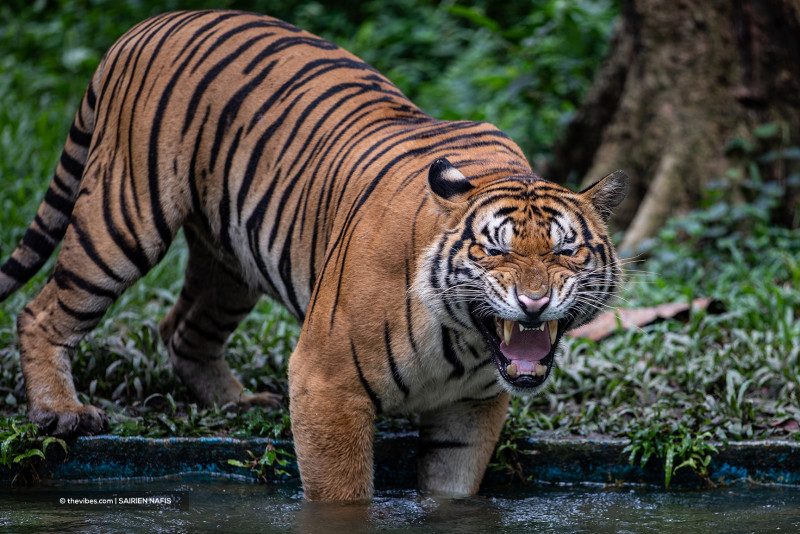
The prime minister said the population of tigers has plunged to fewer than 4,000 worldwide, and this figure includes the critically endangered Malayan tiger, a symbol of Malaysia’s strength and resilience, which adorns the country’s coat of arms.
Based on the First National Tiger Survey conducted from 2016 to 2020, he said, fewer than 150 Malayan tigers were left in the wild, while experts predict that the species will vanish within five to 10 years if strategic actions are not put in place immediately.
The Malayan tiger has been afforded the highest level of protection in our legislation – Totally Protected Species – under the Wildlife Conservation Act 2010 and Appendix 1 under the International Trade in Endangered Species Act 2008.”
Other successful tiger conservation initiatives include the award-winning Ops Khazanah as well as the Biodiversity Protection and Patrolling Programme, in which 167 wildlife criminals were arrested for smuggling goods worth RM36 million under those two programmes.
Besides that, Ismail Sabri said the Greening Malaysia Agenda through the 100 Million Trees Planting Campaign from 2021 to 2025 has been successful, as approximately 26.21 million trees from 993 species have been planted under this programme as of this month. – Bernama, January 21, 2022