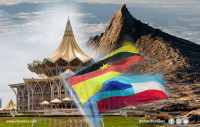

SARAWAK is looking to enhance its tourism potential by enhancing conservation efforts in line with its being recognised as an Unesco Global Geopark Site.
Sarawak's extensive forests, covering about 62% of its land, are categorised into permanent forest estates for conservation, making it the dominant state in terms of forested land.
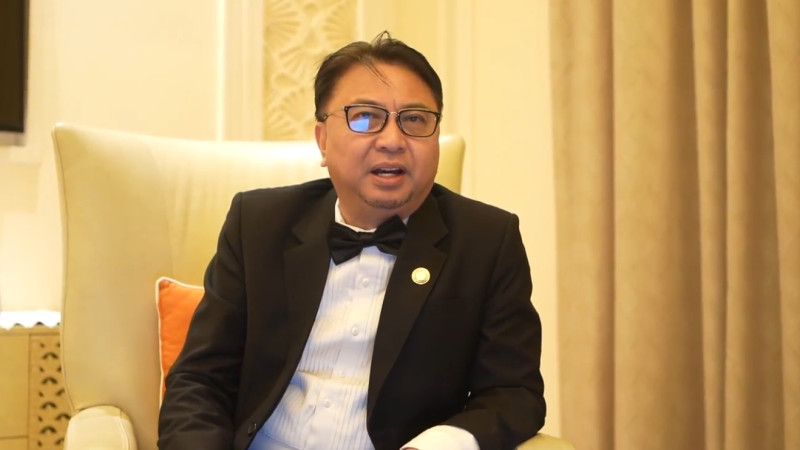
Forest Department Sarawak director Datuk Hamden Mohammad said that while in the past, its fertile trees were good for timber concessions, the state is also aware of the importance of conservation and preservation.
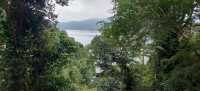
At the heart of it is the Sarawak Delta Geopark, a geo-heritage area, famous for its 200-million-year-old geological heritage, unique biodiversity, and local culture, which offers important sites such as Bako National Park, Santubong National Park, and Dered Krian National Park.
This makes it a prime location for hiking, nature exploration, and understanding Sarawak's history.
This year, Sarawak Delta is poised to join Langkawi and Sabah's Kinabalu as an Unesco accredited global geopark - one of over 200 of its kind in 50 countries.
A geopark is a protected area with significant geological heritage (sites of scientific, rarity, or aesthetic value) managed holistically for protection, education, and sustainable development, integrating geology with cultural and natural heritage for community benefit, often through geo-tourism.
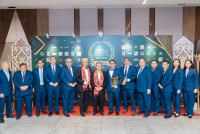
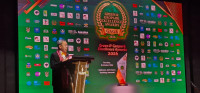
In an interview in conjunction with the inaugural Green and Geopark Excellence Awards (GAGA), of which the Sarawak Forestry won four awards, Hamden stressed that the state was no longer just about timber.
“We are advocating a huge chunk of attention towards conservation and preservation. We will also be replanting our trees."
He said that with more recognition, it will spur Sarawakians to collaborate with both the public and private sectors to showcase its forests and geoparks in their original form rather than in having to redevelop them.
"This shift was crucial, as Sarawak moves to transform its forestry sector through more sustainable and technology-driven methods, in line with the post Covid - 19 development strategy 2030. Sarawak is no longer primarily reliant on logging as its main source of income."
The forestry authority was also reportedly investing in advanced monitoring technology, with one key initiative involving a collaboration with Japan’s National Institute of Science and Technology (NIST) through a Memorandum of Understanding signed in 2024.
“Technology from Japan, such as satellite monitoring that can detect climate change and natural disasters early, is being studied for application in Sarawak.”
It is distinct from the Sarawak Forestry Corporation (SFC), which handles national parks and wildlife management. - January 14, 2026.