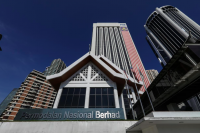

KUALA LUMPUR – An investigation conducted by the Human Resources Ministry on allegations of forced labour in Sime Darby Plantations Bhd by the United States Customs and Border Protection (CBP) found no such truth in the claims.
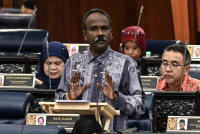
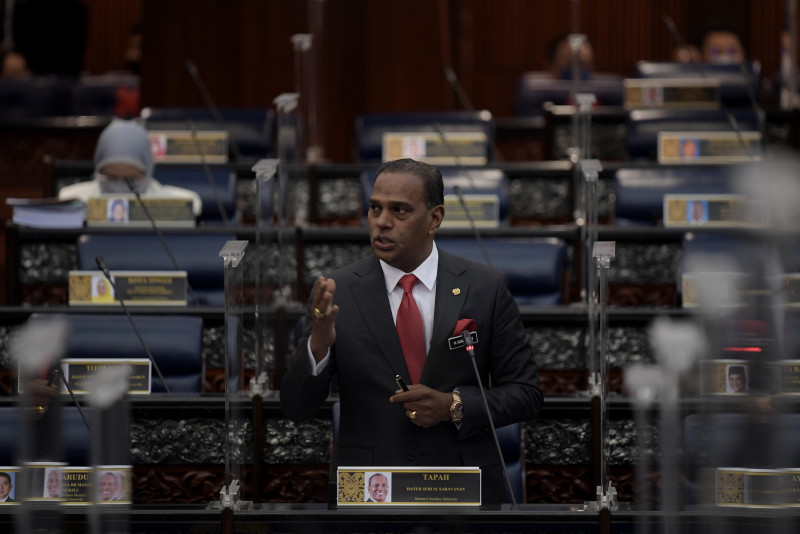
Minister Datuk Seri M. Saravanan told Parliament today that its probe only found the firm committing an offence under the Workmen’s Compensation Act 1952 for failing to report on an accident involving a foreign worker within the stipulated 10 days.
He was responding to Sivarasa Rasiah (Sungai Buloh-PH) who wanted an update on the investigation into claims of forced labour, which have seen the CBP issue a withhold release order (WRO) on palm oil produced by Sime Darby.
Following the reply by the minister, Sivarasa had asked about the efforts taken by the government to engage with US authorities to obtain evidence of forced labour claimed by them.
“We should be scrutinising the evidence. The US can’t be banning our products without an excuse,” he said in his supplementary question.
In response, Saravanan said he had already recently met with the US ambassador to Malaysia for an explanation on the matter, after the CBP took action without first engaging with the government.
The minister maintained that Sime Darby had not committed any forced labour offences, saying instead that the US has a different interpretation of the matter to Malaysia.
Citing an example, Saravanan noted that many employers in Sabah and Sarawak do not offer childcare centres for children of workers particularly from Indonesia, forcing the kids to follow their parents to the farms.
“This doesn’t mean the children are there to work. But at the international level, this is seen as child labour,” he said.
He added that to date, the US has failed to highlight specifically which of the 11 forced labour indicators Sime Darby had breached, insisting that the ministry's probe found no wrongdoing.
The US CBP first issued a WRO on palm oil produced by Sime Darby on December 30, 2020 based on information that reasonably indicated the presence of all 11 of forced labour indicators in the plantation’s production process.
In January this year, the CBP issued another notice of finding saying some of the company’s palm oil products were produced using forced labour, resulting in the products being seized by port authorities and forfeiture proceedings commencing.
Saravanan said that the recent ban on several local companies over allegations of forced labour had tarnished Malaysia's image at the international level, with the country supposedly facing problems recruiting foreign workers.
Datuk Xavier Jayakumar (Kuala Langat-Independent), meanwhile, said Malaysia should be firm against the US, saying the ban on palm oil was done simply to stop the country from exporting its commodity.
“Don't come to Malaysia and lecture us on forced labour. History has proven you are far worse than us. I think this is a white man’s game to stop us exporting our products.”
Saravanan said this message has been communicated to the US ambassador, albeit in more delicate language. – The Vibes, March 8, 2022