KUALA LUMPUR – In Malaysia, festivals often witness a sharp rise in the generation of domestic waste.
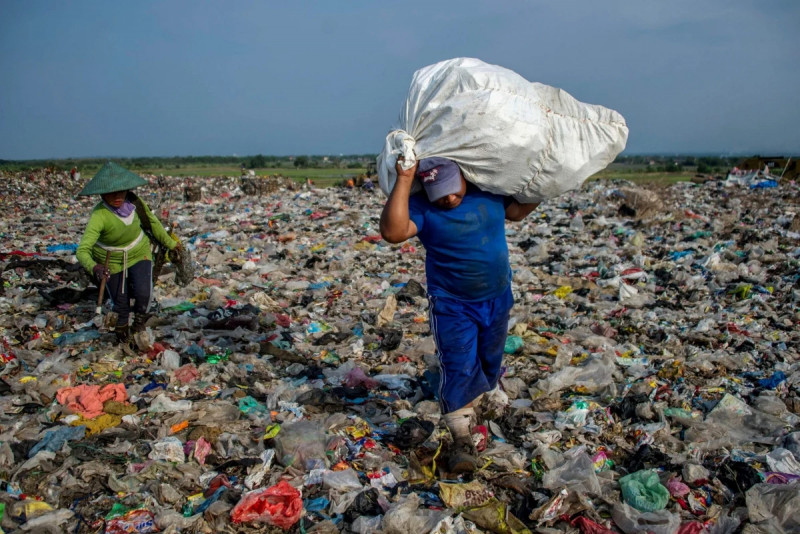
With interstate travel and open houses allowed during this year’s Aidilfitri celebrations – after a hiatus of two years due to the Covid-19 pandemic – solid waste operators and activists are understandably worried about the growing pile of household waste, particularly plastic waste.
Their fears are not baseless as Malaysia ranks second in Asia for annual per capita plastic use. Worldwide, it ranks eighth among nations that mismanage plastic waste. This is certainly not something to be proud of and even the Sultan of Perak Sultan Nazrin Muizzuddin Shah recently rebuked Malaysians for their lack of awareness of the hazards of plastic pollution.
Malaysians reportedly dump over 30,000 tonnes of plastic waste into the sea yearly.
Malaysia has eight more years left in its Roadmap Towards Zero Single-use Plastics 2018-2030 but, going by the current trend in consumer habits and practices, will the nation be able to realise its goal of eliminating single-use plastics by 2030?
Major issue
Commenting on this, Universiti Putra Malaysia Faculty of Forestry and Environment senior lecturer Mohd Yusoff Ishak had this to say, “The road (to achieving the zero single-use plastic target) is getting harder… in fact, it may even be impossible.”
Citing public apathy, he said people, in general, are not serious about the dangers of mismanaging plastic waste.
He said their attitude is evident based on the 40,000 tonnes of domestic waste generated in Kuala Lumpur alone as of the 20th day of Ramadan last month, which Bernama understands is the largest amount of waste collected by solid waste management and public cleansing concession holder Alam Flora Sdn Bhd in the last four years, with single-use plastic bags forming the bulk of the waste generated in the capital city.
Alam Flora chief executive officer Datuk Mohd Zain Hassan has been quoted as saying that he expects solid waste generation to increase until the first week of Aidilfitri following the reopening of all economic and social sectors.
Yusoff said the Malaysian society’s lackadaisical attitude must not be taken lightly as this very attitude has been identified as the main reason why the use of plastic is still high in this country, particularly in wet markets and sundry stores and during festive seasons despite the implementation of various awareness campaigns.
“Plastic waste is a major issue in Malaysia. It is sad that many people still take this issue lightly. For example, many traders still prefer to use non-environmentally friendly plastic bags because these are cheaper than biodegradable ones.
“Consumers too mainly prefer to use plastic bags simply because recyclable bags have to be cleaned each time they are used. This shows that people would rather prioritise convenience than consider the effects of plastic on the environment,” he told Bernama.
Yusoff also said that Malaysia’s plan to attain zero single-use plastics by 2030 is hampered by the fact that not all states have enforced the Solid Waste and Public Cleansing Management Act 2007 (Act 672).
The Act, which is currently enforced in only seven states, requires households and owners of business premises to separate their waste at source. Five states – Kelantan, Terengganu, Selangor, Perak and Penang – have yet to sign the Solid Waste and Public Cleansing System Agreement as provided by Act 672.
Yusoff said: “We have sufficient policies. We also have the proper legislation in place, but its enforcement has become an issue. By right, it should be enforced nationwide, not just in certain states.”
He also observed that efforts by local authorities and state governments to impose a 20-sen charge on each plastic bag has not been successful as the sum is too small.
He said the 20 sen charged for each plastic bag has a tremendous impact on environmental sustainability because plastics that are not managed properly take 400 to 1,000 years to decompose naturally.
There are other risks as well – plastic waste can cause obstructions in drainage systems, leading to the occurrence of flash floods. And plastic waste dumped into the sea can be detrimental to marine life.
Meanwhile, Zero Waste Malaysia (ZWM) co-founder Khor Sue Yee said while public awareness is slowly growing, many people’s knowledge of why it is important to eliminate single-use plastics is still shallow.
“We can already see some people practising the zero-waste lifestyle… they bring their own containers when buying takeaway food at restaurants and use recyclable bags when they go shopping.
“But only a handful practice such a lifestyle. Others may know of this lifestyle but don’t practice it. Then, there are those who have no idea such a campaign (zero single-use plastic) exists,” she said.
Khor said that based on a study carried out by ZWM on 7,000 respondents in the Klang Valley, 50% of them said they are confused about the type of items that can be recycled.
As such, she added, ZWM often collaborates with residents’ associations, companies and educational institutions to impart information on recycling and inculcate the habit of recycling in the community, especially among schoolchildren.
“We believe that educating children from a young age is the best way to enable them to understand the concept of recycling and encourage them to practice a zero-waste lifestyle,” she said.
ZWM recently launched its Trashpedia interactive website, in collaboration with Bursa Malaysia, to make it easier for the public to have an in-depth understanding of why recycling is crucial to sustaining the environment.
Trashpedia, short for Trash Encyclopedia, also provides a comprehensive guide on 101 household items that can be recycled, which is useful for those who wish to lead a zero-waste lifestyle.
The website’s content is currently only available in English, but efforts are underway to provide the Bahasa Malaysia, Mandarin and Tamil versions by October this year.
“Through this platform (Trashpedia), we want to educate the public that implementing zero waste is actually very easy. The average Malaysian disposes of 1.64kg of waste each day compared to the world average of 1.2kg. Items discarded include food waste and recyclable waste such as plastic, glass, electronics and cardboard.
“The indiscriminate dumping of recyclable waste has contributed to Malaysia’s fairly low recycling rate of 32%,” she added. – Bernama, May 6, 2022