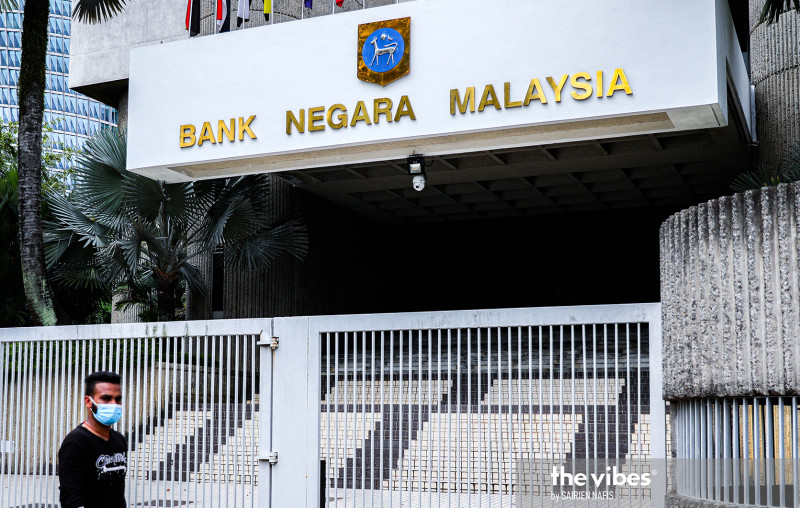

KUALA LUMPUR – Malaysia continues to record a decline of its central bank’s international reserves, but they are still sufficient to support the economy, the Dewan Rakyat heard today.
Deputy Finance Minister II Yamani Hafez Musa revealed that Bank Negara Malaysia (BNM)’s international reserves stood at US$109 billion (RM480.1 billion) as of June 30, compared to USD112.8 billion (RM474.2 billion) the previous month.
The figure is also a further dip compared to December 2021, when BNM recorded reserves amounting to USD116.9 billion.
According to Yamani, the current figure is enough to accommodate imports of goods and services for 5.8 months, and is 1.1 times the country’s short term external debt.
“This is based on the assessing the reserve adequacy metric by the International Monetary Fund,” he said today.
“At the moment, our current reserves are considered sufficient, although we will continue to monitor (the situation) to stabilise our ringgit.”
He was responding to questions on the current standing of BNM’s international reserves, and how this compares to the amount recorded at the end of last year, which the central bank had previously said was enough to finance 7.7 months of retained imports.
Yamani acknowledged the importance of the international reserves’ support, noting that without it, there will be uncertain ringgit fluctuations due to the increased volatility in the market.
He added that financial market stability is also vital to increase foreign investors’ confidence in the local market, which will subsequently positively impact the country’s international reserves.
To a separate question from Datuk Seri Ahmad Maslan (Pontian-BN) on the weakening ringgit compared to the US dollar, Yamani dismissed the suggestion that Malaysia’s currency is faring poorly.
He noted the US dollar is also strengthening compared to the majority of global currencies, due to aggressive interest rate increases in the US as well as other external factors like the slow economic growth in China and the conflict in Ukraine.
“Since the start of 2022, the ringgit value fell -6.2% compared to the US dollar, which is in line with the movement of regional currencies and other developed nations, which saw a similar decline of between -2.8% and -16.4%.”
Regardless, Yamani said the government will continue to manage the risks posed by domestic and external developments, adding that BNM will also continue to strive to ensure a stable foreign exchange rate.
On a question regarding the impact of the overnight policy rate (OPR) increase by 50 basis points in 2022, Yamani said the gradual hike is not expected to gravely affect Malaysians.
For one, he noted that one-third of borrowers from low-income households took fixed rate car and personal loans as opposed to the floating rate, which will be affected by the OPR hike.
“For floating rate borrowers, the increase in monthly payment will also not increase significantly.
“At the same time, depositors will also benefit from higher interest returns,” he added. – The Vibes, August 1, 2022