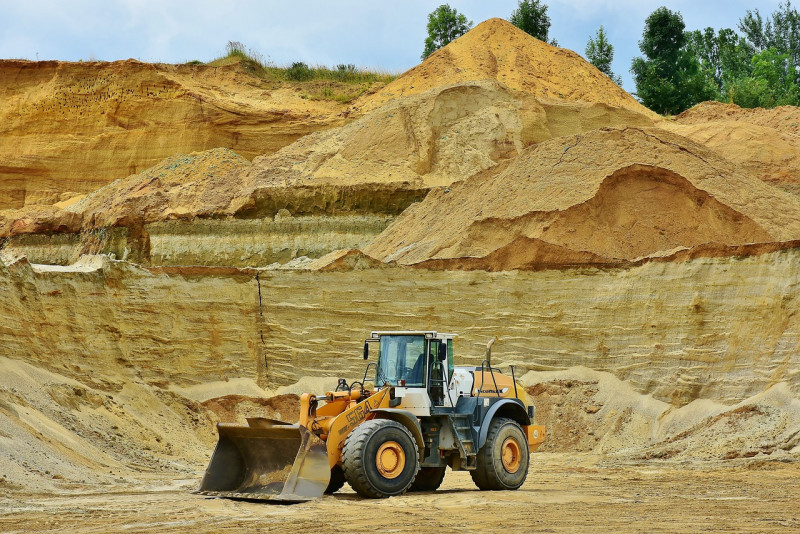
GEORGE TOWN – Sahabat Alam Malaysia (SAM) says it is concerned about reports of radioactivity in Kedah after the state government hired a joint-venture company to explore the mining of rare-earth elements in Sik, Ulu Muda and Baling.
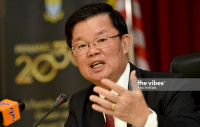
Similar claims were made last year by the Water, Land and Natural Resources (Ketsa) over a deal between a China company and the Perak government for the exploration of rare-earth minerals, SAM president Meenaskhi Raman said in a statement today.
The Perak venture involved the state government and Chinese company Chinalco GXNF Rare Earth Development, which undertook the exploration of rare-earth minerals.
SAM said it believes the Kedah venture could go the same way as in Perak, and called on the Kedah goverment to make public details of the venture, including whether it involves the same company.
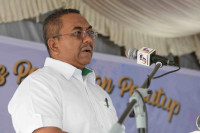
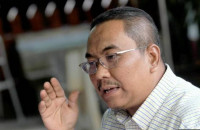
"Our concerns have not been addressed by Kedah Menteri Besar Muhammed Sanusi Md Nor or the federal government on whether the venture involves radioactive elements," SAM said.
SAM’s preliminary research on China’s experience shows serious risks to the environment and human health related to the mining and leaching of ion-adsorption rare-earth clay resources.
A 2013 study by six Chinese university academics on the consequences in southern China of its ion-adsorption rare-earth industry revealed devastating environmental effects in the region, SAM said.
For this reason, Beijing had, in June 2011, enforced a ban on surface mining and tank/heap leaching, while implementing in-situ leaching for ion-adsorption rare earths.
According to the study, “surface/mountaintop mining for ion-adsorption rare-earth ores has become the dominant driver of land-use change and degradation in southern China, causing permanent loss of ecosystems, severe soil erosion, air pollution, biodiversity loss and human health problem”.
The study estimates that the costs of such mining outweigh the benefits, even before considering the cost to human health and the environment, Meenaskhi said.
"Firstly, in the interest of transparency, we call on the Kedah government to make public and disclose the deal and the company involved in the venture.
"The public has a right to know what the company is tasked with doing, where the exploratory activities will take place and what environmental and social safeguards are in place."
"Secondly, we call on (Ketsa) to make public the government’s policy on the development of the rare-earths industry and seek public consultations prior to allowing states to embark on such ventures, not only in Kedah and Perak, but anywhere else in the country."
Both the federal and state governments should not be blinded by promises of billions in profit in relation to the rare-earth industry, which must be viewed as a dirty and toxic industry, similar to the plastics and tobacco industries, SAM said.
"We have to find alternatives to rare earths, given their damaging nature. Malaysia must get its priorities right and put the environment at the centre, and not continue to plunder and damage our natural resources in the name of generating economic wealth.
“Clearly, we are not learning from lessons of the past on what it takes to be truly sustainable, but instead, are leaving a toxic legacy for generations to come." – The Vibes, December 3, 2020