Malaysia

New judge to hear Najib’s second SRC trial

K. Muniandy replaces Mohamed Zaini Mazlan who has been elevated to Court of Appeal

Updated 3 years ago · Published on 03 Mar 2023 12:06PM

New judge to hear Najib’s second SRC trial
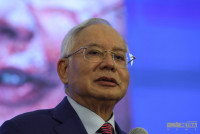
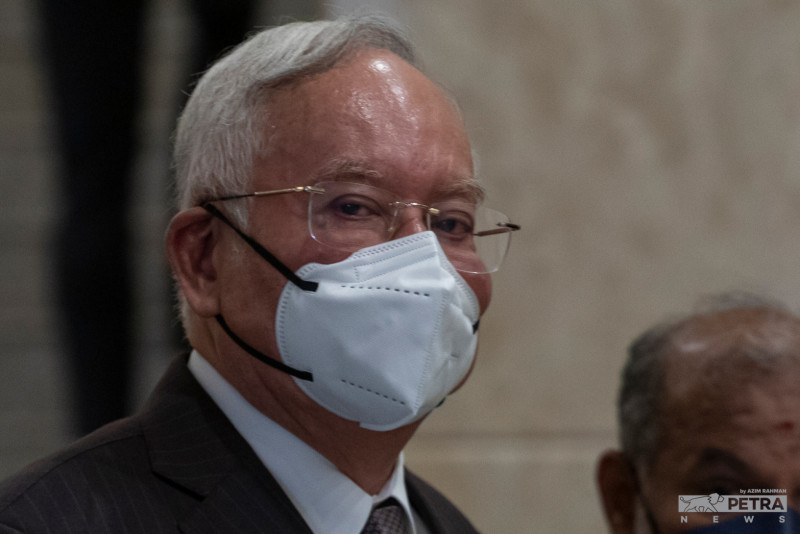
The court has set May 29 for case management in Datuk Seri Najib Razak’s second SRC International Sdn Bhd case involving RM27 million. – AZIM RAHMAN/The Vibes file pic, March 3, 2023

KUALA LUMPUR – High court judge K. Muniandy will preside over former prime minister Datuk Seri Najib Razak’s second SRC International Sdn Bhd (SRC) case involving RM27 million following justice Mohamed Zaini Mazlan’s recent elevation to the Court of Appeal.

During today’s case mention, the court has set May 29 for case management.

Earlier, deputy public prosecutor Mohd Ashrof Adrin Kamarul told the court that the prosecution and defence applied for the trial to be postponed.

This is due to Najib’s ongoing review application on the Federal Court’s August 23 decision to uphold his conviction and 12-year jail sentence and RM210 million fine after he was found guilty of misappropriating SRC International’s RM42 million.

“The date of the review decision has not yet been decided, and it (the date) will be notified by the registrar of the Federal Court in the near future. The prosecution and the defence request that the date for this case management be fixed in May,” said Ashrof Adrin as quoted by Bernama.

Najib’s lawyer Alaistair Brandah Norman also agreed for the case management to be set in May.

Previously, the trial had been postponed pending the disposal of the RM42 million SRC appeal.

On February 3, 2019, Najib pleaded not guilty to the three charges of money laundering whereby he is alleged to have received money totalling RM27 million, allegedly proceeds from unlawful activities, in three AmPrivate Banking accounts belonging to him.

Najib is alleged to have committed the offences at AmIslamic Bank Bhd, Bangunan AmBank Group, No. 55, Jalan Raja Chulan, on July 8, 2014.

He was charged under Section 4(1)(a) of the Anti-Money Laundering and Anti-Terrorism Financing Act 2001, which provides for a maximum fine of RM5 million or jail not exceeding five years or both, if convicted. – The Vibes, March 3, 2023
Related News

Malaysia / 1mth

‘No one gets rich in politics unless he’s a crook’: Selangor Sultan shares Truman's quote

Malaysia / 1mth

No money trail because payments to Guan Eng made in cash - Witness

Malaysia / 1mth

Anwar’s budget cuts - a master move for reform

Malaysia / 1mth

Rosmah: ‘There was no obligation for me to buy any of the jewellery’

Malaysia / 3mth

'Do not be too hasty in passing judgment against others' - PM

Malaysia / 3mth

Corruption: 'Nobody escapes my radar' - King issues stern warning

Spotlight

Malaysia

Anwar congratulates Modi on becoming India's longest-serving elected PM

Malaysia

Missing jewellery: Rosmah ordered to pay RM67.5 million

People

Malay kampongs in Bangkok: Echoes of southern heritage in Thailand’s capital

Opinion

Johor MB’s exclusionary rhetoric betrays the people, exposes UMNO’s political hypocrisy

Malaysia

Johor and NS polls first major test of post PAS-Bersatu political order

Malaysia

Claimed installation of 12th N. Sembilan ruler invalid - Pengelola Bijaya Diraja

Malaysia

4WD driver who drove backwards on highway nabbed, positive for drugs (video)

By Ian McIntyre

Malaysia

Seven in ten Malaysian workers earn RM5k or less - economist

You may be interested

Malaysia

PAS cites unity and political stability in decision to end cooperation with Bersatu

Malaysia

Anwar congratulates Modi on becoming India's longest-serving elected PM

Malaysia

4WD driver who drove backwards on highway nabbed, positive for drugs (video)

By Ian McIntyre

Malaysia

Terengganu retains Bersatu exco despite PAS split, signalling government stability

Malaysia

Missing jewellery: Rosmah ordered to pay RM67.5 million

Malaysia

Woman molested on her way home from work (video)

Malaysia

Seven in ten Malaysian workers earn RM5k or less - economist

Malaysia

AG defends compound settlements in corruption cases, says law bars further prosecution after payment