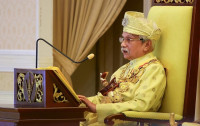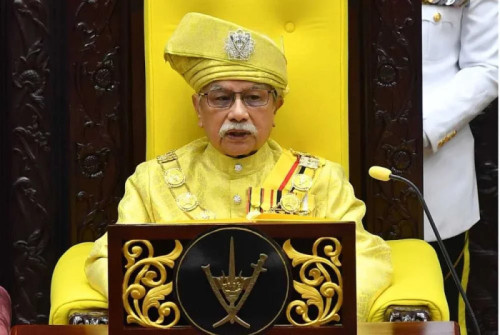
PROJEK SAMA urges the Pardons Board of Wilayah Persekutuan to fully disclose the grounds of application by Datuk Seri Najib Abdul Razak and the recommendations made to Yang diPertuan Agong Al-Sultan Abdullah Ri'ayatuddin Al-Mustafa Billah Shah over the pardon of corruption convict Najib Razak. This must be done without delay after the drama over Najib's pardon shocked and confused the nation since the afternoon of January 30 (Tuesday).
While His Majesty Yang diPertuan Agong (YDPA) has the full discretionary power on pardon of convicts in the Federal Territories as provided for under Articles 42(1) and 40(3) of the Federal Constitution, the public has the right to be informed of the grounds of application and recommendations, including any written opinion by the Attorney General [Article 42(9)], made to His Majesty.
Transparency on the part of the convict Najib and of public officers sitting on the Pardons Board – the Attorney General and the Minister in charge of the Federal Territories (in the case of a state, the Chief Minister) – is important to ensure public trust in the constitutionally enshrined mechanism of pardon.
Not amenable to judicial review, pardon is an invaluable mechanism to supplement justice with compassion by "[making] the convict a new man and [giving] him new credit and capacity. (essence of KM Nanavati v State of Bombay 1961 SCR 497, as summarised by Lexis Nexis).
Without transparency, the public's trust will be eroded by doubts and cynicism. The public may well conclude that powerful convicts abuse the mechanism and thereby undermine justice.
To put things in perspective, pardons for politicians convicted of criminal acts is not rare. It is often done to effect political reconciliation.
However, two conditions normally apply. First, the convict admits guilt and seeks forgiveness from the public. This is especially important as an affirmation of the legitimacy of the Prosecution’s efforts and the Judiciary's decisions. Also, this condition protects the two institutions from contempt. Second, where possible, the convict undertakes acts of redemption to make amends such as making good losses to the country caused by the convict’s wrongdoing.
Beyond those two conditions, a decision on pardon ought to take into consideration whether the convict has already served a substantial part of the prison term he was sentenced to.
The Malaysian public deserves to know if the SRC convict Najib Razak has admitted his guilt in the 1MDB scandal and sought forgiveness of Malaysians, and more importantly, whether he has instructed his lawyer to plead guilty on the remaining three cases to save public funds on litigation and return all of the ill-gotten wealth.
To borrow from the essence of the KM Nanavanti's case, "is Najib intending and ready to be a 'new man'?"
If the five-member Pardon Board has recommended Najib to be pardoned or to have his term commuted while he insists that he is a victim of selective prosecution or that others failed him, then such recommendation has derided the Judiciary and the Prosecution. It also indirectly sends to the Judiciary and Prosecution a message of futility over Najib's remaining cases, as he would eventually be freed even if he is convicted again and again.
The rule of law must be consistently upheld, both to underline the equality of all citizens and to encourage law-abiding behaviour. This is vital for sustaining and growing any civilised society and modern economy.
An act of pardon without justification can greatly undermine the rule of law, discourage respect for law and justice amongst the citizens, and discourage investment from both at home and abroad. Of course, the practice of double-standards also erodes the moral basis of the sitting government. – The Vibes, January 31, 2024
Projek Sama (for ‘Project – Stability and Accountability for Malaysia’) is a movement advocating institutional reforms in Malaysia.