By Sanjeev Krishna
Politicians are common coin but as elections repeatedly demonstrate, virtuous leaders are harder to come by.
The ancients noted it takes unshakeable integrity, unflinching application of justice tempered by wisdom and a vision that touches all peoples, not only those who vote for you, to distinguish a true statesman from a politician.
We remember these great leaders – Nyerere of Tanzania so influential from such a poor and sparsely populated country where I grew up, Selassie, Mandela, Ghandi, Nehru.
Their charisma reflected their unimpeachable qualities and a shared vision for the common and often supranational good.
It is no coincidence that these leaders emerged in the global South where injustices foisted by the most wealthy and powerful nations demanded their voices be heard.
When rules that stabilise, the international order are flouted then the exercise of power and unbridled capitalism inevitably challenge the concepts of justice, cooperation and altruism.
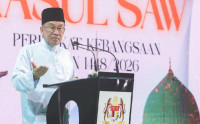
In these post-normal times, Malaysian Prime Minister Datuk Seri Anwar Ibrahim is articulating a statesman’s vision for the Global South as Malaysia helms the Association of Southeast Asian Nations (ASEAN) in 2025.
Anwar wants to work within ASEAN to enhance collaborative efforts to benefit the populations of their member states through rapid economic development and political cooperation that transcend the issues affecting individual countries.
His highly inclusive and open vision will soon welcome Timor Leste as a full member of ASEAN. But it does not shy away from the escalating conflict and resulting displacement of peoples that has inflicted a humanitarian catastrophe on millions in Myanmar.
To strengthen partnerships beyond the geographical confines of ASEAN, strong alliances now include closer working with established ASEAN+ partners: China, Japan, South Korea, India, Australia, and New Zealand.
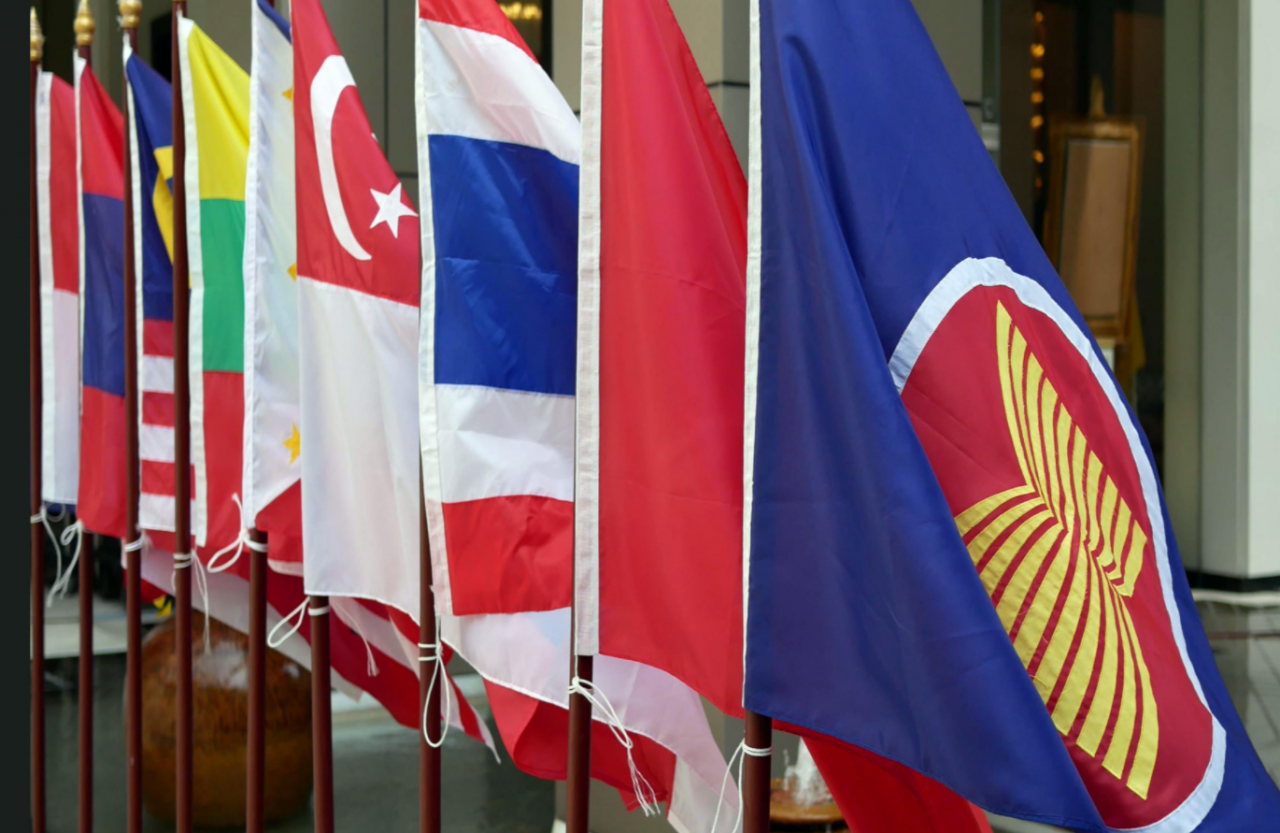
Malaysia is now part of BRICS+, motivated again by similar aims of increasing trade flows, foreign investments, regional stability and global influence. Under Anwar, Malaysia continues adroitly to work with current economic leaders (China, USA, EU) whilst building strong alliances with the Gulf Cooperative Countries.
His advocacy for the Global South where approximately 85% of the world’s population generates a GDP of 40% of the global total has required considerable diplomacy.
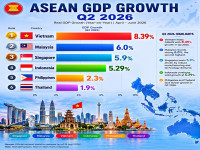
To deliver the goal of Malaysia becoming one of the world’s top 30 economies in the next decade will need more than diplomacy.
Internal political challenges from those who question his implementation of the Reform agenda, misplaced accusations of backpedalling on anti-corruption efforts and the length of time it takes to translate economic policies into healthy economic growth are used to try and create rifts in Malaysia’s richly diverse society.
Anwar’s government has addressed many of these issues by articulating a National Industrial Masterplan leading to 2030 (NIMP2030).
NIMP 2030 focuses on key sectors that will increase the economic complexity of Malaysia’s industrial and social landscape using technological innovation to bypass incremental advancement. To deliver a vision that boosts Malaysia’s economic growth, open collaborations in science, technology and innovation that include the healthcare sector are being implemented.
These aim to make Malaysia a global leader in the fields of medical devices and the pharmaceutical industry with Digitech supporting these sectoral initiatives.
The Global South experienced starkly highlighted inequalities during the COVID-19 pandemic, with most people never receiving any COVID-19 vaccine.
To avoid repeating these experiences, supply chain resilience, technical expertise in developing diagnostics, new treatments and vaccines have all become urgent priorities.
Nearly half of the world’s population lacks timely access to accurate and affordable medical diagnostics.
Out-of-pocket health-care expenditures in Southeast Asia, with a population of 690 million, are among the highest in the world and continue to escalate.
In July 2024, Malaysia hosted a scientific workshop that brought together government, academia, responsible industry and civil society stakeholders, with strong representation from ASEAN, to tackle the issue of access to affordable diagnostics and therapeutics for Southeast Asia and the wider Global South.
This framework report ‘Advancing Access to Diagnostics and Therapeutics in Southeast Asia’ showcased how Malaysia is in an unique position in Southeast Asia to lead innovation and manufacturing in these areas.
Malaysia leads in Southeast Asia for delivery of high-quality industry sponsored clinical trials, with established platforms such as Clinical Research Malaysia and the National Institutes of Health both within the Ministry of Health.
A follow up Common Action Forum meeting in December 2024, developed some key ideas further by focusing on issues such as resilience in research, development, manufacturing, local supply chains and intellectual property rights in the Global South.
Healthcare initiatives that impact grassroots communities and address the plight of under privileged populations reflect Anwar’s commitment to equity.
Having been a political prisoner of conscience for over a decade, his first-hand experience of being tortured and beaten and the subsequent struggle to access timely healthcare after suffering spinal and shoulder injuries will have no doubt shaped his resolve to deliver access to healthcare, education and socioeconomic benefits for all.
Under his leadership, rural government health clinics in the remote interiors of Borneo are being upgraded and the state of Sarawak will get its own cancer centre, which was decades in the making.
Very few politicians become statesmen, but statesmen need to be effective politicians to realise their vision.
Anwar Ibrahim laid out his vision for an Asian Renaissance nearly three decades ago.
Now he is intent on ensuring ASEAN+ undergoes a second renaissance and works together to deliver benefits for the populations of the Global South by transforming the lives of many, not just a privileged few.
Sanjeev Krishna is Professor Emeritus of Molecular Parasitology and Medicine at City-St George’s University of London and Co-Director of the Centre for Affordable Diagnostics and Therapeutics.