By Murray Hunter
THE Malaysian Chinese Association (MCA) has languished in relative obscurity for over a decade since Barisan Nasional's (BN) surprise defeat in the 2018 general election. Once a key pillar representing Chinese interests within the ruling coalition, the party has struggled to regain relevance as voters recognised the Democratic Action Party (DAP) as the major voice for defending Chinese interests.
Many in the Chinese community view the MCA as having failed to robustly safeguard their positions in education, culture, and economic equity, preferring instead the more vocal, opposition-style advocacy of the DAP.
Yet, some are perceiving that political winds may be shifting.
The current Madani administration under Prime Minister Datuk Seri Anwar Ibrahim has faced criticism from segments of the Chinese electorate for perceived shortcomings in addressing community-specific concerns, ranging from economic pressures to unresolved issues like the recognition of the Unified Examination Certificate (UEC).
This discontent has manifested in lower enthusiasm and turnout risks among traditional DAP supporters.
The party's complete loss of all state seats it contested in the recent Sabah state election served as a stark warning signal of eroding Chinese support.
In contrast, the MCA's historical approach in working quietly within BN to extract concessions from UMNO offers a different model.
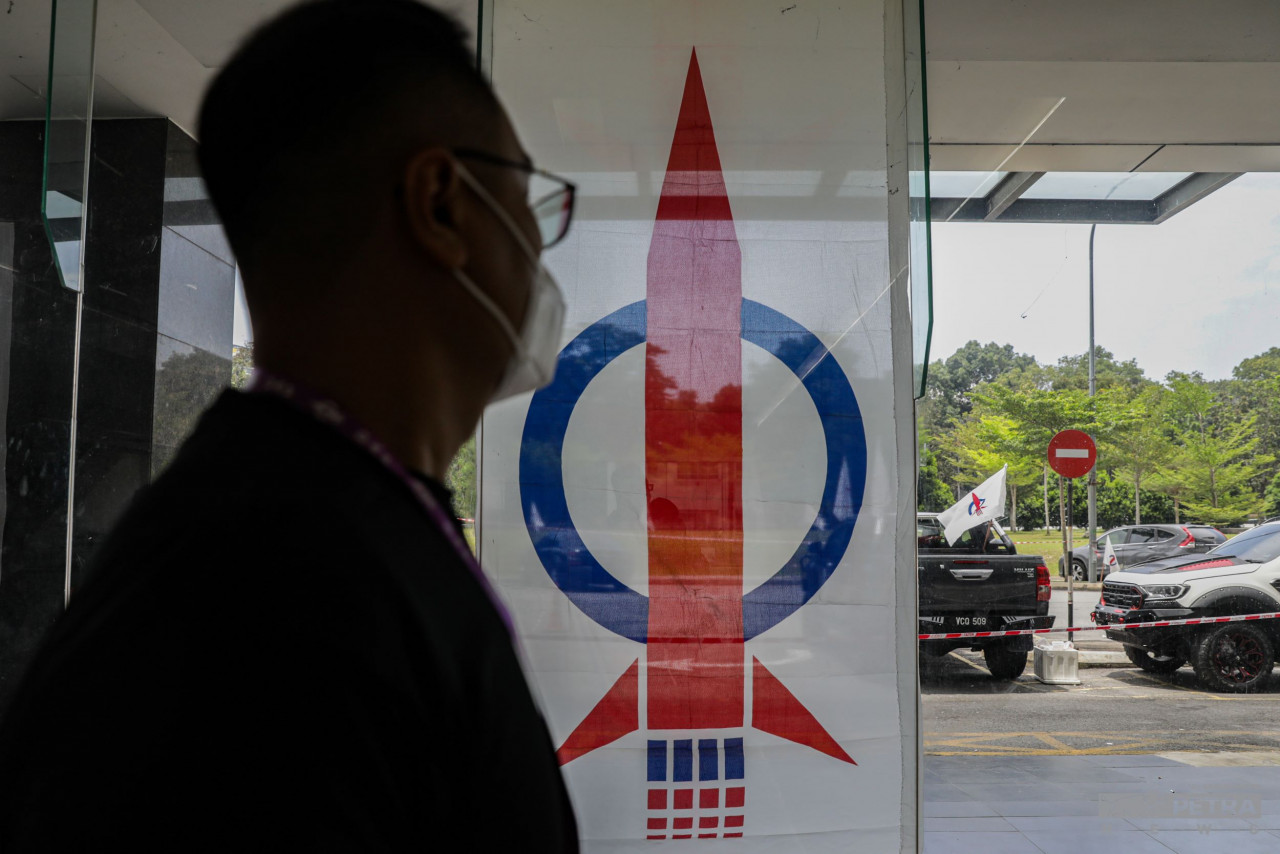
While less flashy than DAP's confrontational style, it delivered tangible gains during periods of BN dominance. With perceptions of UMNO's resurgence and BN's strong incumbency in Johor, MCA sees a window to reclaim ground from a demoralised DAP.
Johor as the laboratory
The upcoming Johor state election on 11 July 2026 presents the perfect testing ground.
Johor is BN's stronghold, where the coalition secured a two-thirds majority in 2022, with MCA winning 4 seats, including in mixed and Chinese-leaning areas like Bekok, Yong Peng, Paloh, and Pekan Nanas.
The MCA is fielding candidates in 15 constituencies this time, positioning itself aggressively in Chinese-majority or competitive wards.
Analysts note that Chinese voters, who form significant blocs in about a quarter of Johor's 56 seats, are no longer a "fixed deposit" for DAP or Pakatan Harapan (PH).
Disillusionment with Madani governance, coupled with bread-and-butter issues, has created space for MCA to pitch itself as a pragmatic partner within a resurgent BN. Success here would be measured not just by seats won but by vote swings in Chinese areas.
This would validate MCA's strategy of leveraging BN's Malay base while appealing to pragmatic Chinese voters tired of opposition fatigue.
A strong showing in Johor would generate crucial momentum.
It could demonstrate to Chinese voters nationwide that MCA remains a viable vehicle for influence within government, rather than perpetual opposition.
This is particularly relevant for Penang, where state elections are expected to coincide with the next general election. Penang has long been a DAP bastion, but growing unhappiness with state and federal performance opens the door for BN-MCA to challenge that dominance.
Certainly, the voter demographics in Penang are changing to make such a hypothesis more valid.
Path to Penang and state power
If MCA makes meaningful inroads in Johor, it sets up a narrative for Penang, where Chinese interests might be better served through quiet, insider negotiations with UMNO-led BN than through DAP's increasingly strained multiracial balancing act.
A BN victory or strong performance in Johor could embolden MCA to target Penang seats directly, potentially contributing to a coalition that forms government there alongside UMNO components.
This hypothesis rests on several assumptions.
These include sustained Chinese voter discontent, effective MCA grassroots campaigning, and UMNO delivering on perceptions of strength without alienating non-Malay partners.
However, the challenges remain significant. The DAP retains loyal core support, and alternative parties like Party Bersama Malaysia or abstention could fragment votes.
Most crucial the MCA must also overcome its image problem of irrelevance accumulated over the years.

Seats to watch in the Johor state election
The MCA is defending four seats, Bekok, Yong Peng, Paloh, and Pekan Nanas, and competing against the DAP in another 11 seats.
Most of the seats the MCA are standing in greatly resemble Penang state seats in demographics.
The seats that the MCA are competing against the DAP are as follows;
Jementah is a constituency with 50.8% Chinese, 40.2% Malay, and 8.3% Indian voters.
Ng Kor Sim won the seat in the 2022 state election with a 714-vote majority. The MCA’s See Ann Giap is competitive here.
Tangkak is a constituency with 48.8% Chinese, 40.2% Malay, and 10.2% Indian voters. The DAP’s Ee Chin Li won this seat with only a 5,077-vote majority in 2022. This will be a straight contest with the MCA’s How Chin Teck, where it will be easy to see the swing either way in the vote.
Bentayan has a voter constituency with 70.8% Chinese voters. In 2022, the DAP’s Ng Yak Howe won this seat with a 7,476 majority.
Penggaram is another Chinese-majority constituency, where Gan Peck Cheng won with a 9,958-vote majority in 2022.
A new DAP candidate, Felicia Poh Hui Ling, will be defending it against the MCA’s Boo Chin Leong in a straight-out contest.
Layang Layang is an interesting seat because UMNO is giving up this seat for the MCA.
What is interesting about Layang Layang is that it has 55% Malay voters in the constituency.
The seat is held by Abd Mutalip Abd Rahim of Bersatu, who won it with a majority of 2,815 votes, then under UMNO.
PKR’s Dr Maszlee Malik has abandoned trying to win the seat for another one. MCA’s Chua Jian Boon will try to take it off Bersatu.

Mengkibol is another Chinese-majority voter seat held by the DAP.
The DAP has a new candidate this time round, where the former incumbent won over a 10,000-vote majority.
This will be a straight-out two-party contest between Warren Yap Zhi Peng of the DAP and Chu Poh Yee of the MCA.
Johor Jaya is a mixed seat with 46.2% Chinese, 39.0% Malay, and 7.93% Indian. The DAP won it with a 1,922-vote majority in 2022.
Bersama and an independent are joining the fray, making the seat a four-cornered contest.
Here we will be able to see the dynamics between the DAP, MCA, and Bersama.
Stulang is another Chinese majority-voting seat with 53.5%.
There are 37.7% Malay and 4.98% Indian voters in the constituency.
The DAP won the seat in 2022 with a 2,866-vote majority.
The contest this time around will have the DAP, MCA, Bersama and Bersatu.
Skudai is another Chinese-majority seat, where Marina Ibrahim of the DAP won with a 13,943-vote margin.
This seat is controversial as Marina has retired from politics, and Kartiyani Jeyapalan will contest the seat.
It will be hotly contested with Bersama, PSM, and the MCA.
Perhaps one of the most watched seats will be Puteri Wangsa, a mixed seat with 51,3% Chinese, 35.6% Malay, and 10.6% Indians. MUDA president Amira Aisya Abdul Aziz, who won in 2022 with a 7,114 majority, has stood aside for her service centre head , Rashifa Aljunied.
Interestingly, Maszlee is also running for this seat and is campaigning as the unofficial PH poster boy.
The MCA’s Teow Chia Ling is also in the race.
The Johor state election will function as a political laboratory.
Results on 11 July will test whether the MCA can capitalise on DAP's vulnerabilities in the Madani era.
A breakthrough could reshape Chinese political alignment in Malaysia, signalling a return to coalition pragmatism over opposition idealism.
For a party written off by many, Johor offers not just seats, but a path back to relevance, and potentially a role in Penang's future governance. – July 7, 2026