THE recent parliamentary session concluded with the passing of Budget 2021 in the Dewan Rakyat at its third and final reading, with a razor-thin majority of just three votes (111 to 108).
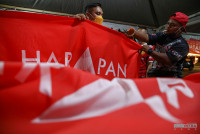
Subsequently, a few key Pakatan Harapan leaders, namely Lim Guan Eng from DAP and Mohamad Sabu from Amanah, called for a “political reset” to consolidate the strength of the 108 opposition MPs in the Dewan Rakyat.
A press statement issued by both leaders stated: “This is the reality that PH must face, the need for a political reset to focus on uniting our friends among the opposition MPs who stood by us on Tuesday. PH should not be wasting time on opportunistic government backbenchers exploiting PH for their own private benefit to get more and more lucrative deals from the PN (Perikatan Nasional) government.”
I fully support this call for a “political reset”. For me, this reset should incorporate five important elements that will strengthen the opposition bench and lead us forward together in a strategic and focused manner.
These elements are:
(i) Maintaining our position as a strong, formidable and convincing opposition until the next general election (GE15);
(ii) Negotiate a Confidence and Supply Agreement (CSA) with the federal government as part of the institutional and democratic reform process;
(iii) Nominate spokesmen from each party to play the role of check and balance for each ministry;
(iv) Provide inputs and recommendations on Covid-19-related measures across the policy spectrum; and,
(v) Prepare for the upcoming Sarawak election, and also GE15.
(i) Maintaining our position as a strong, formidable and convincing opposition until GE15
While the opposition MPs from PH, Warisan, Pejuang, Muda and independents have tried our best to play an effective role as a check and balance in the last two parliamentary sessions, the reality is that we have been inevitably distracted with discussions of the PN government losing a motion of confidence, and subsequently, being replaced by a new government.
This distraction or confusion was made most apparent in the decision at the last minute not to call for a vote by division (belah bahagi) during the conclusion of the second reading of Budget 2021.
Rather than continue to be distracted by further schemes and backroom dealings to cause the fall of the PN government and form a new administration, we should instead focus our energies on consolidating the strength of the existing 108 opposition MPs in order to form the strongest opposition bench in Malaysian history.
As much as I strongly object to the manner in which this PN government was formed, the truth of the matter is that a new government that would replace the PN government would likely not have a sizeable majority, and would be beset by the same threats of political “blackmail” that Prime Minister Tan Sri Muhyiddin Yassin is currently facing from certain leaders in Umno.
Like it or not, another change in the federal government through non-electoral means will further destabilise the political landscape in Malaysia. It will also negatively affect the nascent economic recovery, drive investor confidence in the country down further, and potentially disrupt the Covid-19-related rollout plans that have been put in place.
We should let voters decide on the next federal government at the next general election. Let the voters judge between the 22 months of the PH government and the governing record of the current PN government at GE15.
We should spend time from now until the next elections to consolidate the strength of the 108 opposition MPs, and play the most effective role of check and balance that a strong, formidable and convincing opposition bench can play.
(ii) Negotiate a CSA with the federal government as part of the institutional and democratic reform process
Once we are clear that we will maintain our position as an effective opposition, we would be in a better position to negotiate a CSA with the PN government.
A precedent has been set in Perak, where under the new menteri besar, it was decided that all state representatives will receive an equal allocation from the state government, and opposition assemblymen will be able to attend district-level committee and task force meetings.
This CSA was carried out in the interest of political stability for the state government, and also as part of a process of institutional and democratic reforms in the state.
A similar arrangement should be made at the federal level, whereby opposition MPs will receive their fair share of their constituency allocation as part of a larger package of institutional and democratic reforms.
This should include opposition MPs being invited to attend certain government meetings, such as those by the Economic Action Council, as was proposed by the prime minister in early November, and allowing opposition MPs to be invited to schools and other government institutions in their respective constituencies.
Such an arrangement will set a much welcomed precedent in terms of institutional reform for future Parliaments, so that opposition MPs and their voters are not unfairly discriminated against.
It would also provide the prime minister with some breathing room, so that he is not “blackmailed” into agreeing to demands by certain government MPs – to drop charges against them, for example – in exchange for their support in Parliament.
(iii) Nominate spokesmen from each party to play the role of check and balance for each ministry
There have been some suggestions for PH to form a shadow cabinet as part of being an effective opposition bench. Unfortunately, any such move by PH will give ammunition to irresponsible quarters, to play the race/religion card.
Such a move would cause unnecessary tension within PH, and between PH and other opposition forces such as Warisan and Pejuang. What “shadow” positions should be given to Tun Dr Mahathir Mohamad, Datuk Seri Mohd Shafie Apdal and Datuk Seri Mukhriz Mahathir, for example?
It would be better for each party to nominate key spokesmen for the various ministries. There is already a natural allocation that has taken place, with former ministers and deputy ministers “shadowing” their former ministries. Other opposition backbenchers who were previously not part of the government, too, can “shadow” the ministries they are naturally interested in.
The roles of these spokesmen can be bolstered by giving them more prominent speaking roles during parliamentary debates involving the ministries they are shadowing.
The speaker and deputy speakers should also be made aware of the role of these spokesmen, so that they stand a higher chance of being selected by the speaker to ask additional questions pertaining to the ministries they are shadowing during the question-and-answer sessions in Parliament. Joint press conferences can be held by these spokesmen on the ministries they are shadowing.
These spokesmen should be named publicly by the respective opposition parties, and coordination between the parties can take place thereafter.
(iv) Provide inputs and recommendations on Covid-19-related measures across the policy spectrum
Malaysia and the rest of the world are suffering from an unprecedented health and economic crisis as a result of the Covid-19 pandemic. The challenges have hit every single corner of life in the country and beyond. Such unique challenges require unique responses.
Opposition MPs have provided clear recommendations in specific policy areas related to the Covid-19 response.
Whether it is better data-sharing with state governments, pressuring the government to extend the loan moratorium to a larger segment of the population, setting up a rental relief fund for SMEs, setting up a constituency employment centre for those who looking for jobs, asking the government to reconsider the blanket closure of schools, or proposing an economic recovery plan for Sabah, these are just some examples of opposition MPs’ proposals of clear, alternative policy recommendations in relation to the Covid-19 crisis.
Ideally, we should be presenting clear Covid-19-related policy responses in all sectors of social and economic life, but this requires greater focus and coordination among the opposition leadership.
(v) Prepare for the upcoming Sarawak election, and also GE15
Finally, rather than be distracted by attempts to replace the PN government, opposition MPs should be focused on preparing for the upcoming Sarawak election, due to be held next year, and also possibly GE15, which may also be held in 2021.
It would be better for any election to be held off until Covid-19 vaccines are fully deployed throughout the country in order to prevent another spike in cases (as was the case after the Sabah election), but the current government may feel otherwise.
Regardless, preparations need to begin, and they will not be effective if there is still uncertainty as to whether a new government can replace the PN administration through non-electoral means in the near future.
In conclusion, a political reset led by PH does not require there to be a leadership change in PH. What it does require is a change of direction and focus given by the PH leadership.
And, it starts with building a strong, formidable and convincing opposition bench that can play an effective role of negotiating with and checking on the current government. – The Vibes, December 21, 2020
Ong Kian Ming is DAP’s Bangi MP