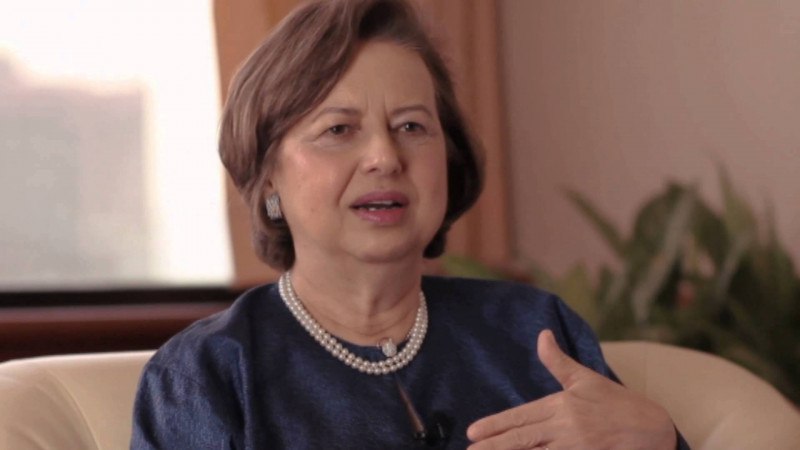
ASEAN is poised for a fundamental economic transformation amid sweeping changes in the global financial order, but the region’s ability to navigate this critical juncture will depend heavily on political will, institutional readiness, and a unified regional strategy, according to Tan Sri Dr Zeti Akhtar Aziz.
Speaking at the ‘Eminent Persons’ Dialogue: ASEAN Financial Integration in a Multipolar World’ in Kuala Lumpur on Wednesday, the former Bank Negara Malaysia Governor said the Southeast Asian bloc now faces an era unlike any before — marked by supply chain disruptions, rising job dislocation, and shifting global power dynamics — yet enters it from a position of comparative strength.
“Unlike in the past, ASEAN is now positioned from a place of strength,” Bernama cited Zeti saying, crediting over two decades of regional collaboration for laying a strong economic and financial foundation.
“Concerted efforts over the past 20 years have significantly strengthened ASEAN through enhanced regional integration and more robust networks.”
This foundation, she noted, equips the 10-nation grouping with the tools necessary to respond to global challenges — from excess industrial capacity and economic dislocation to geopolitical turbulence.
However, Zeti stressed that seizing this opportunity would require a cohesive, region-wide response, rooted in both vision and action.
“While this vision is entirely within reach, it will, however, require political will, institutional capacity, and continued public-private collaboration,” she said. “It will require investment in digital infrastructure, harmonised regulatory frameworks, and mechanisms that support financial inclusion.”
She urged ASEAN to proactively engage with emerging technologies, especially artificial intelligence, and to mobilise the region’s top talent to guide a coordinated transformation across economies.
Importantly, Zeti argued, ASEAN must aim to shape the future global financial architecture — not merely adapt to it.
“The world today is characterised by multiple centres of economic influence, and ASEAN must navigate this shifting landscape with confidence and agility to adjust,” she said.
“While recognising these realities, the region should actively shape international financial and trade norms to ensure ASEAN’s perspectives and priorities are reflected in global decision-making.”
Zeti also highlighted the importance of regional solidarity in maintaining economic resilience. Citing the Chiang Mai Initiative Multilateralisation (CMIM) as a landmark in regional cooperation, she said the mechanism symbolised ASEAN’s commitment to financial self-reliance and its capacity to act decisively in times of crisis.
“The CMIM reinforces our collective ability to respond swiftly to external shocks and to safeguard our macroeconomic and financial stability,” she said. “It stands as an assertion of regional solidarity and greater financial self-reliance.”
The CMIM, comprising all 10 ASEAN countries along with China, Japan, and South Korea (ASEAN+3), was originally established as the Chiang Mai Initiative in 2000 in the wake of the Asian Financial Crisis. It was later transformed into a multilateral agreement in 2010, doubling its funding pool from US$120 billion to US$240 billion.
Zeti added, ASEAN has to maintain its longstanding commitment to unity, economic openness, and reform.
“Vital will be the continued commitment to regional solidarity toward building a stronger, more secure, and more prosperous region,” she said. – April 10, 2025