EVEN penguins on the far-flung Heard and McDonald Islands could not escape the ripple effect of the United States' latest trade offensive, as President Donald Trump’s announcement of reciprocal tariffs sent shockwaves through the global economy.
While most countries — except China — were later spared the full brunt of the move, the damage had already taken root.
The mere announcement triggered a week of turmoil in financial markets, wiping trillions off global stock exchanges, prompting downward revisions of growth forecasts, and triggering whispers of a looming global recession.
In a sign of just how disruptive the tariffs could become, Apple reportedly dispatched five emergency flights to transport iPhones from India and China to the US, racing to beat the deadline. The desperate move underscores how multinational companies are now being forced into high-cost, high-stakes logistical gymnastics when global trade rules shift overnight.
“This isn’t just an inconvenience, it’s turbulence on a global scale,” Bernama cited in a exclusive today.
Malaysia, too, was caught in the crossfire. Initially slapped with a 24 per cent reciprocal tariff, the figure was later paused — but not without consequence. A flat 10 per cent baseline tariff remains applicable to all countries, despite Malaysia's average applied tariff rate to the US standing at 5.6 per cent.
Adding insult to injury, experts have criticised the method used by the Trump administration to determine the tariffs. The formula has been widely labelled as flawed.
“A tariff formula that doesn’t make economic sense, based on error and faulty assumptions from the outset,” said one report.
That being said, tariffs in themselves are not inherently harmful. In fact, when employed thoughtfully, they can serve a legitimate purpose.
Tariffs are essentially taxes imposed on imported goods, designed to either generate revenue for the state or protect domestic industries from being undercut by foreign competitors. This is particularly critical for Micro, Small and Medium Enterprises (MSMEs), which often find it difficult to compete with cheaper, sometimes subsidised, imports.
By raising the cost of foreign products, tariffs can level the playing field, making local alternatives more attractive to consumers and fostering the growth of homegrown industries.
However, what unfolded in the name of “Making America Great Again” has been widely condemned.
“What US President Donald Trump did in the name of ‘making America great again’ is nothing short of a bully,” the article states, echoing Prime Minister Datuk Seri Anwar Ibrahim, who described the move as a form of “megaphone diplomacy.”
While Malaysia has chosen not to retaliate directly, that should not be mistaken for inaction.
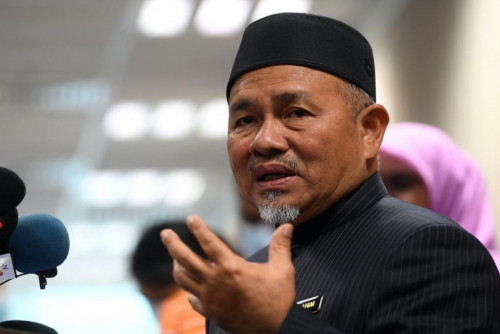
The Ministry of Investment, Trade and Industry (MITI) had been preparing behind the scenes well before the announcement, and when it came, Minister Tengku Datuk Seri Zafrul Aziz was quick to respond with clarity and calm.
The technocrat-turned-politician deployed a smart, accessible communication strategy — explaining complex economic implications in plain language on social media, while simultaneously engaging with business leaders, coordinating with authorities, and fielding difficult questions from the media without missing a beat.
Malaysia, as a highly open trading nation, will not escape this storm unscathed. But with measured and steady leadership, the country is positioning itself to navigate the crisis — and emerge stronger on the other side. – April 12, 2025