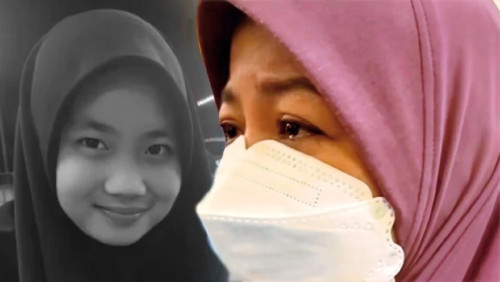
THE recent fatal bus crash in Gerik that claimed the lives of 15 students from Universiti Pendidikan Sultan Idris (UPSI) has left the country shaken — but familiar with such grief.
Each tragedy feels like déjà vu, accompanied by the same cycle of sorrow, outrage, and promises that seldom materialise.
In a Bernama exclusive commentary today, writer Nurul Hanis Izmir cited: “As someone with a younger brother studying far from home, I share the same dread many Malaysian families do when their loved ones board long-distance buses. Even a short journey in Bestari Jaya can stir unease.
“The Gerik crash has made that fear feel all too real again.”
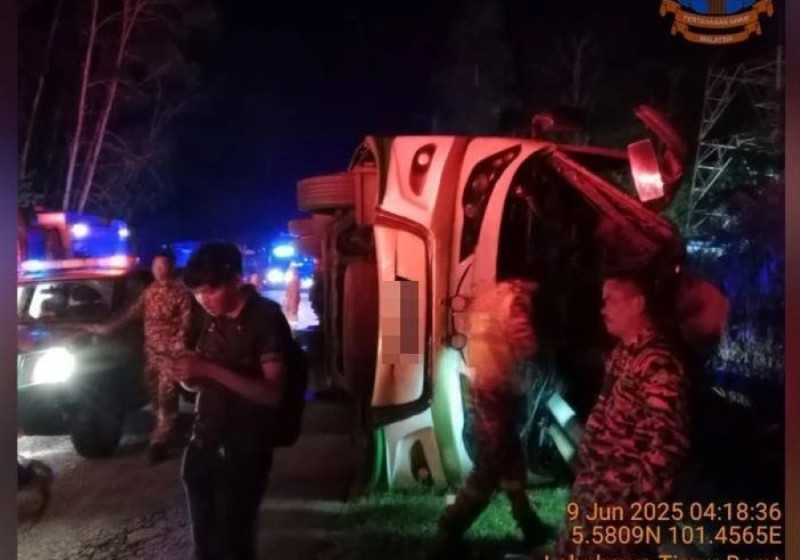
The collision took place in the early hours of 9 June on the notoriously dangerous East-West Highway near Tasik Banding. The bus, chartered to transport 42 UPSI students, collided with a Perodua Alza before hitting a guardrail and overturning. Thirteen students died at the scene; two more later in hospital. Thirty-three others, including the passengers in the car, sustained injuries.
This disaster came less than a month after a separate tragedy in Teluk Intan, where nine Federal Reserve Unit (FRU) officers lost their lives in another heavy-vehicle crash. When such devastating accidents occur in quick succession, they must be seen for what they are: systemic failures, not misfortunes.
“My own memories of perilous road travel returned sharply when I saw dashcam footage of the Gerik crash — a bus dangerously speeding downhill, overtaking on bends. Years ago, on a mountainous night route from Manali to New Delhi, I was so frightened that I messaged my family what I thought might be a final farewell. The sense of helplessness then is the same many families feel now,” she said.
Sharifah Hunaini Syed Ismail, 49, a friend of hers, used to travel the same East-West route as a student more than two decades ago. “It was like gambling with your life,” she said, recalling how she used to carry handwritten notes with emergency details and last words for her family — just in case.
“Two decades on, little appears to have changed. The 39-year-old driver involved in the Gerik incident reportedly had 18 prior traffic summonses, mainly for speeding. The bus company had unlawfully sublet its operating permit, and the vehicle’s GPS tracking system had not been activated. These are not oversights — they are breaches of the most basic safety standards.”
While the operator’s licence has since been revoked, the larger question remains: how many others are cutting corners and getting away with it?
A task force comprising the Malaysian Institute of Road Safety Research (MIROS), the Road Transport Department (JPJ), and the Land Public Transport Agency (APAD) has been established. But unless its work leads to meaningful, enforceable reform, scepticism is warranted. Past investigations have too often led nowhere.
This cannot be yet another entry in the country’s long list of missed opportunities for reform.
According to the 2024 Global Burden of Disease report, Malaysia recorded the second-highest rate of road deaths in ASEAN in 2021 — 23.7 per 100,000 people. That is one death every two hours.
What Malaysia needs is urgent, uncompromising action: stronger enforcement, mandatory vehicle inspections, transparent driver vetting, and a full overhaul of the current regulatory system, Nurul said.
One solution is the creation of a centralised digital verification platform that allows institutions to confirm permit validity and driver records in real time. This would not only close dangerous loopholes but also incentivise operators to comply with safety standards.
Another step is to make real-time GPS and speed monitoring mandatory for all chartered and commercial buses — something already done by some operators but not yet required by law. The technology exists. The challenge is not capability, but will.
Bernama cited that Associate Professor Dr Law Teik Hua of Universiti Putra Malaysia’s Road Safety Research Centre stressed the need for a phased but firm rollout of such systems, supported by government incentives. He also recommends restricting overnight bus operations on dangerous routes like the East-West Highway.
“Three key reforms must be prioritised,” he said. “First, GPS and speed monitoring should be mandatory and centrally regulated. Second, permit issuance and enforcement must be digitised and made transparent. Third, drivers must receive proper fatigue management training and adhere to strict safety protocols.”
These are not radical suggestions. They are essential measures for a country serious about protecting lives.
Public transport safety should never be optional, nor reduced to a soundbite after every tragedy. Malaysia owes its people more than condolences — it owes them action. - June 17, 2025