ASEAN must transition from working in silos to executing strategic, coordinated action if it is to remain relevant and influential in a shifting global order, according to Tan Sri Dr Munir Majid, Chairman of CARI ASEAN Research and Advocacy.
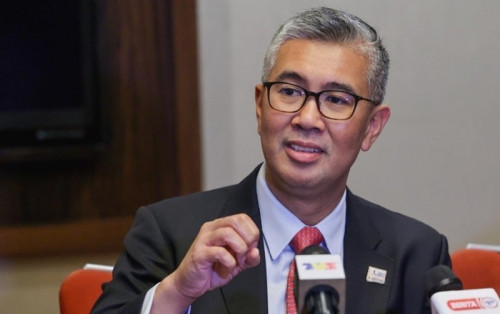
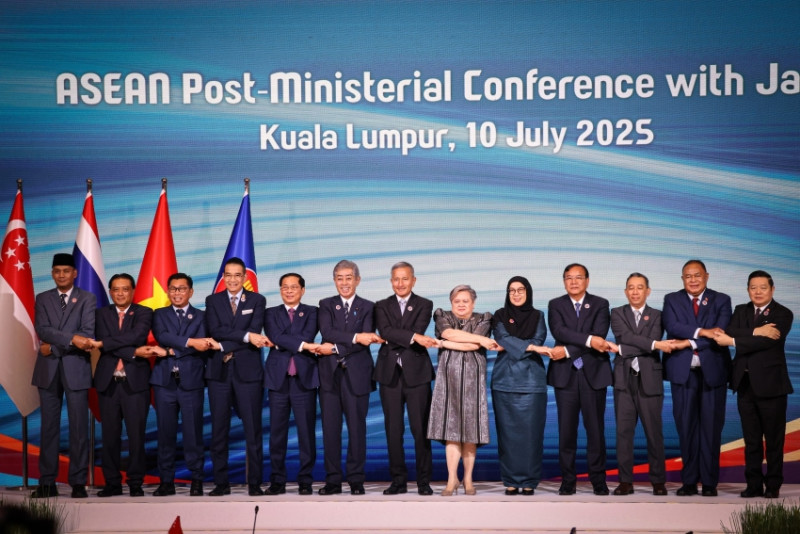
Commenting on the outcome of the recently concluded 58th ASEAN Foreign Ministers' Meeting (AMM), Munir described the 32-page, 160-paragraph joint communique as "very comprehensive", stating: “The breadth and depth of the issues covered showed that ASEAN officials were seized of the matters at hand. However, there may be one or two little potholes you could identify; but overall, it was a good document.”
The most notable development, he said, was the historic move to establish formal coordination between ASEAN foreign and economic ministers.
“This is the first time. It's a very good thing because they have not been talking to each other very much. They've been working in silos,” said the Visiting Senior Fellow at the London School of Economics’ Centre for International Affairs, Diplomacy and Strategy.
He argued that economic issues have become increasingly securitised, especially in the wake of global disruptions and escalating trade tensions, necessitating a more unified ASEAN approach.
Trade Convergence: ASEAN Must Lead with RCEP–CPTPP Strategy
Munir urged ASEAN to go beyond coordination and take a leadership role by launching a strategic initiative to bridge the Regional Comprehensive Economic Partnership (RCEP) and the Comprehensive and Progressive Agreement for Trans-Pacific Partnership (CPTPP).
“RCEP accounts for about 30 per cent of global gross domestic product, largely because of China. CPTPP, on the other hand, covers 18 per cent. Convergence between the two would be a major step towards regional economic integration.”
He proposed two possible approaches: overlapping membership and the alignment of standards. Countries such as China, which is part of RCEP but not CPTPP, could be granted accession to the latter provided they meet the necessary requirements.
“Let China join and fulfil them. Several CPTPP members have exemptions, so this shouldn’t be used as a barrier.”
Alternatively, tariff schedules, rules of origin, and other standards could be harmonised even if membership remains separate.
The urgency for such convergence has been heightened by recent US actions, particularly the invocation of “reciprocal tariffs” in April 2025. These ranged from 24 to 49 per cent on ASEAN exports, with Malaysia facing a 25 per cent levy, while Vietnam and Cambodia were hit with 20 and 36 per cent, respectively.
“While the US remains a critical player, if America chooses not to participate constructively, the region must move on,” he said, noting the Asia-Pacific’s enduring role as the world’s economic growth engine.
US Engagement: Strategic, But ASEAN Must Assert Itself
Munir welcomed the presence of US Secretary of State Marco Rubio at the AMM and East Asia Summit, saying it reflected continued American interest.
"People forget this – US investments in Southeast Asia are larger than in China, Japan, South Korea and India combined. That’s a huge interest to protect."
Nonetheless, ASEAN must not be passive. “We recognise US interests, but we too must protect ours, without being intimidated by Trump-style tactics,” he said, adding that Rubio appeared more open to dialogue.
Difficult Issues: Myanmar, Border Tensions, and Maritime Security
Addressing humanitarian crises, Munir acknowledged ASEAN's support for ceasefire efforts in Gaza, although the bloc stopped short of condemning Israeli actions as genocide.
On Cambodia-Thailand border tensions, he noted that ASEAN opted for a call to cease hostilities rather than assign blame, owing to the sensitivity of the dispute.
Munir also raised concerns about illicit ship-to-ship transfers in the region, warning that such activities require stronger enforcement collaboration.
On Myanmar, he expressed frustration with the lack of progress but welcomed the upcoming visit in September by Foreign Minister Datuk Seri Mohamad Hasan and four other ASEAN counterparts.
“That’s good. We have to be active in trying to heal this wound,” he said, while supporting the efforts of ASEAN’s special envoy Tan Sri Othman Hashim.
South China Sea and Nuclear-Free Commitment
Turning to the South China Sea, Munir said ASEAN must accelerate the conclusion of a long-overdue Code of Conduct (COC), now in its third reading.
“It’s been over two decades. I hope something actually materialises soon. Whether legally binding or not, a COC should govern behaviour. If you break the code, you break the code.”
He also urged ASEAN to reassert the region’s nuclear-weapon-free status under the 1971 ZOPFAN declaration. - July 14, 2025