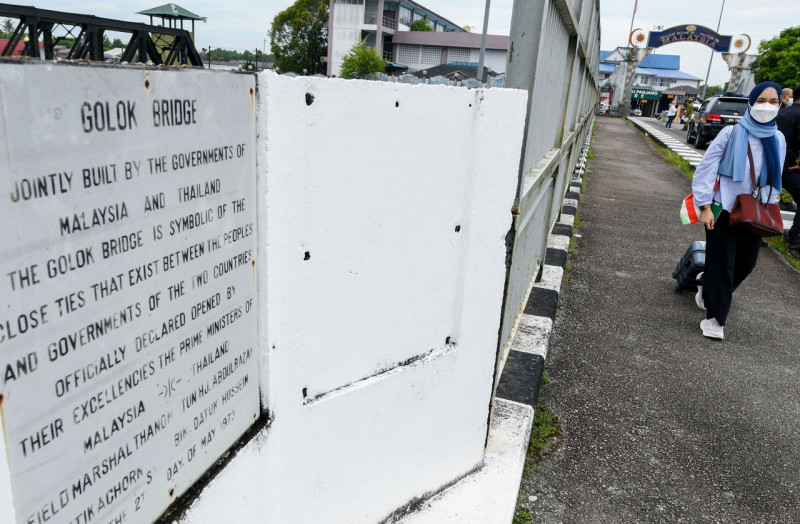
THE fatal shooting of Malaysian national Mohd Fuad Fahmie Ghazali, 33, who was killed by 18 gunshots in Kampung Bering, Sungai Golok, Thailand, on Saturday has once again underscored the persistent security challenges faced by communities along the Malaysia–Thailand border.
Criminologist from Universiti Utara Malaysia (UUM), Dr Zalmizy Hussin, said the border region remains a “hotbed” for various forms of transnational crime, including the smuggling of firearms, drugs and human trafficking.
He noted that statistics from the first half of 2025 reveal thousands of arrests and seizures linked to smuggling operations along the border, highlighting the extensive criminal networks operating in the area.
“What is worrying is that easy access to illegal firearms can completely alter the security landscape.
“If such weapons are easily obtained by individuals seeking to settle personal or group disputes violently, a culture of resolving conflicts through aggression can quickly take root.
“This situation is not confined to high-profile cases but could spread to minor incidents — such as local fights, debt disputes or community tensions — ultimately increasing the rate of armed crime in the long term,” he told *Sinar Harian* on Monday.
Dr Zalmizy said such incidents call for swift and decisive action by authorities, including intensified patrols, tighter border surveillance and stronger regional cooperation to prevent firearms from filtering into society and threatening the peace of border communities.
“Border communities that should be peaceful and stable can suddenly turn into high-risk zones, where individuals and families live in constant fear and anxiety.
“This fear not only reduces quality of life but also disrupts local economic and social activity,” he said.
He stressed that authorities must pay attention to early warning indicators such as rising reports of small-scale armed conflicts, discoveries of illegal weapons, and the emergence of new groups seeking influence in border areas.
He added that this required rigorous monitoring, cross-border cooperation and advanced surveillance technology at both official checkpoints and informal routes.
“Beyond enforcement, community engagement is vital to managing and mitigating these risks.
“Active participation by local residents in reporting suspicious activities, along with support for crime prevention programmes, can form the first line of defence in safeguarding border security,” Dr Zalmizy said. - November 4, 2025