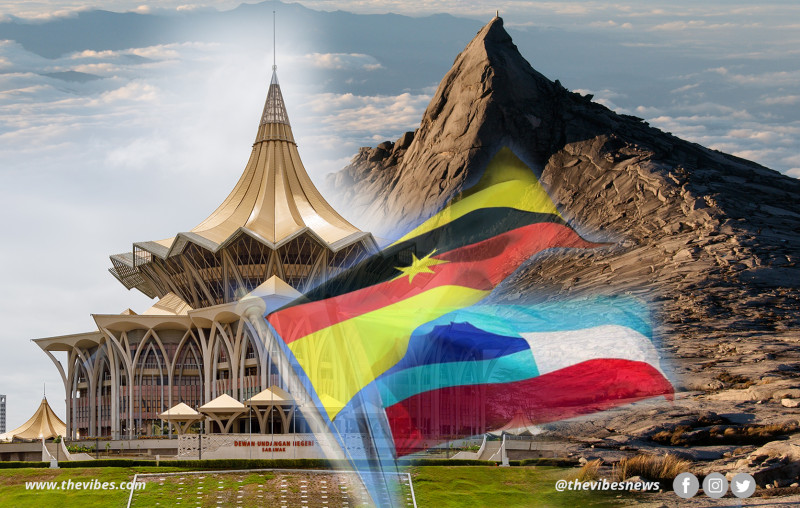
POLITICAL Analysts view the upcoming 17th Sabah state election (PRN17) as a crucial test of the influence of young voters in determining the state’s political direction.
According to the 2024 Master Electoral Roll and the August 2025 Supplementary Roll, Sabah has 126,979 voters aged between 18 and 20, and another 406,950 aged between 21 and 29, out of a total of 1.78 million registered voters across 73 state constituencies.
Universiti Malaysia Sabah (UMS) fellow, Associate Professor Dr Bilcher Bala, said the sizeable youth demographic could play a decisive role in shaping voting patterns, particularly in marginal, urban, and semi-urban constituencies.
However, the member of the National Historian Council noted that their impact would depend not only on numbers but also on their level of political awareness, mobilisation, and the clarity of narratives offered by political parties.
“In the post-Undi18 landscape, young voters are increasingly inclined to evaluate candidates based on personality and competence rather than party loyalty,” he said. “Therefore, candidates who can connect directly with young communities and offer concrete solutions to issues affecting them stand a good chance of generating a new wave of support.”
The Election Commission (EC) has set 15 November as nomination day for the Sabah polls, with early voting scheduled for 25 November and polling day on 29 November.
The Undi18 law, which came into effect in December 2021, automatically registers citizens aged 18 and above as voters. This makes PRN17 the first major test of how Sabah’s young electorate will shape the state’s political future.
Bilcher said candidates hoping to appeal to young voters should focus on issues rooted in their everyday realities, such as job opportunities, local economic empowerment, and access to essential infrastructure like roads, internet connectivity, and affordable housing.
He added that broader issues — including the restoration of Sabah’s rights under the Malaysia Agreement 1963 (MA63), administrative transparency, and youth participation in policymaking — could also have a significant political impact.
Meanwhile, UMS senior lecturer Dr Haryati Abdul Karim argued that while young voters represent a growing force, they may not yet bring a political “tsunami” to Sabah’s electoral landscape.
“The proportion of voters under 30 is only about 30 per cent compared with 70 per cent above that age group, so it is difficult to say they can dramatically shift Sabah’s voting patterns,” said the researcher with the Centre for Election and Geopolitical Studies of Borneo (GeoPES).
Haryati noted that her research showed young voters in Sabah tend to choose based on the candidate rather than party affiliation and that many have no strong political allegiance.
“What young voters emphasise most is leadership that can truly develop Sabah and solve basic problems that still affect their lives, such as public amenities, employment opportunities, affordable housing, and the cost of living,” she said.
To win their support, Haryati said candidates must bring new ideas and a clear vision for Sabah’s development, as youth voters evaluate both candidates and parties by their record of governance.
Based on interviews with young Sabahans, she said many expressed frustration over persistent infrastructure issues in their areas and a lack of meaningful progress — sentiments that could push them to favour new faces in politics.
Her research also found that young voters were sceptical of political campaigns run on social media platforms such as TikTok. “They prefer face-to-face engagement where they can personally assess the candidate’s character,” she added. - - November 4, 2025