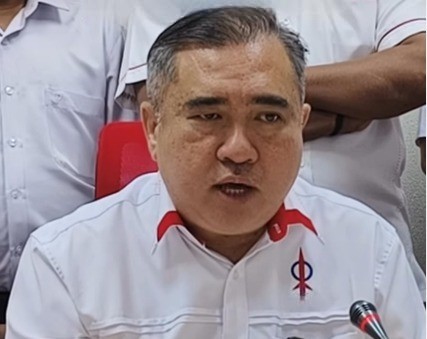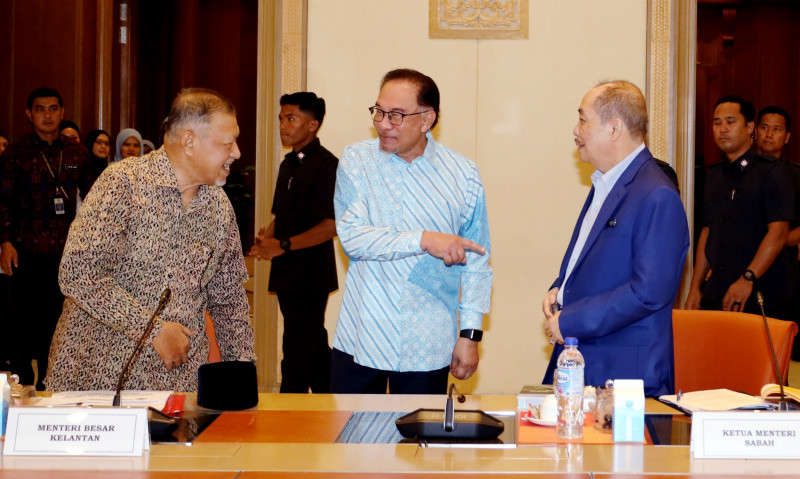
SABAH’S political arena is becoming increasingly congested as the state heads into what is expected to be a highly competitive election, with every one of its 73 constituencies set for multi-cornered contests.
Several seats are poised for 10- or 13-way races, and none is expected to feature fewer than six contenders.
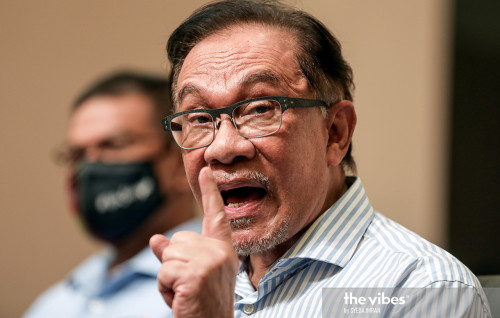
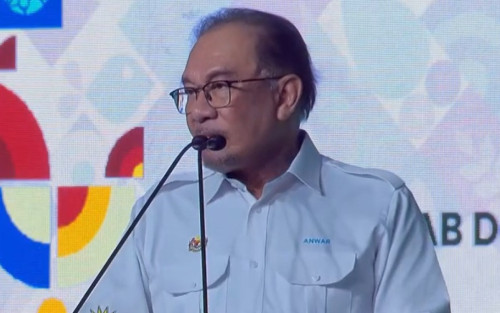
Prime Minister Datuk Seri Anwar Ibrahim remarked last Sunday that Sabah is “unique” for having “the most parties in the world”, underscoring the unprecedented number of factions on the ballot.
Yet analysts believe that despite the breadth of contestants, only a few blocs are genuinely positioned to form the next government.
The Gabungan Rakyat Sabah (GRS)–Pakatan Harapan (PH) coalition, led by caretaker Chief Minister Datuk Seri Hajiji Noor, heads into the polls as the largest bloc.
GRS comprises Parti Gagasan Rakyat Sabah (PGRS), Parti Bersatu Sabah (PBS), Parti Cinta Sabah (PCS), United Sabah National Organisation (USNO), Liberal Democratic Party (LDP) and Parti Harapan Rakyat Sabah (PHRS), while PH brings in DAP, PKR and Amanah.
Though PGRS and PBS are expected to contest the bulk of GRS seats, PKR has taken the lead among PH parties despite DAP’s stronger urban base.
The alliance is campaigning on continuity through its “Sabah Maju Jaya” agenda and highlighting stability fostered by its partnership with the federal unity government.
Even so, it faces mounting discontent over water shortages, blackouts, stalled projects and ongoing fallout from corruption allegations tied to a mining scandal. Hajiji is also under scrutiny, with critics arguing he has grown increasingly susceptible to federal influence, particularly as Anwar expands PKR’s footprint in the state.
The coalition’s cohesion was further questioned after two GRS incumbents opted to contest under PKR with GRS’s blessing, following earlier exits of STAR, SAPP and Upko.
Anwar’s stepped-up presence in Sabah — coupled with a viral public exchange over the state’s constitutional right to 40 per cent of federal revenue — has sparked concerns that federal leaders may not fully appreciate Sabah’s priorities.
Barisan Nasional and Pakatan Harapan remain formal partners in the federal unity government, yet operate with complicated dynamics in Sabah, where PH simultaneously cooperates with GRS.
Sabah Umno, led by Datuk Seri Bung Moktar Radin, has been openly critical of the GRS administration since their split in 2023.
The BN–PH arrangement could strengthen federal influence in Sabah, but risks alienating voters who prefer state-based leadership and minimal peninsular interference.
BN’s “Bikin Balik Sabah” campaign centres on tackling long-standing infrastructure failures and improving governance. BN is contesting mainly in Muslim-majority rural seats, DAP in urban constituencies and PKR in mixed areas.
Meanwhile, Parti Solidariti Tanah Airku (STAR) and Sabah Progressive Party (SAPP) withdrew from GRS shortly before the State Assembly was dissolved, declaring they would contest independently. Datuk Seri Jeffrey Kitingan and Datuk Yong Teck Lee argue that Sabahans are ready for a government made up entirely of local parties.
STAR claims its exit reflects grassroots frustration with excessive federal influence, though it has suffered major blows with five of its six state assemblymen defecting to support Hajiji.
While the move may further fracture the Kadazandusun Murut vote, STAR retains influence in strongholds such as Keningau and Tambunan.
Warisan, led by Datuk Seri Mohd Shafie Apdal, is again contesting solo after past coalition experiments. Once the largest opposition bloc, the party has seen defections reduce its tally from 23 seats to 14.
Under its “Save Sabah” banner, Warisan is campaigning on autonomy, infrastructure and rising living costs — issues that resonate in Semporna, Lahad Datu and urban centres grappling with water cuts, blackouts and ongoing corruption controversies.
The party’s challenge lies in recovering ground in KDM-majority seats where competition has intensified.
The United Progressive Kinabalu Organisation (Upko) drew attention by withdrawing from PH days before nomination, citing disagreements over Sabah’s rights. Its president, Datuk Ewon Benedick, has been praised for prioritising state autonomy over federal alignment.
However, Upko’s organisational reach remains limited compared with PBS and STAR, especially in interior districts. Even so, Ewon — seen as a rising leader — could emerge as a key post-election figure if he galvanises young voters demanding stronger advocacy for Sabah’s rights.
Parti Kesejahteraan Demokratik Masyarakat (PKDM), under Priscella Peter, is positioning itself as a middle-ground option between GRS and Warisan. The party’s influence is bolstered by leaders such as Datuk Wetrom Bahanda and former DAP chairman Datuk Frankie Poon.
Well-funded and strategically placed, PKDM could play spoiler roles in seats such as Tenom, Kota Marudu and Sandakan.
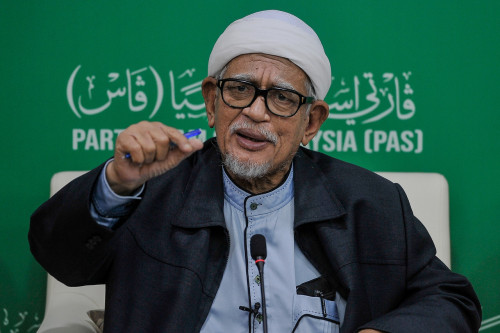
Perikatan Nasional, led by Bersatu and PAS, retains only a small foothold in Sabah following the departure of its former local components. Nevertheless, it is contesting widely, banking on national machinery and conservative appeal.
Its biggest barrier remains relevance: Sabah voters have historically rejected peninsular-centric platforms. Datuk Ronald Kiandee is PN’s strongest candidate in Sugut, though he faces significant local competition. PAS continues to face entrenched resistance among Sabah voters.
A growing slate of independent candidates, known as the “Black Wave”, led by Kudat MP Datuk Verdon Bahanda, is tapping into anti-establishment sentiment.
Verdon, steering a group of 17 independents, promises clean governance and a politics free of party patronage. While their chances of winning multiple seats are uncertain, independents could influence results in tight constituencies.
With only a small number of safe seats, Sabah is heading into one of its most volatile state elections in recent memory. GRS enters with numerical strength, but local issues and personality-driven contests are likely to outweigh any broad statewide trends.
PH, although not dominant within its coalitions, has positioned itself to wield significant post-election leverage depending on the distribution of seats.
While outcomes remain uncertain, all signs point to Sabah once again being governed by a multi-party coalition — the question being which combination of parties will ultimately form it. - November 15, 2025