WITH the 17th Sabah General Election just days away, voter sentiment is beginning to reveal the likely trajectory of the contest.
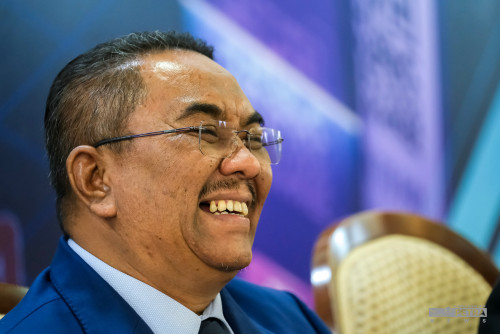
Former Parti Cinta Sabah (PCS) Secretary‑General Mohd Ustar Abdul Ghani said a mix of national issues, domestic priorities, political affiliation, and local concerns are shaping electoral outcomes, with voting patterns strongly influenced by urban, suburban, and rural constituencies.
Gauging from the mood on the ground and recent campaigning, it seems the state’s local mainstream political parties remain firmly in contention to form the next government, contrary to earlier predictions of a national party surge.
Political observers predict that leaders of Warisan, GRS, STAR, UPKO, and UMNO are likely to retain their respective seats.
Parti Bersatu Sabah’s President, Joachim Gunsalam, however, faces stiff competition from a PKDM candidate in Kundasang, with the outcome to be confirmed on polling day.
Warisan is expected to maintain its stronghold along Sabah’s east coast and is predicted to make inroads into constituencies previously held by UMNO and GRS.
In certain Chinese-majority constituencies, Warisan appears to have gained traction, potentially capturing seats formerly held by the PH-DAP alliance.
Overall, Warisan is projected to secure 26 seats across urban, suburban, and rural areas.
Mohd Ustar told the Jesselton Times today that he expects GRS and UMNO to retain most of their existing seats, though some losses are anticipated.
In 2020, GRS won 11 constituencies and UMNO 14; current projections suggest GRS may drop to eight seats, while UMNO could fall to nine.
Analysts also anticipate a vote swing in at least 16 constituencies, particularly in the Momogun heartland, which may benefit PKDM, potentially granting it five seats.
Chinese-majority constituencies are showing shifting allegiances, with voters increasingly inclined to “join the ship,” a reference to Warisan.
Eight constituencies previously divided between DAP and PKR—six for DAP, two for PKR—are likely to see changes as campaigning concludes.
Despite these trends, 23 constituencies remain highly unpredictable.
These include Chinese-majority areas such as Api-Api, Luyang, Sri Tanjong, Elopura, and Merotai, where incumbent Saifuddin Hatta will face Datuk Seri Anwar Ibrahim’s handpicked candidate, Ruji Ubi.
Warisan will contest 14 of these volatile constituencies against GRS, PKDM, or PH. Winning at least 13 of these seats is crucial for Warisan to secure a simple majority; otherwise, a hung assembly—and potentially a unity government—looms.
Among the mainstream parties, PBS and STAR face particularly difficult prospects.
PBS, which previously won seven constituencies, is predicted to lose Tamparuli, Kiulu, and Matunggong to PKDM, with Lumadan expected to fall to Warisan.
Kundasang, Telupid, and Tandek remain uncertain, potentially going to PKDM, GRS, or UPKO. STAR, holding six seats, may retain Tambunan, but Paginatan is projected to go to PKDM and Liawan to Warisan, while Bingkor, Tulid, and Sook remain closely contested.
UPKO’s Ewon Benedick is expected to win Kadamaian, while Wilfred Madius Tangau faces a challenging contest in Tamparuli against PKDM.
The much-discussed “Black Wave” has largely failed to materialize, analysts said.
Verdon Bahanda is expected to mount a fierce contest in Tanjong Kapor against a Warisan candidate, but other predictions suggest limited success.
Ultimately, Sabahans appear determined to elect a government capable of delivering dynamic and efficient leadership over the next five years.
Whether the ideals of “Sabah for Sabahans” or “Sabah First” will resonate sufficiently with voters will only be revealed on 29 November 2025.
Current projections indicate Warisan securing 26 seats, UMNO nine, GRS eight, PKDM five, STAR one, and UPKO one.
The outcomes of 23 constituencies remain uncertain, and the final tally will determine whether a single-party majority government emerges or a coalition becomes necessary. - November 26, 2025