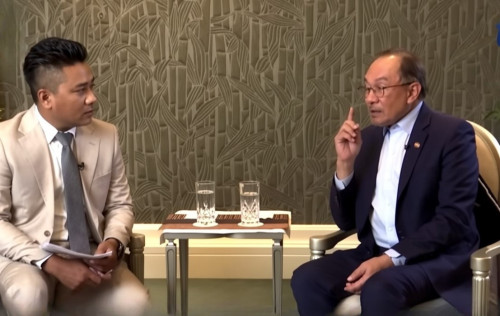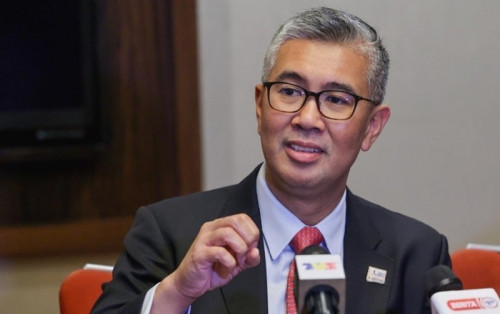
SINCE assuming office as Malaysia’s 10th Prime Minister in November 2022, Datuk Seri Anwar Ibrahim has overseen a series of policy initiatives, including targeted aid, subsidy restructuring, cost-of-living interventions, Rahmah initiatives, and institutional reforms, all amidst challenging fiscal conditions and persistent political pressures.
Yet despite the flurry of announcements, a significant portion of the public continues to feel that these measures have yet to make a tangible difference in their daily lives.
Analysts describe this as a modern political paradox: policies exist, implementation is underway, but the perceived impact is not reaching the populace.
“The core issue facing the government today is not a lack of policy or weak implementation, but a failure of effective communication between the authorities and the people,” wrote Suwadi Guliling, Deputy Director (Community Communications) at the Department of Community Communications (JKOM).
“The government speaks in the language of policy, fiscal rationale, and statistics, while the public thinks in terms of daily life — prices, utility bills, living costs, employment opportunities, and confidence in the future.”
He noted that many policies are rolled out at times when citizens are already under emotional and economic strain, meaning even accurate messages can be perceived as insensitive or disconnected from reality.
“This is not a question of policy content, but the alignment between communication and societal sentiment,” he added.
The challenge is further compounded in the era of unrestricted information. Every decision is scrutinised, every shortcoming amplified, and every misstep recycled in rapid news cycles.
When government communication becomes overly technocratic, intended messages of reassurance can instead create distance.
Citizens may not reject policies because they are flawed, but because they fail to see how they relate directly to their lives.
Excessive reliance on digital channels has also contributed to the gap. Not all citizens are active on social media or follow official briefings and infographics.
Many form opinions in everyday spaces — in markets, workplaces, religious centres, and family chat groups. Without consistent grassroots and offline engagement, emotional and informational voids are left for speculation and frustration to fill.
Compounding this, responses to criticism are often defensive, focusing on correcting facts or defending decisions.
“The public is not seeking counterarguments, but recognition of their struggles,” Guliling observed. “When emotions are met solely with data, the government appears distant, even with the best intentions.”
He emphasised that citizens do not expect miracles. They understand fiscal constraints, national debt, and global challenges.
What they seek is honesty, understanding, and inclusion. “When people understand why decisions are made, gaps can be tolerated. When left guessing, disappointment grows,” he wrote.
According to Guliling, the Madani government still has both time and opportunity to close this divide.
Effective change begins with recalibrating communication — listening before explaining, acknowledging emotions before defending policies, framing human stories alongside statistics, and balancing digital outreach with on-the-ground engagement.
“In governance, citizens do not merely wish to be ruled correctly, they want to be understood sincerely. Between policy and public sentiment lies the future of trust,” he concluded. - December 16, 2025