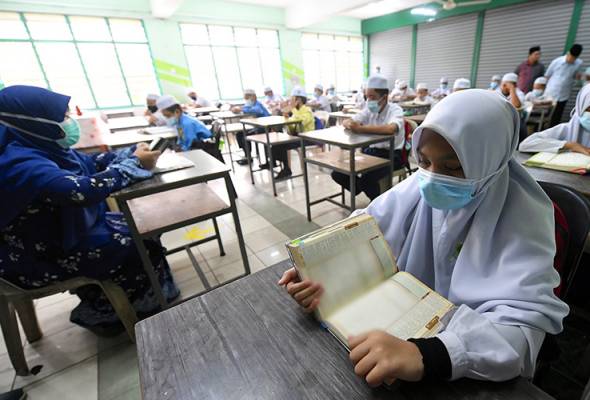
IN a nation that frequently champions its aspiration for a “world-class education system”, any retreat from reform is widely seen as a serious misstep.
Yet the growing push to revive UPSR and PT3 suggests that when pressure builds, Malaysia may still be inclined to fall back on familiar approaches rather than persevere with change.
The core question is a simple one.
When a new system is not yet perfect, does that justify abandoning it entirely and reverting to the old?
Education, after all, is not a racing circuit where a swift U-turn resolves underlying problems. It is a long-term endeavour aimed at nurturing human potential and preparing future generations.
The debate has been likened to abandoning a 5G smartphone and reverting to 4G merely because of technical issues.
The comparison underscores a flawed line of reasoning. School-Based Assessment, or PBS, is still relatively young and has yet to reach full maturity. That reality calls for improvement and refinement, not outright rejection.
This perspective aligns with the views of the National Union of the Teaching Profession.
Its president, Aminuddin Awang, has cautioned that PBS remains in a consolidation phase and that its effectiveness cannot yet be conclusively judged.
His remarks point to the need for patience and measured enhancement, rather than abrupt policy shifts driven by those outside the education profession.
More broadly, the global education landscape has evolved. Academic excellence is no longer defined solely by an ability to memorise textbooks.
Contemporary education systems prioritise critical thinking, innovation, communication skills and meaningful social interaction. Judging success purely through examination results is increasingly seen as an outdated approach that does not reflect the demands of the future.
At its heart, this debate is not merely about examinations.
It is about the courage to make decisions with a long-term vision and to stand by them.
If the system continues to make repeated U-turns, the question becomes unavoidable: when will Malaysia ever reach its intended destination in education reform? - January 12, 2026