By Datuk Ismail Yusop
EACH time education becomes a public issue, reactions tend to be deeply emotional. Some respond with optimism and hope, others with anxiety and resistance. In reality, both reactions stem from the same source: a shared desire to ensure that the future of the nation’s children is set on the right path.
Debates surrounding the National Education Plan 2026–2035, including related issues such as Year One school admissions, should therefore be viewed beyond the noise of immediate polemics. What is often overlooked is that the effort to design a long-term national education plan is not new.
Discussions on the need for a comprehensive education blueprint have taken place over many years through consultations, studies and engagements involving ministries, relevant agencies, educational institutions and educators themselves.
On that basis, it is difficult to accept claims that the National Education Plan was drafted hastily.
One important fact must be clearly understood. This blueprint does not belong to any individual minister. It is a policy document.
While the Minister of Education provides leadership and strategic direction, the actual implementation of the policy is carried out by professional practitioners within the education system.
Within the education community itself, there are diverse schools of thought on the best approach to teaching and learning. Some favour traditional academic models, others support progressive pedagogy, while many emphasise skills-based education.
The National Education Plan should therefore be seen as an attempt to find common ground among these perspectives, following a process of reflection and maturation.
The plan does not promise perfection. Rather, it offers a broad framework as a shared guide.
Supporting an education blueprint does not mean ignoring its weaknesses. It means recognising the need for a national compass, while at the same time demanding implementation that is more coherent, transparent and effective.
Much of the criticism voiced so far relates less to the plan itself and more to issues of execution, communication gaps or uneven levels of readiness.
These concerns are real and cannot be dismissed. However, they should not be interpreted as grounds to reject the entire plan.
In a system involving thousands of schools and hundreds of thousands of teachers, a gap between policy intent and on-the-ground reality is almost inevitable.
What distinguishes a mature system from a failing one is the willingness to acknowledge and correct that gap.
Ultimately, any form of education reform must return to the most fundamental foundation of Malaysia’s education system: the National Education Philosophy.
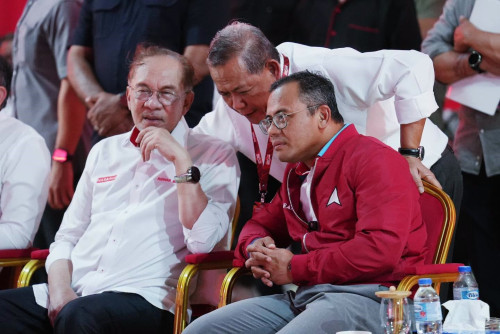
This philosophy was formulated when Datuk Seri Anwar Ibrahim served as Minister of Education.
It emerged from the recognition that education cannot be built solely around economic needs or market demands, but must be centred on human development.
The National Education Philosophy affirms that education is a process of developing human potential in a holistic and integrated manner, encompassing intellectual, spiritual, emotional and physical dimensions.
In other words, the goal of education is not merely to produce efficient workers, but to nurture thinking individuals of character who are responsible to their faith, society and nation.
Within this framework, the National Education Plan should be assessed on the extent to which it remains faithful to that philosophy.
As long as these core principles are upheld, differences of opinion over approaches and implementation mechanisms should be welcomed as part of a healthy process of improvement.
Education reform is not about who is right or wrong. It is a long journey that demands patience, wisdom and the courage to change.
What the public needs today is not promises of perfection, but confidence that every reform is undertaken thoughtfully, gradually and with the best interests of Malaysia’s children at heart.
*Datuk Ismail Yusop is Director-General of the Department of Community Communications (JKOM), Putrajaya.