IN the wake of the recent “meat cartel” scandal, I urge the government to face up to the abuse of the approved permit (AP) system and review the current mechanism of using it for food imports.
The government must formulate post-pandemic strategies to achieve food security in order to reduce our reliance on imported food and prevent a food crisis.
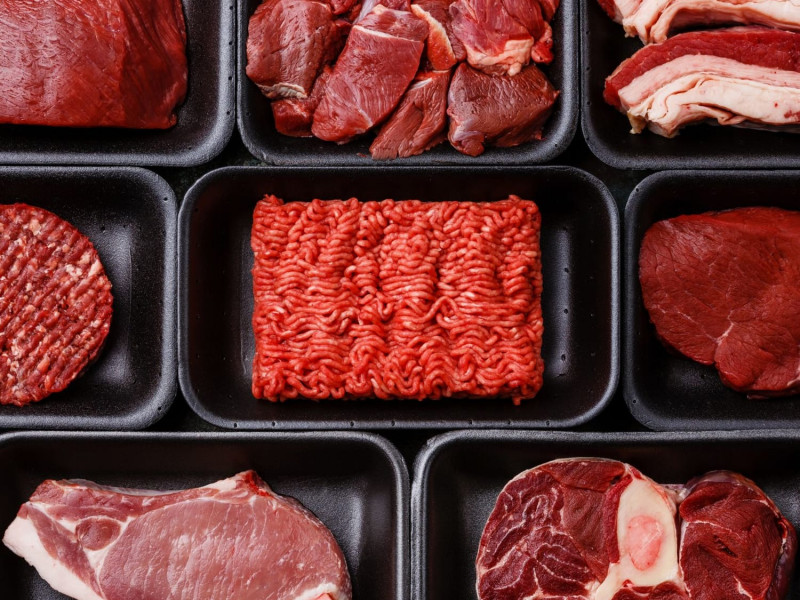
Recently, New Straits Times reported that a meat cartel syndicate had been exposed for forging halal documents and abusing APs to smuggle frozen meat before repackaging the meat with the halal logo at a warehouse.
The meat cartel bribed relevant senior officers with money and even sex in order for them turn a blind eye to the cartel’s operation, from slaughter, import, and customs clearance to sales.
The meat cartel scandal proves that the extremely flawed AP mechanism for food import can be easily abused, and has become a breeding ground for corruption.
The AP system has not only eroded the people’s confidence in food safety, but also brought about severe repercussions to the development of local small- and medium-sized agriculture businesses.
First, the government must acknowledge that the AP system for food imports has deviated from its original purpose, and is seriously jeopardising food security as well as increasing the cost of living for low-income groups.
The government initially introduced APs to allow a small number of individuals or companies to intervene in economic activities in various fields by importing a specified amount of goods, such as vegetables and meat from abroad.
The original intention was to stabilise market supply and demand as well as prices. However, because the AP application and approval processes have not been transparent, compounded by the lack of tracking and monitoring mechanisms, the AP system eventually became a hotbed for rent-seeking activities and corruption.
Based on the Market Review on Food Sector in Malaysia report published by Malaysia Competition Commission in 2019, only well-connected food importers can easily obtain APs and engage in rent-seeking businesses by selling their quota of food imports to other importers at a high price for profit.
This not only affects the overall competitiveness of the agricultural and food industry, but also sidelines local small and medium companies. Consequently, it will exacerbate Malaysia’s food trade deficit and capital outflow.
The meat cartel has exposed various flaws of the AP mechanism for food imports. Therefore, the government must set up a special, independent task force to thoroughly investigate its flaws, and identify and severely punish relevant units and individuals who are involved in abusing the system.
Apart from that, the government must review application and approval processes to ensure that the AP mechanism for food imports will increase Malaysia’s food self-sufficiency rate to 100%, to guarantee national food security.
Second, the government must manage the country’s food security problems by disallowing food to be imported freely, which can ravage the domestic market, and reviewing APs for food imports that have turned into money-making tools for a small number of individuals.
Based on the same report, the self-sufficiency rate of round cabbage has dropped sharply by 42% from 2014 to 2017. It was due to a few factors, including the merciless demolition of unlicensed farms in Cameron Highlands by the government, and the increase in labour and production costs.
Unfortunately, even consumers did not benefit from the influx of cheap imported cabbage as it completely disrupted the market, leading to an increase in the market price of cabbage in recent years.
Obstacles to food supply and circulation due to human error will inevitably bring about severe challenges to regions and countries that depend on food imports.
In order to ensure that local food supply remains sufficient during the Covid-19 pandemic, many countries, including China, Russia, Vietnam, Egypt, and India, have restricted or even halted food exports.
Because the global food supply chain is greatly affected, countries that rely heavily on food imports are trapped in limbo, with lower-income groups being the first to bear the brunt.
The interruption of global trade and national lockdown measures have also increased the difficulty in transporting agricultural products into the market, processing plants and ports.
In some cases, when some cities face food shortages, much food is left to rot in the fields in rural areas. It was also reported that when it became more difficult for agricultural products to be transported to processing plants and the market, a large number of farms even had to dump or destroy milk and fresh food.
Regardless of whether the AP policy was introduced in good faith, the scandal has proven that it only allows a small number of importers to import food for profit, yet jeopardises the interests of most small and medium farmers.
When a small number of companies are given special rights to import food, the prices of agricultural products from small and medium farmers will inevitably be affected, thus making it difficult for farmers to earn stable incomes.
Also, when a small number of individuals can easily import food to monopolise the market and trample on the livelihoods of local small and medium farmers, it is foreseeable that more farmers will have no choice but to gradually give up agricultural activities because of the increasing difficulty in competing with well-connected individuals.
In the long run, this will even affect the development and transformation of local agriculture, and hinder the country’s efforts to achieve the strategic goal of food security. As a result, our country will be doomed to continuously rely on foreign food, which will exacerbate the food trade deficit and seriously jeopardise our national interests.
Third, the government must immediately promote collaboration between different ministries (particularly the three main ministries – Agriculture and Food Industry Ministry, Domestic Trade and Consumer Affairs Ministry, and Finance Ministry) and private enterprises.
Such collaboration will help the government formulate long-term strategies, revise the AP policy that stifles domestic economic activities, and assist domestic small and medium farmers to increase production and gradually transform their agricultural activity.
Cooperation between the key players in agriculture will help our country reduce dependence on imported food and achieve the goal of national food self-sufficiency while improving the quality and international competitiveness of local agricultural products.
Since Malaysia is a developing country, with most citizens in B40 groups, the vulnerable groups will be the most affected once food prices fluctuate. Also, as poverty has worsened since the pandemic broke out, the food crisis will ultimately lead to social instability.
The meat cartel scandal has gone beyond the issue of halal certification, and is a concern to the food safety and security of the country. This issue has exposed intertwined corruption, fraud, and loopholes within and between various departments and agencies.
For the sake of guaranteeing the health of all citizens, the government must set up a commission of inquiry in order to thoroughly investigate the issue and uncover all syndicates behind the scandal.
The government must be fully prepared for potential food crises, promote the development and application of agricultural innovation, enhance food production capacity and capabilities in disaster prevention and reduction, assist and support small and medium farmers, guarantee an unimpeded local food supply chain, and promote food self-sufficiency at all levels with cooperation from each and every citizen. – The Vibes, January 2, 2021
Chiong Yoke Kong is the Tanah Rata assemblyman and DAP Youth deputy chairman