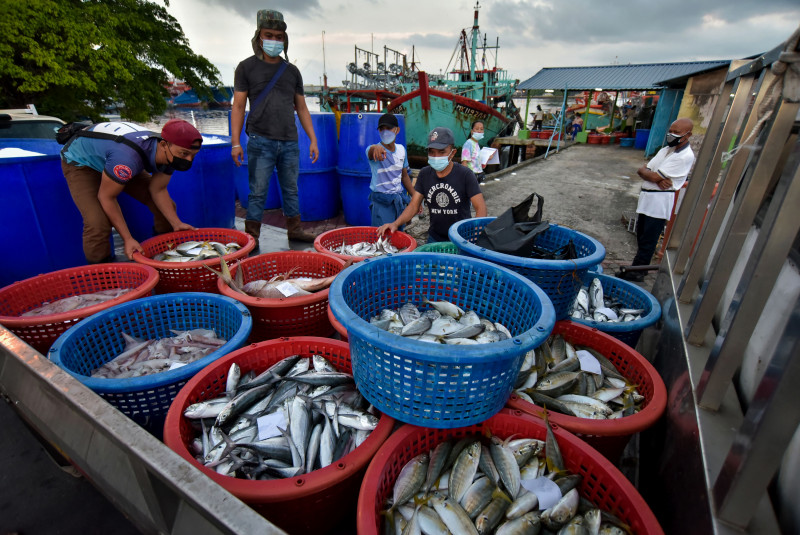
TO improve food security in the state, the Sarawak AG's Chambers is finalising an Ordinance for the creation of its own Fisheries Department, said the Minister for Food Industry, Commodity and Regional Development.
According to Datuk Seri Dr Steven Rundi Utom, the creation of its own Fisheries Department is among several measures being taken to enhance food security in the state.
"We expect the Ordinance to be tabled either during the May or November State Legislative Assembly sitting," he said as reported by Borneo Post.
He said the Ordinance was important for the state to have its own authority to tap the resources located along the shores of Sarawak.
"We need to make sure that we are able to take advantage of our natural resources and exploit them further to contribute to the increase of revenue in Sarawak," he said.
He said the state could not rely on the Fisheries Development Authority of Malaysia (LKIM) to do everything, adding that Sarawak has its own ways of managing resources.
He pointed out Sabah already has its own state fisheries department, which will be used as an example for Sarawak.
“This also has got to do with other things, especially our continental shelf and MA63 (Malaysia Agreement 1963). All of these must be resolved. So, once that’s done, we move forward,” he said.
Dr Rundi also said that the ministry is considering having mills for all high value crops and industries.
“When we look at the supply chain, always our farmers in Sarawak, in particular, stop halfway. We are only able to produce. Then we stop there. We don’t go into downstream processing and so then we have problems in the market.
“The situation should have been like when you plant pineapple, there would be processing mill or factory ready. You plant coconut, there’s a factory ready. If you plant something like a seasonal fruit, especially rambutans, there’s no factory.
“By the time the season is at the peak, you can only see miserable returns. From RM100 becomes even 50 sen per kilo. So, these are the things that we must look into, especially in our ministry,” he explained, adding he came up with the idea based on the business-driven oil palm industry.
On the self-sufficiency level for livestock, he said it is very low at 13 per cent.
Therefore, the state has to increase livestock production by 2030 to at least 25 per cent to improve food security, he added. - April 14, 2025