THE internal warfare paralysing Malaysia's opposition coalition has burst into the open with an unprecedented demand from Bersatu information chief for PAS to voluntarily exit Perikatan Nasional (PN).
This public condemnation exposes deep structural rifts, framing the Islamist component not as a powerful electoral anchor, but as a compromised, slow-moving liability that is actively sabotaging its partners while surreptitiously plotting with the ruling administration.
At the heart of this internal mutiny is an explicit accusation of political infidelity.
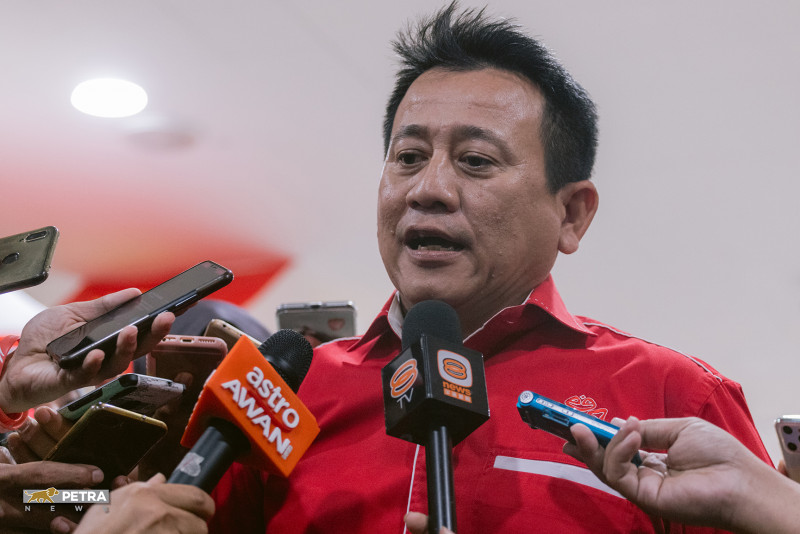
Bersatu Information Chief Datuk Tun Faisal Ismail Aziz revealed that PAS has consistently undermined the coalition through unauthorised external negotiations, most notably the clandestine Bangkok Move, alongside direct overtures to the government hierarchy.
PAS was also alleged to have held meetings with Prime Minister Datuk Seri Anwar Ibrahim and UMNO President Datuk Seri Dr Ahmad Zahid Hamidi without the knowledge of Bersatu or PN.
This severe breakdown in coalition discipline is heavily compounded by what Bersatu views as a blatant rejection of the unified opposition identity.
Rather than embracing the multi-ethnic appeal symbolised by Perikatan Nasional's blue branding, PAS has aggressively imposed its own monochromatic agenda, prioritising its green party logo in northern strongholds and attempting to replicate this isolationist strategy in upcoming southern campaigns.
“We also see that PAS lacks loyalty to the PN brand, for example, in Kelantan and Terengganu, the party prioritises the PAS logo, and in Johor, there are also proposals to contest using the same logo, Tun Faisal observed, signalling a deep frustration with the subversion of the central alliance brand.
The critique extends beyond branding into a fundamental paralysis of governance within the opposition bloc.
According to the Bersatu leadership, the current administrative machinery has become entirely ineffective due to an unworkable hierarchy where urgent political decisions are delayed indefinitely, trapped in a loop of retrospective approvals demanded by the PAS central command and its ultra-conservative clerical body, the Ulama Shura Council.
Several important PN decisions, including regarding the appointment of the Opposition Leader and amendments to the coalition's constitution, were also alleged to have taken a long time to implement, Tun Faisal noted, pointing directly to an institutional inertia that leaves the coalition ill-equipped to counter rapid political developments.
From an electoral strategy perspective, the aggressive visibility of the Islamist faction is viewed as a toxic barrier to expanding the opposition base.
By forcing a conservative religious image onto a coalition designed to be inclusive, PAS has effectively alienated crucial segments of the electorate, making it impossible to build the cross-communal consensus required to challenge the unity government.
Under such circumstances, PN faces challenges in attracting the support of parties as well as non-Malay voters, the information chief argued, highlighting the strategic dead-end created by their partners' ideological rigidity.
The final provocation stems from highly damaging speculation regarding upcoming state polls, where PAS is heavily rumoured to have negotiated a secret non-contest pact with UMNO in Johor, sacrificing Bersatu interests in exchange for guaranteed post-election appointed legislative seats.
“If the rumours are true that PAS has already negotiated with UMNO and will not contest in the Johor state election and will be offered appointed state assemblyman seats after the Johor state election, then is it not better and more appropriate for PAS to voluntarily leave PN and be with UMNO in MN,” Tun Faisal said.
“Again, if these rumours are true, it is inappropriate for PAS to continue chairing PN. Is that not better than PAS being seen as trying to sabotage Bersatu, PN, and other parties that want to be with PN?
“Ultimately, it serves as a defining ultimatum for the future of the right-wing opposition.”
Tun Faisal proposed that Bersatu must aggressively protect the integrity of the Perikatan Nasional brand by cutting ties with the unreliable Islamist faction and forging a renewed, more agile alliance alongside the Ikatan Prihatin Rakyat bloc, casting off an unfaithful partner to secure long-term political survival. - June 19, 2026