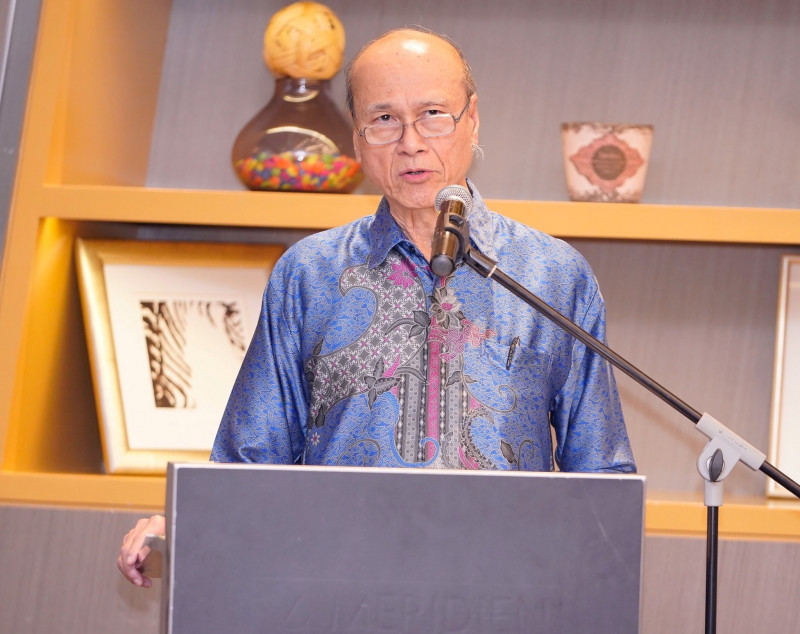
THE media is one of the key pillars in cultivating a culture of integrity that underpins the development of a fair, transparent and progressive nation, according to veteran Malaysian social activist and a distinguished member of the Institute of Integrity Malaysia (IIM) Tan Sri Lee Lam Thye.
He said that while laws, enforcement agencies and various anti-corruption initiatives are important, efforts to instil integrity across society cannot succeed without the involvement of all stakeholders, including the media.
“As the fourth pillar of democracy, the media plays an important role as the eyes and ears of the people.
“Through responsible, accurate, fair and fact-based reporting, the media can expose corruption, abuse of power, misappropriation and various forms of integrity breaches, ensuring that those entrusted with public responsibility are held accountable,” he said in an interview with Berita Harian today.
Lee said the cultivation of integrity is a shared responsibility involving the government, private sector, educational institutions, civil society organisations and the media, all of which must work together to promote values that reject corruption, abuse of power and dishonesty.
He added that IIM had expressed its intention to strengthen strategic cooperation with media organisations to ensure that integrity-related messages are communicated more widely and effectively, particularly to younger generations.
IIM president and chief executive Datuk Seri Noridah Abdul Rahim said recently that the media should not only serve as an information channel but also act as a strategic partner in bridging communication gaps, in line with the recently launched National Integrity and Ethics Strategy.
Lee also stressed that the role of the media should not be limited to exposing wrongdoing but should also highlight stories of individuals, organisations and public servants who demonstrate integrity, honesty and accountability.
He said such positive narratives, along with investigative journalism, documentaries, features, forums and awareness campaigns, can help strengthen public understanding of the importance of transparency, ethical leadership and good governance.
At the same time, he said the media must uphold the highest standards of journalism, including fact-checking, verification, fairness, independence and professionalism, in order to maintain public trust.
“The spread of false information, sensational reporting and unverified allegations will only damage the credibility of the media and weaken efforts to build a culture of integrity.
“The media has the power not only to deliver information, but also to shape public thinking and values,” he said. - July 4, 2026