A STATEMENT suggesting that a state election result should be interpreted as a “signal” for the personal fate of a former prime minister crosses a clear line between democratic contest and political narrative-building.
That is what Langkawi Umno chief Datuk Nazifuddin Najib attempted when he linked a strong Barisan Nasional performance in Johor to supposed public support for Datuk Seri Najib Razak and even sentiment around a royal pardon.
Elections are not instruments to rewrite legal outcomes, nor are they platforms to manufacture emotional pressure around individual cases.
Johor voters are not casting ballots as a proxy for anyone’s personal circumstances — they are deciding on governance.
The Johor state election is not a referendum on the fate of any individual. It is a fresh mandate by Johoreans for a new state government, based on policy direction, leadership credibility, and the ability to deliver results that matter in daily life.
It is also important to place this in an electoral context. In GE15, despite a national voter turnout of more than 70%, Pakatan Harapan secured 14 parliamentary seats out of 26 in Johor — a sign that voters in the state are already making decisions with a national-level understanding of governance and performance.
By contrast, the previous state election was held before GE15, with turnout below 55%, under very different political conditions that cannot simply be recycled to justify present narratives.
The Unity Government today exists as a national solution to a prolonged political stalemate that once weakened policy continuity and institutional stability.
It is not a convenient arrangement for coalitions, but a corrective framework aimed at ensuring governance can function with consistency.
Within this structure, the Malaysia Madani agenda continues to provide direction — focusing on economic resilience, institutional reform, and social protection that benefits Malaysians across all backgrounds.
If Johor were to come under a Pakatan Harapan-led administration, it would strengthen the ability to implement the Madani vision with clearer political alignment between federal and state levels.
This is not about symbolism, but about execution — ensuring policies are not diluted by fragmentation across administrations.
At the core of Pakatan Harapan’s commitments are manifesto-driven priorities that go beyond rhetoric.
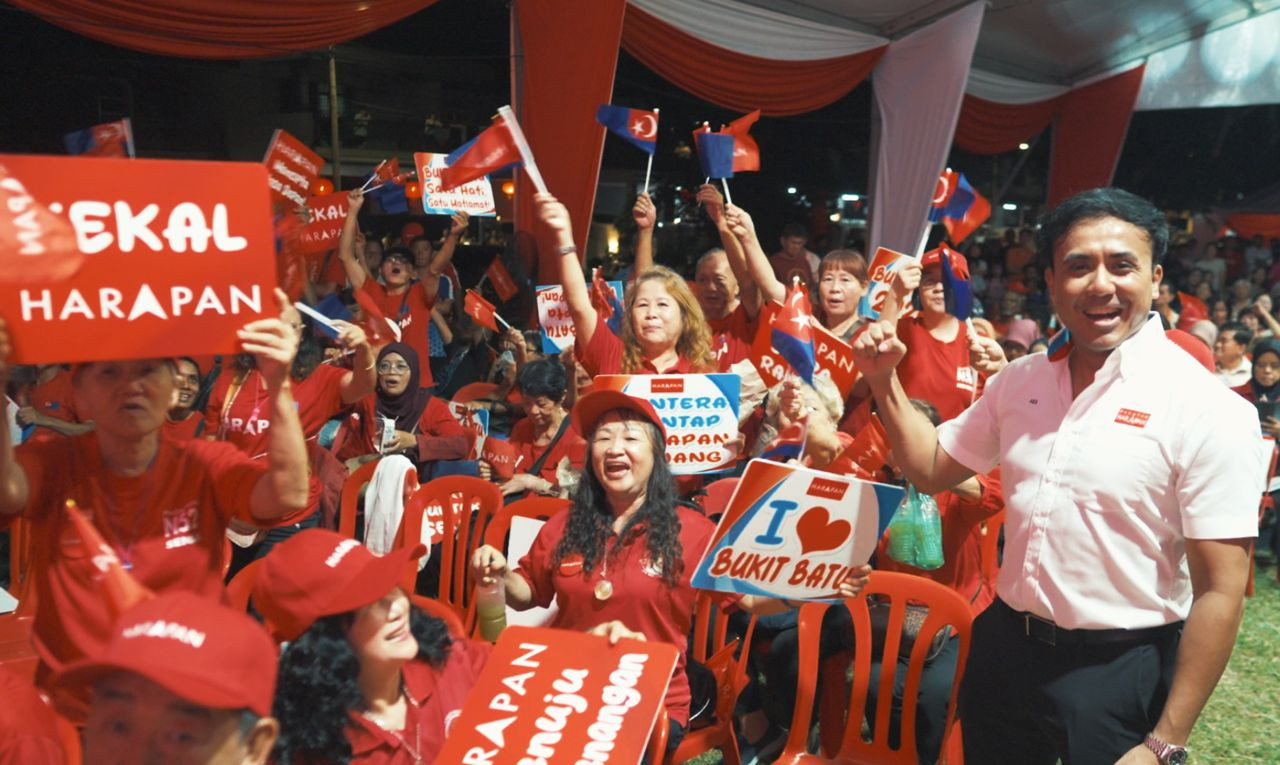
This includes expanding affordable housing access for first-time buyers, particularly young Malaysians who continue to be priced out of home ownership, as well as pushing wage growth through skills upgrading and the creation of higher-value jobs in the digital and industrial transition economy.
These are not campaign talking points — they are structural reforms that require political stability and alignment to move from paper to implementation.
Youths remain central to this approach. Young Malaysians are not asking for more rhetoric or division; they are asking for opportunity, fairness, and a system that reduces inequality rather than deepening it.
Leaders have a responsibility to narrow social gaps, not stretch them further through negative campaigning or identity-based messaging.
This is why Malaysians today are not seeking a political shortcut or recycled confrontation.
They are seeking a national resolve — a stable, forward-looking approach that prioritises governance over theatrics, and delivery over distraction.
Against this backdrop, it is especially troubling to see continued attempts by former prime minister Tun Dr Mahathir Mohamad to frame elections through ethnic exclusivity, urging Malay voters to support Malay candidates under the warning that “tanah Melayu” will be lost otherwise.
Such rhetoric is not just outdated — it is reckless. It reduces citizens to racial categories and implies that national survival depends on exclusion rather than shared citizenship.
Malaysia does not need politics of fear disguised as cultural protection. It does not need warnings of disappearance every election cycle to justify voting behaviour.
And it certainly does not need senior figures reviving divisive narratives that undermine the very fabric of a multi-ethnic nation.
That kind of politics weakens trust. It corrodes unity. And it underestimates the intelligence of Malaysian voters who have repeatedly shown they are capable of choosing based on competence, not coercion.
Johor — and Malaysia — deserves leadership that builds confidence, not anxiety.
The path forward is not through personal narratives or ethnic alarmism, but through governance that is accountable, inclusive, and focused on results. – July 4, 2026
Aidi Amin Yazid
KEADILAN Deputy Secretary-General