THE Gaza crisis has become one of the most severe tests of the modern international system. It is no longer merely a question of Israel-Palestine relations, but a broader reflection of the perceived failure of international law, the fragility of global institutions and the inability of major powers to adequately protect civilians.
In this context, Prime Minister Datuk Seri Anwar Ibrahim’s diplomatic approach warrants support as it represents a blend of moral conviction, legal reasoning, diplomatic pressure and humanitarian assistance.
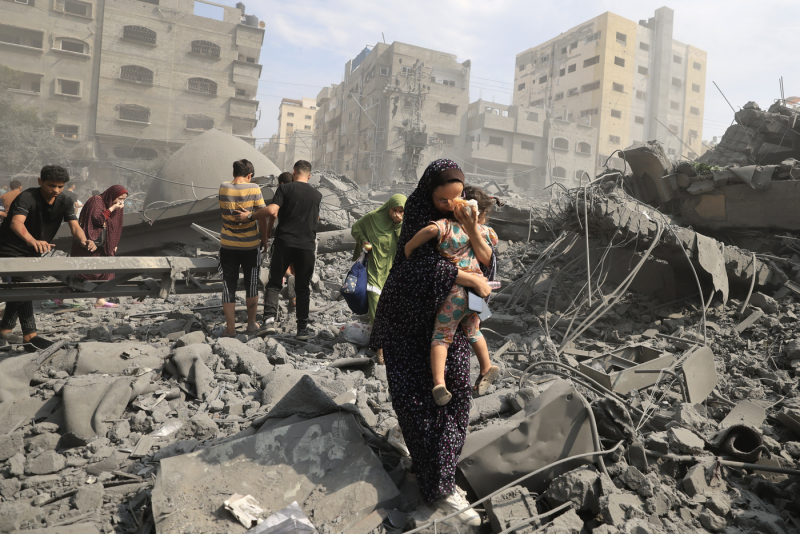
Based on the latest available data, 1,000 days after the most recent phase of conflict in Gaza, there have been 73,066 deaths, 173,514 injuries, 5,400 cases of disability and amputations, and 8,922 recorded attacks on families.
Of those killed, 21,730 were children, while 45,113 children were injured and 59,054 were orphaned. More than 90 per cent of infrastructure has been destroyed, humanitarian aid has been restricted, and over 2.1 million people are facing what has been described as genocide and famine conditions.
These figures are significant because they frame Malaysia’s diplomatic stance on Gaza within a clear humanitarian reality.
When 81 per cent of total infrastructure is damaged or destroyed, 92 per cent of housing is affected, nearly 90 per cent of water and sanitation systems are compromised, and 91 per cent of households face water insecurity, the issue becomes one of civilian protection, public health collapse and a broader international humanitarian emergency.
National Defence University of Malaysia (UPNM) Honorary Professor Dr. Mizan Aslam opined that within this context, Anwar’s diplomacy can be understood across several dimensions.
Firstly, it is legal in nature.
On January 16, 2024, Anwar expressed Malaysia’s support for South Africa’s case against Israel at the International Court of Justice over alleged breaches of the 1948 Genocide Convention, describing it as a courageous step that deserved international backing. Malaysia’s position, he emphasised, was that Israel must be held accountable under international law.
“This reflects a deliberate positioning of Malaysia not merely as a political commentator on Gaza, but as a supporter of legal accountability mechanisms. By backing proceedings at the ICJ, Malaysia situates the issue within a framework of justice rather than rhetoric alone,” Mizan said.
Secondly, Anwar’s diplomacy is multilateral. At the Extraordinary Arab and Islamic Summit in Riyadh on November 11, 2024, he called for stronger collective action to halt violence in Gaza, improve humanitarian access, strengthen support for UNRWA and increase international pressure on states supplying arms.
“This approach underscores Malaysia’s reliance on collective diplomacy through platforms such as the Organisation of Islamic Cooperation (OIC) and broader Islamic and Global South coalitions, recognising the limits of unilateral influence by middle powers,” he added.
Thirdly, his diplomacy is humanitarian and pragmatic. Speaking at the Gaza solidarity rally at Axiata Arena in Kuala Lumpur on October 8, 2025, Anwar stressed the importance of negotiation, the release of humanitarian activists, and ensuring aid reaches Gaza. He reiterated that Malaysia sought an end to killings, the liberation of Gaza and immediate humanitarian access.
While acknowledging public anger, Anwar maintained that diplomatic engagement remains essential. In international relations, principled positions do not necessarily exclude negotiation; rather, diplomacy is often the mechanism through which moral positions are translated into practical outcomes.
Fourthly, Malaysia’s approach includes tangible humanitarian assistance. On October 14, 2025, at the Kuala Lumpur Conference on A New Just and Humane International Order, Anwar announced RM100 million in initial humanitarian aid for Gaza. He also highlighted cooperation with Japan to mobilise support in East Asia, backing humanitarian NGOs such as the Global Sumud Flotilla, and leveraging diplomatic networks across the Middle East and beyond.
Mizan added that this is particularly relevant given the scale of humanitarian need, including acute food insecurity affecting 1.97 million people, with 641,000 at catastrophic levels of famine risk. Reports have also recorded 466 deaths from malnutrition, 17,800 cases of severe child malnutrition in 2025, and nearly 69,000 cases among children under five between 2025 and May 2026.
Fifthly, Anwar has been vocal in criticising perceived double standards in the international system. At the AIAC conference on October 14, 2025, he argued that Gaza represents a failure of global conscience, where international law is frequently invoked but unevenly enforced, and where civilians continue to suffer despite formal legal frameworks.
He warned that when law is applied selectively, it risks becoming a tool of political justification rather than a universal standard.
Sixthly, his diplomacy extends beyond ceasefire advocacy. At a press conference with Australian Prime Minister Anthony Albanese on April 16, 2026, Anwar stressed that a ceasefire alone cannot end the crisis. He highlighted ongoing violence, settlement expansion in the West Bank and the need for a durable political solution, including the establishment of a sovereign and viable Palestinian state.
This reflects a broader strategic view that temporary cessation of hostilities does not address underlying structural issues such as occupation, blockade, sovereignty and reconstruction.
From a public health perspective, the scale of devastation is also evident. Forty hospitals have been targeted, 158 primary healthcare centres affected, 825 violations against health facilities recorded, 1,723 health workers killed and 362 detained, indicating a systemic collapse of healthcare infrastructure rather than isolated incidents.
“The approach adopted by Anwar can be interpreted through the lens of what might be described as “active non-alignment”. This is not passive neutrality, but a principled positioning that allows Malaysia to act based on legal norms, humanitarian values and national interest,” Mizan said
Malaysia’s influence does not derive from military power or permanent membership of the UN Security Council. Instead, it rests on moral authority, diplomatic engagement, ASEAN and Global South networks, and its standing within the Muslim world.
In conclusion, Malaysia’s diplomacy on Gaza under Anwar Ibrahim combines legal advocacy, multilateral coordination, humanitarian assistance and sustained political pressure. While Malaysia alone cannot resolve the conflict, it can ensure that the crisis remains visible in international courts, diplomatic forums and global public discourse.
The central contribution of this approach is to translate solidarity into structured international action that carries accountability. - July 5, 2026