By Murray Hunter
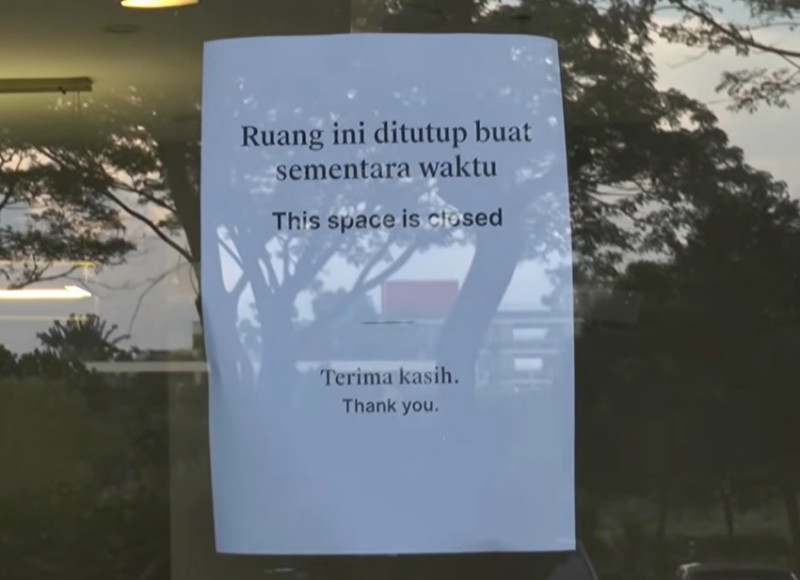
THE recent forced closure of Network School in Johor represents more than the shutdown of a single incubator.
It is a stark symbol of Malaysia’s deepening struggle to nurture the very creativity and innovation its economy desperately needs. In a nation still heavily reliant on resource extraction, mega-construction projects, rent-seeking conglomerates, and franchise-style retail and services, genuine value creation through new ideas remains painfully scarce.
Malaysia’s economic model has long favoured scale over substance, such as big infrastructure, commodity cycles, and protected markets.
While government rhetoric champions data centres, AI, and Industry 4.0 as the path forward, these are primarily capital-intensive enablers.
Real innovation does not emerge from hardware or policy slogans. It arises from creative individuals who connect dots, challenge assumptions, and build new business models, products, and platforms that generate fresh sources of economic value.
Network School was precisely such a platform as an incubator designed to nurture bold ideas and translate them into scalable ventures capable of competing regionally and globally.
Its abrupt closure last week sends a chilling message.
Even modest attempts to build a creative ecosystem in Johor can be throttled.
This is not just a local loss. It risks deterring high-tech investors and the growing global community of digital nomads, estimated at 30–35 million and expanding rapidly.
These mobile talents bring multiplier effects through spending, knowledge transfer, and network effects.
Forest City, strategically located on the border with Singapore, had the potential to become a vibrant innovation cluster, a Shenzhen-style delta where Malaysian creativity could meet capital and markets. Instead, one promising spark has been extinguished.
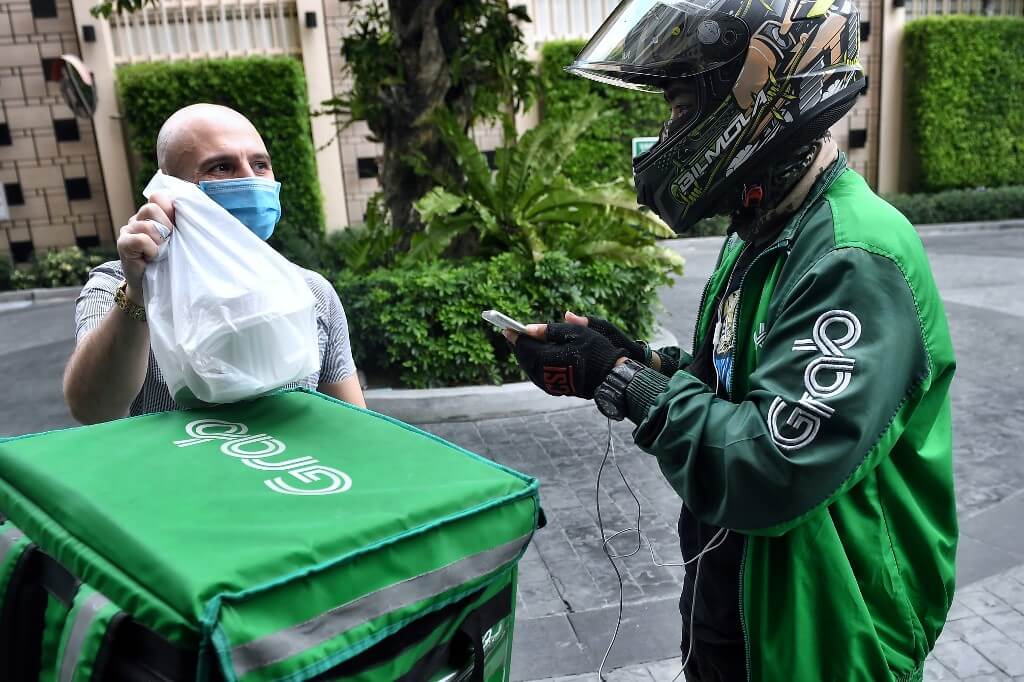
This pattern is depressingly familiar. Consider Grab, born in Kuala Lumpur in 2012 as MyTeksi.
Founders Anthony Tan and Tan Hooi Ling identified a real Malaysian problem, unsafe and inefficient taxis, where they prototyped the solution here.
Yet the company scaled its headquarters to Singapore, where it evolved into a Southeast Asian super app, listed on Nasdaq, and now delivers ride-hailing, food delivery, and fintech services across the region.
Malaysia lost not only the headquarters but also the associated high-value jobs, tax revenue, and ecosystem spillover.
Grab is far from isolated. Malaysians have repeatedly proven their innovative capacity, sadly, often after leaving.
Carsome, Malaysia’s first tech unicorn, digitised the used-car market across Southeast Asia.
In crypto and blockchain, Malaysian teams founded CoinGecko (one of the world’s top data trackers), Etherscan, and contributed to DeFi successes like Pendle, Jupiter, and Virtuals Protocol.
In design and education, Piktochart (visual tools used by millions worldwide) and Mindvalley (global personal growth platform) showcase Malaysian creativity.
Consumer and deep tech successes include RPG Commerce, Jimmy Choo, the USB flash drive pioneer Phison Electronics, drone leader Aerodyne, and AI-health platform Naluri.
Many of these ventures started with Malaysian roots but scaled up elsewhere due to better funding access, regulatory clarity, and talent ecosystems.
The same story echoes with AirAsia’s operational and strategic decisions, shifting value creation beyond borders.
Meanwhile, expatriate Malaysians run thriving businesses in Singapore, Hong Kong, Australia, the US, and Europe, demonstrating daily the talent pool the country is haemorrhaging. Just look at the current brain drain going on.
This brain drain is not due to a lack of creativity among Malaysians, who have shown themselves adept at innovation when given space.
The problem lies in the domestic ecosystem, including policy uncertainty, bureaucratic hurdles, preference for connected conglomerates over genuine startups, and an environment that often punishes risk-taking rather than rewarding it.
Rent-seeking and protected industries crowd out the disruptive thinking needed for new value creation.
The closure of Network School exacerbates this.
It discourages not only local founders but also the international creative class that could help spark the clusters Malaysia needs.
True innovation hubs thrive on density, diverse talents colliding in supportive environments.
Richard Florida explained this in his New York bestseller “The Rise of the Creative Class”, where he said, “Places that succeed in attracting and retaining creative class people prosper; those that fail don’t.”
Without platforms like Network School, Forest City risks becoming another glossy real estate project rather than a dynamic innovation corridor.
Johor local authorities ordered the operation of Network School in Forest City to be closed, effective July 22.
The Iskandar Puteri City Council (MBIP) issued an order to close and revoke the business license of the technology community after reviewing the inspection report and enforcement findings.

Johor Menteri Besar Datuk Onn Hafiz Ghazi backed the decision by the MBIP to revoke the business licence of NSO Malaysia Sdn Bhd (Network School) and said the state government fully supported the decision, which was made following a special full council meeting.
Malaysia stands at a crossroads. Continuing with the old resource-and-rent model will yield diminishing returns amid global disruption.
Data centres and AI infrastructure alone will not suffice if the human spark is missing. The country must urgently rebuild trust through consistent policies that protect and nurture incubators, ease talent mobility, incentivise risk capital, and reduce regulatory friction for startups.
If Malaysia fails to create fertile ground for its own creative individuals, and those drawn from abroad, it will continue exporting talent and importing finished innovations.
The Network School closure is a warning. The question is whether policymakers will heed it before more promising sparks are extinguished, and Malaysia’s innovation potential fades further into what-could-have-been. – July 26, 2026