By Murray Hunter
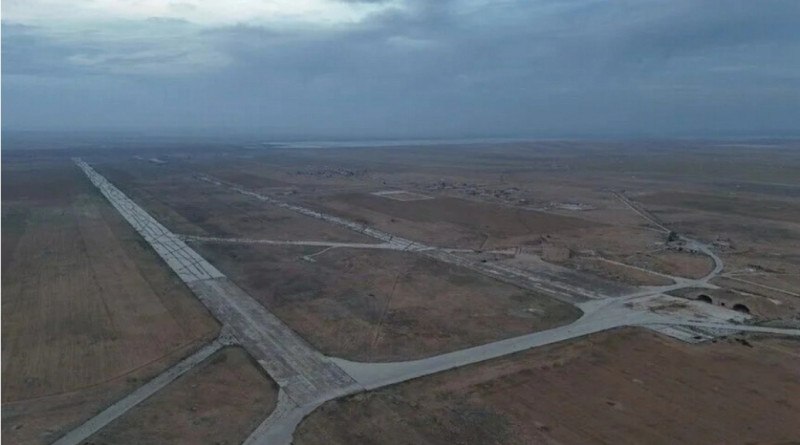
IN recent days, Israeli warplanes struck the Abu al-Duhur airbase in northern Syria, a facility Turkish forces have utilised and where Ankara was reportedly considering a larger presence.
The attack, which damaged runways and hangars without reported casualties, has sharpened an already poisonous rhetoric between Jerusalem and Ankara.
Israeli politicians have spent months escalating verbal attacks on Türkiye ahead of Israel’s October elections.
Türkiye has countered by seeking an Interpol Red Notice against Prime Minister Benjamin Netanyahu on charges that include genocide, crimes against humanity and torture linked to the interception of a Gaza-bound flotilla.
What looks at first glance like election-season theatre masks deeper structural rivalry.
Syria remains the prize. Israel has steadily expanded its military footprint and security demands inside Syrian territory since the fall of the Assad regime.
Turkish forces, present for years to manage Kurdish threats and stabilise northern zones, now cooperate more openly with the new Syrian authorities.
Israel views any Turkish consolidation near Aleppo as a potential forward threat. Türkiye sees Israeli strikes as expansionist interference in a neighbour’s sovereignty.
The result is a classic contest for strategic depth in a fragmented state.
The question of why Israel would open a new front while still engaged in Gaza, Lebanon and with Iran is not difficult to answer once domestic politics and long-term strategic culture are considered.
Hard-line messaging against a vocal Muslim-majority NATO member plays well with segments of the Israeli electorate. Portraying Türkiye as a rising regional threat allows politicians to claim vigilance and strength.
At the same time, Israel’s security doctrine has long treated any significant military presence near its borders, especially one backed by a capable army, as unacceptable.
Turkish military professionalism is well-known; its forces are among the more competent in the region.
Yet Israeli planners appear to calculate that limited kinetic actions inside Syria, and perhaps even signalling over Cyprus, can be contained short of Article 5 territory, where NATO nations would have to come in and aid Türkiye under attack.
This calculation is a risky one. Türkiye is a NATO member.
Direct attack on Turkish soil would theoretically invoke collective defence. Operations confined to Syrian or Cypriot space might evade the formal Article 5 trigger, particularly while Greece maintains its own historical frictions with Ankara.
Still, the precedent of using force against the interests of a formal ally strains the Alliance’s credibility.
Every such episode chips away at the assumption that NATO members do not actively work against one another’s core security concerns.
The United States finds itself in the awkward position of close partner to both.
Reports that the Trump administration has explored pathways for Türkiye to acquire F-35 fighters only heighten Israeli objections, underscoring how Washington’s dual alliances are becoming harder to manage.
Broader alignments add further hazard. The emerging network sometimes described around the Mecca framework, incorporating Pakistan’s substantial military capacity, raises the prospect that a serious clash could draw in additional Muslim-majority states.
Israel’s own history of supporting certain Kurdish groups against both Syria and Türkiye injects another layer of mutual suspicion.
Meanwhile, the two countries maintain non-trivial trade and tourism links, facts that make open hostility appear economically self-defeating.
Yet geopolitics frequently overrides commercial interest when leaders perceive existential stakes or domestic political advantage.
This aggressive style of contemporary statecraft compounds the danger.
Rhetoric is no longer separated from kinetic demonstration.
Strikes are used as messages and legal manoeuvres such as Red Notice requests function as political theatre, where public statements are calibrated for domestic audiences more than diplomatic resolution.
The risk is familiar from earlier European history, where the alliances and prestige considerations can lock parties into escalatory paths no parties fully intended.
A limited action in Syria could, under the wrong conditions, cascade into wider confrontation involving Greek-Turkish tensions, Gulf dynamics or great-power signalling.
For NATO, the episode is quietly corrosive. An Alliance already stretched by other commitments now watches two members, or a member and a close partner, edge toward open rivalry.
Article 5’s deterrent value depends on credibility and cohesion.
However, repeated intra-Alliance friction erodes the deterrent.

The United States, still the central organiser of the Alliance, faces the embarrassment of trying to de-conflict partners whose interests in Syria increasingly diverge.
None of this makes large-scale war inevitable.
Both sides have incentives to keep any clash limited. Trade continues. Tourism exists.
Washington continues to urge restraint.
Yet the combination of Israeli electoral timing, Turkish assertiveness under President Erdoğan, competing visions for post-Assad Syria, and the willingness to mix military action with diplomatic posturing creates a volatile mix.
The underlying contest is about influence in the Levant and the acceptable limits of each state’s security perimeter.
In an era when multipolar pressures are already reshaping older hierarchical arrangements, such contests are becoming harder to contain within tidy diplomatic channels.
The coming weeks will show whether the latest strike and Red Notice request remain political signalling or mark the opening of a more sustained confrontation.
History suggests that once kinetic actions enter the repertoire of messaging between capable regional powers, the margin for miscalculation narrows.
Syria is the immediate arena; the implications for NATO cohesion and regional order are larger. – August 22, 2026