
A PERSON convicted of stealing from a mosque donation box may leave prison to face public scorn.
But someone convicted in a case involving billions of ringgit could find supporters waiting to welcome him.
That was the pointed comparison made by social media users, who questioned what they see as a growing double standard in society’s attitude towards corruption.
In social media posts, some users lamented what they described as an era in which those convicted of corruption are celebrated, while people who uphold principles of trust and integrity are condemned.
“Don’t be surprised, friends. We are living in an era where the corrupt are celebrated, those who uphold trust are condemned and pushed aside, and society has begun accepting wrongdoing and even contributing to it,” one user wrote.
He further contrasted the treatment of petty thieves with that of individuals convicted in major financial scandals.
“An inmate who steals money from a mosque donation box gets no attention, not even from a cat, when he leaves prison.”
“But an inmate who steals billions gets a salute when he walks out. What a strange world,” he said.
His remarks touch on a wider question in Malaysian politics: why does public outrage over corruption so often depend on who is involved?

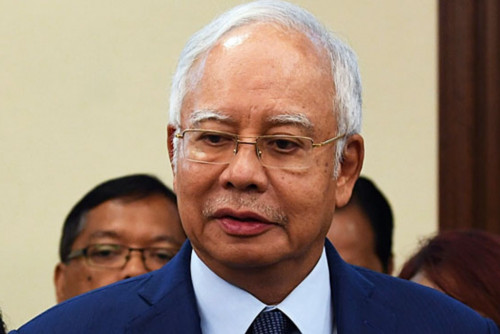
The continued support for former prime minister Datuk Seri Najib Razak, who was convicted in the SRC International case, has brought that question into focus.
Najib was found guilty of abuse of power, criminal breach of trust and money laundering involving RM42 million belonging to SRC International.
The Federal Court upheld his conviction in 2022.
Yet, he retains a loyal following, with supporters continuing to defend his legacy and point to his contributions during his years in office.
There is a difference, however, between defending someone’s legal rights and dismissing the findings of a court.
Everyone is entitled to due process and fair treatment under the law. But neither should be used to excuse wrongdoing or turn a conviction into something to be celebrated.
The more troubling aspect is the apparent selectiveness in how corruption is condemned.
Allegations involving political opponents often trigger demands for accountability.
When the same issue involves a leader from one’s own camp, however, the response can be markedly different, with justifications replacing the calls for action.
That approach reduces the fight against corruption to little more than political convenience.
It also sends the message that wrongdoing can be overlooked as long as the person responsible enjoys enough support.
The implications go beyond the fortunes of any one politician.
For a country trying to build a stronger culture of accountability, the standards applied to those in public office cannot change according to political allegiance.
A leader’s past contributions do not cancel out a conviction, just as a person’s political standing should not place them above public scrutiny.
Though some social media posts were delivered through sarcasm, the question behind it is a serious one: what does it say about society when those found guilty of serious wrongdoing can still be celebrated, while integrity is treated as an inconvenience?
Corruption cannot be condemned in one breath and defended in the next simply because the person involved belongs to the right political camp.
If that is where public sentiment is heading, the problem is no longer just corruption itself, but the willingness to accept it. – November 9, 2026