IT has been a life-long battle since Malaysia was declared a developed country. We were going to see developed country problems in the future and healthcare concerns are no different. We have seen recently how control of non-communicable diseases (NCDs) in Malaysia is somewhat spiralling and the effects on Covid-19 has shown why we need to act on it quickly.
Let’s take a look at our recent National Health and Morbidity Survey of 2019:
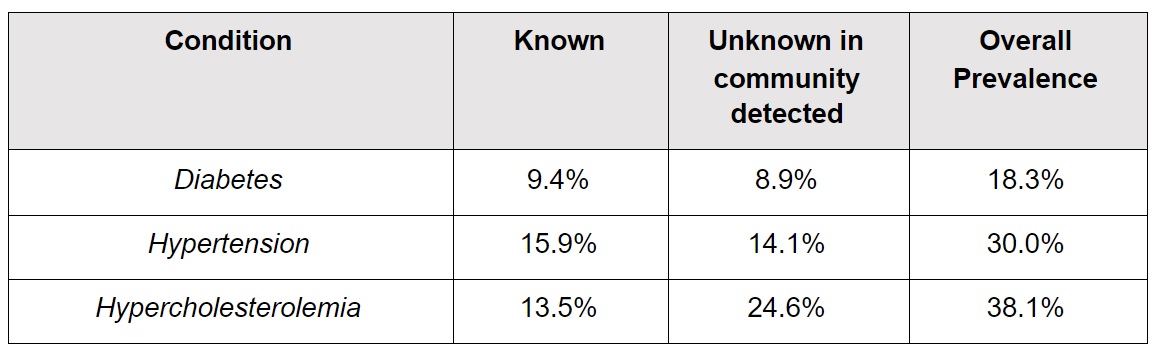
From the above, we can see that there are many people in the community who have not been diagnosed and may present very late for medical care when they develop symptoms. Even more worrying is that 50.1% of adults are overweight or obese (19.7%), have abdominal obesity (52.6%), are current smokers (21.3%) and alcohol consumers (11.8%).
Now, where am I going with all of this? I bring you very disturbing news.
As an active locum doctor (constant in some clinics), we have recently seen that some insurers, healthcare management companies (healthcare companies managing healthcare for other companies) and companies managing their own healthcare pulling off stunts that are seen to be mere cost-saving techniques that are eventually going to affect the long-term health outcomes of their employees.
I have been consistently seeing patients with diabetes, hypertension and dyslipidemia in my daily practice. Over the last few months, I have seen the number of my regular patients (those following up with me for the last five years) suddenly not turning up for their scheduled appointments. These patients are patients whose healthcare is being subsidised by their company. I will share one instance with you to paint the exact picture.
One fine evening, one of the above-described patients presented to me with acute anaphylaxis (sudden high-grade allergy), causing general body itchiness and mild breathing difficulty. After treating and stabilising her, I enquired about her sugar control (curious that she had not seen me for the last few months). She said “Oh doctor, don’t you know, my company with the health-management company PQ-CSTV (real name concealed) told me that I need not see you anymore. They said that they have tied a deal with a pharmacy that will post these drugs to my house”.
Shocked at this, I asked her “How is your sugar control?”. She frowned “Doctor, ever since I stopped coming to see you, my glucose levels have been out of control – fasting between 9-15” (previously between 5-6/good control fasting for many months). “Also doctor, they have changed my medications.”
Upon review, to my horror, the company had changed the medications of my patient and also informed her that it was the same medications that we were prescribing at our centre. After much investigating and enquiring, it was found that the patient was allergic to a drug – one that was newly changed by the company a week ago.
“They changed the medications out of the blue and when I enquired, they said, 'don’t worry – it’s the right medication”. This medication did not only cause an allergy reaction, it caused her sugars to spiral out of control. We manage to control her sugars again with a change of medication, counselling and regular monitoring.
After a month, she was back on track again. However, it came at a cost – her kidney function had deteriorated, for which she was given adequate management, counselling and asked to come in for tri-monthly monitoring (previously, under our care, her renal profile was excellent).
This is the scenario of horror that my colleagues and I are seeing daily. Health management companies and companies are now tying deals with pharmacies to supply medication to patients directly, bypassing doctors. What worries me is, with my patient above, there were no backtracing methods to identify who changed the medications of my patient – was it the doctor at the company (done via telephone with no physical contact at all (not even once) and the prescription given via email OR was it the pharmacy that decided to change the drug to a less expensive drug, hoping it could make a quick buck in between?).
My greatest concern is, who is to be responsible for the sudden deterioration in the health of my unfortunate patient? The company that decided to pull off a quick-saving scheme? The doctor sitting in the company/health management companies who never once saw my patient and prescribed medication over the phone? Or the pharmacy, just like the company, wanting to earn a quick buck by perhaps changing the prescription? What if this patient had not come and seen me for an allergic reaction? Would she have suffered the short-term complications as a result of this money-making scheme? Would she have had to undergo dialysis in the near future (which the silly company now will have to fork out the money for)? Would she have had to bear the cost of some money-saving scheme at the expense of her health to an irreversible condition?
Companies are implementing cost-cutting schemes by pulling off stunts like these to reduce money invested into staff healthcare. Upon enquiring from the company why was this was done, the response was, “oh, we have our own doctors who have prescribed the medication via telephone. By sending them to the pharmacies, we have a better understanding of our patients health”.
A cost-cutting scheme to save a company a few measly ringgit will eventually end up with:
- Patients getting the wrong medications (like my patient);
- Patients having their NCDs spiral out of control;
- Patients not being monitored for their symptoms with physical examinations and prescribed whatever drugs the pharmacist feels like providing (we are unsure how they bill the companies, perhaps by stating a drug is more expensive but providing a less expensive drug);
- Patients coming to doctors with NCDs so severe that they develop complications like stroke, heart attacks, diabetic foot ulcers leading to amputations etc;
- Patients not being treated wholesomely. No one talks to them about the importance of other co-morbid screening and lifestyle modifications; and,
- Inadequate and non-aggressive treatment given to patients who need them, resulting in a greater rise in patients with debilitating diseases like end-stage renal failure, amputations and strokes.
Is that where we want our country heading? Boasting one of the best healthcare systems in the world where both private and government entities are options for patients, why then are companies choosing money over the well-being of their staff? Can companies now assure their staff that by asking a pharmacy to supply and manage their NCDs, they will have better health outcomes? I have personally seen patients going to pharmacies and getting prescription medications without a prescription; moreover, the pharmacists manage their diabetes and when the patient is referred (by the pharmacists in the end), it is already too late – most have either a diabetic foot ulcer leading to gangrene or some form of severe kidney disease.
The truth is, we are not ready as a nation for prescription practices (already, pharmacies are selling prescription medications over-the-counter) as patients will need a wholesome review to identify if they are suffering from other health comorbidities. Need proof? The NHMS 2019 had reported that- 35.1% have low health literacy, 28% have low health literacy in medical issues, 32.3% have low health literacy related with disease prevention and 27.0% have low health literacy in health promotion and healthy lifestyle practices.
In truth, companies should not be allowed to employ doctors to prescribe long-term medications without ever seeing and physically examining the patient or via tele-consult. Pharmacies dispensing prescription medication without a doctor’s prescription should be barred from practice. For the benefit of our NCD patients, they should not be allowed to be tied up to companies for long-term medications. This is purely out of interest for the well-being of patients to avoid other chronic comorbidities, especially debilitating ones. I hope Malaysians out there will understand what is going on, especially if they are under a healthcare management company or healthcare under companies that have started pulling off schemes like this. Trust me, this is a far bigger worry than the fact that your doctors are paid RM15 consultation for every visit that you make (sometimes, we are not paid that as well). – The Vibes, January 23, 2021
A concerned medical practitioner