SINCE last March, the Education Ministry has been instructed to implement home-based learning initiatives. Yet, after almost a year, our preparation and readiness is still below par.
Until now, three critical issues that would determine the quality of home-based learning have not been addressed:
Lack of gadgets
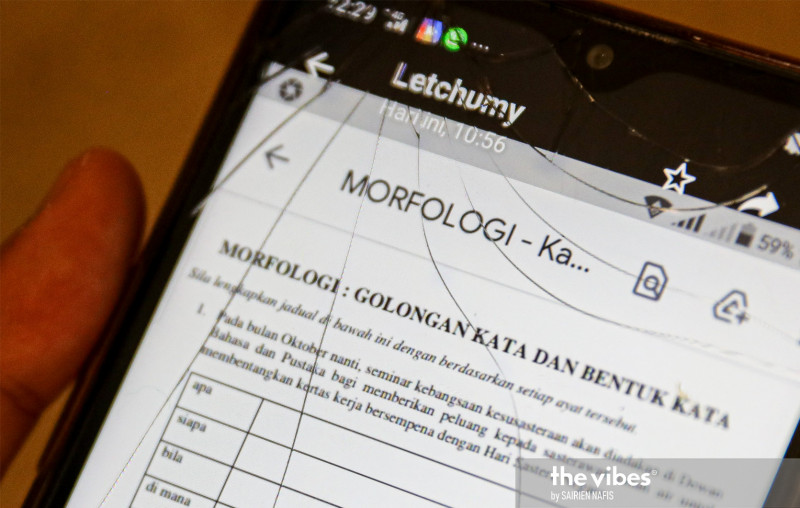
Since last April, the ministry knew that 36.9% of students do not possess any electronic device to follow online lessons. However, until today, the 150,000 laptops promised by the finance minister under Budget 2021 are nowhere to be found.
Last November, I said 150,000 laptops would be highly insufficient. For instance, the United Kingdom government is providing more than a million laptops and devices to disadvantaged children in Years 3 to 11 who do not have access to a device, and whose face-to-face education has been disrupted.
In Singapore, all secondary school students are going to receive a personal laptop or tablet for learning purposes.
We have 4.7 million students in government primary and secondary schools. If 36.9% of them do not have any device to follow online learning, that means 1.7 million students urgently need a laptop or tablet.
How can our government be satisfied with only 150,000 laptops, when we all know that home-based learning is now the new norm?
No internet access
Last year, social media was flooded with news on teachers and students enduring a lot of hardship just to get internet access.
Among them:
– Veveonah Mosibin trekking and climbing trees just to sit her exams;
– Mujalifah Kassim, a teacher at SMK Sibu Jaya, visiting her students who have no internet access, and marking their homework outside their gates;
– Teacher Sambau Dugat of SMK Lubok Antu leading a group of primary and secondary school students from his village in Nanga Sumpa and nearby Nanga Jambu on a jungle trek just to get good internet coverage; and,
– Eight students from Ranau, Sabah, who depended on a particular spot on a suspension bridge to get internet access for an online class, were badly injured when the crossing collapsed.
What lesson has our government learnt from all these incidents, and what is the plan to assist students who do not have internet access? This issue is especially pressing for students in interior areas, where DSL, cable or fibre internet options are not available. Is our government prepared to provide free satellite internet data packages to them?
TV Pendidikan
As of today, online learning is clearly a privilege for certain students. Therefore, I cannot emphasise enough the importance of educational television services.
The current education television programme (also called TV Pendidikan) broadcasts for five hours a day on RTM’s Okey TV channel and NTV7. Meanwhile, for Astro subscribers, there are an additional two hours of broadcast, and another two hours of replay.
In other words, we only have seven hours of content a day to cater to learning for students from Standard 1 to Form 6.
Again, how can this be sufficient, when the combined learning hours in school are easily 60 hours a day?
We have been pointing out the inadequacies of TV Pendidikan since 2020, and the education minister has even admitted these weaknesses.
But, why is there still no improvement, when the reopening of schools has been further postponed for 2021? – The Vibes, January 26, 2021
Teo Nie Ching is Kulai MP and former deputy education minister