THERE has been media coverage recently on Malaysia last year achieving its “highest ever” trade surplus in history.
This was one of the highlights of the media statement by International Trade and Industry Minister Datuk Seri Mohamed Azmin Ali on January 30.
In reality, this “achievement” is nothing to be proud of. In fact, it points to a very weak domestic economy, which is likely to remain lacklustre this year. Hence, there is no need to be over-optimistic about ever-high trade surpluses, including in 2021.
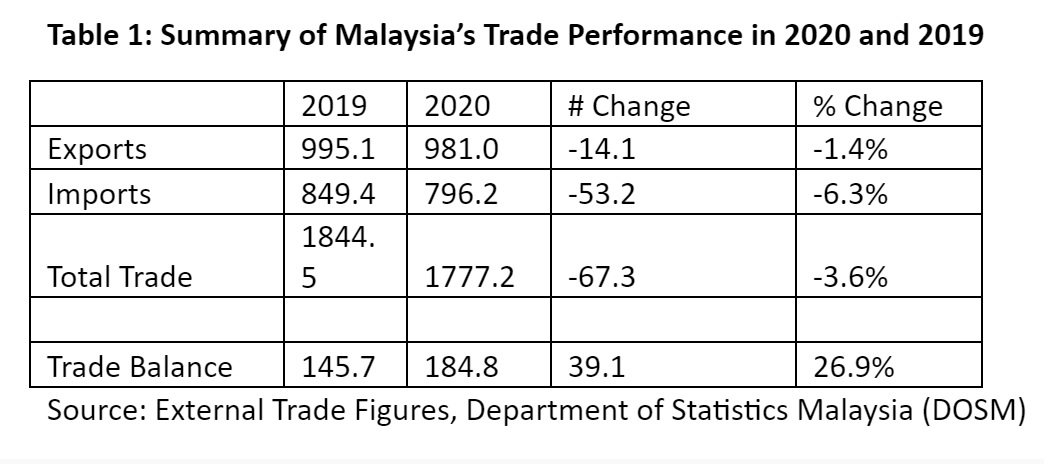
Malaysia’s overall trade (exports + imports) decreased by RM67.3 billion, or 3.6%, from RM1.845 trillion in 2019 to RM1.777 trillion last year. Malaysia’s total exports in 2020 decreased by 1.4%, or RM14.1 billion, compared with 2019. The main reason why the country was able to increase its trade surplus by 26.9%, from RM145.7 billion in 2019 to RM184.8 billion in 2020, is because total imports experienced a large decrease of 6.3%, or RM53.2 billion, from RM849 billion to RM796.2 billion. (See Table 1 below)
It was encouraging that Malaysia’s total exports managed to weather Covid-19 economic uncertainties in 2020. But, it would be wrong to “boast” about Malaysia’s highest-ever trade surplus that was caused by a large fall in our imports.
Lower imports means that domestic economic demand was very weak in 2020. This means the lower purchase of both imported and locally produced goods at our shopping malls, which has a negative impact on our retailers. Lower demand for imports is also a leading indicator of weak local economic conditions in the near future. For example, lower imports of machinery and construction materials, such as iron and steel, means that the construction industry is likely to remain weak in 2021.
A healthy economy should experience growing exports, and also imports that are growing at around the same level as exports (and perhaps slightly more). While trade under the Pakatan Harapan government did shrink by 2.5% in 2019, this was not accompanied by negative gross domestic product growth. In fact, the GDP grew by 4.3% under PH in 2019, while it is expected to contract by at least 4% in 2020 under the Perikatan Nasional government.
With the ongoing movement control order, local demand in the first quarter of 2021 will continue to remain weak. So, don’t be too happy when you see the International Trade and Industry Ministry announcing another “highest ever” trade surplus in the next few months.
We are in for a challenging 2021, despite the optimistic GDP growth projection by the Finance Ministry of between 6.5% and 7.5% this year. – The Vibes, February 5, 2021
Ong Kian Ming is Bangi MP and former deputy international trade and industry minister