WHEN one thinks of attention, chances are that one will not think of it as a valuable commodity. Tech companies hold it in high esteem and spend millions in their tryst to capture this attention, enticing people to spend as much time as possible on their platforms.
Nobel Laureate Herbert Simon coined the term “attention economy”, and noted that in an information-rich world, an enormous amount of information consumes the attention of its viewers, creating a poverty of attention. He suggested that paying attention to too many things at once will lower levels of attention, and, therefore, one needs to tread cautiously.
For example, while writing this article, internet is required for developing and researching content, which is considered the intended activity. But the interface is designed in such a way to divert attention away from the intended activity to advertisements – the intended distraction. This distraction takes away precious attention time needed to finish this article. This diverted attention time then seeps into what one could have done, like going for a walk, spending time with family members or having a conversation with a friend.
Theoretical physicist Michael Goldhaber further added that there is a shift from material-based economy to information-based economy. He noted that human attention is the “scarcest resource”, and is the core of this second economy. In today’s world, technological advances have made it so that an immense information is available at one’s fingertips, and this can be distracting.
Internet companies reach nearly 4.7 billion people worldwide, or 59% of the population, and competition is stiff among the platforms. New ways and means are carefully curated to capture and hold this attention, and these are broadcast utilising the communication media – more attention means better revenue.
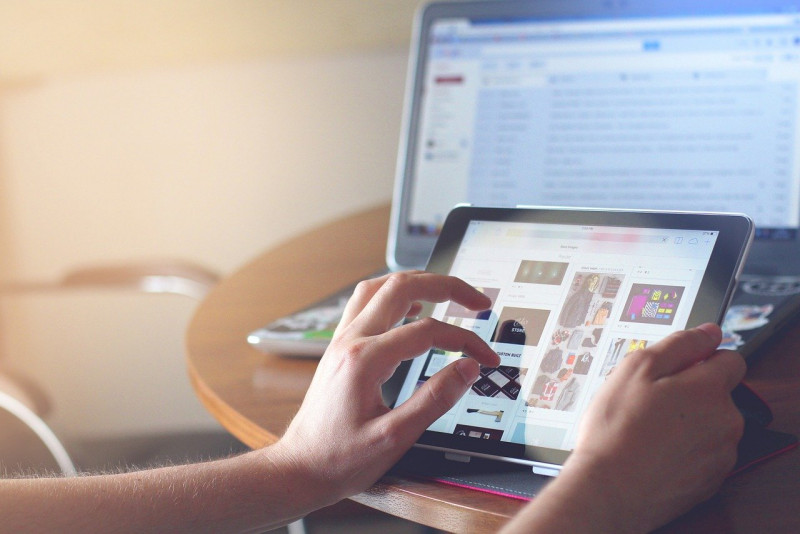
Monopolised by the likes of Apple, Amazon, Facebook and Google, the digital world’s aim is to keep one scrolling and searching in the competitive world of advertising. Algorithms detect patterns that are consistently tracked by these companies, with the aim of distracting audiences with notifications, pop-ups and pings. A smartphone becomes an indulgence of sorts – easily accessing news, literature, entertainment or cute cat videos at the touch of a button.
In this attention-trap model, it is assumed that all this information is free, but to read, process, and maybe even act on it, people expend attention on it. A diversion that challenges the task of finding something people actually want to read at their disposal, but is instead being distracted to pay attention to things that do not matter; a distraction that can take more than 20 minutes before actually getting into real satisfactory work, forgoing other opportunities.

Coronavirus has brought a new perspective to the attention economy. The past year has created new attention trends – new kinds of screen time, new forms of social mediations, and the true meaning of isolation and solidarity in the digital era. Consumers have became more critical and closely scrutinise information as the attention is now dominated by fear and uncertainty.
The world of digital advertising has realised that trust has begun to play a larger role in consumer attraction.
At the start of the pandemic, fear created frantic buying and stock-piling of toilet paper, and Cotonelle, as one of the largest producers of the product, created its #ShareASquare campaign. Its aim is to discourage panic-buying, and asked consumers to “stock up on generosity”, not toilet paper. Humanising content became the forefront of advertising, setting the platform for a trust economy. An attention shift is happening, but should one trust it completely?
Attention economy flourished during the pandemic – screen time has increased for work, studies, exercise, and just general information of the pandemic. But being homebound has its virtues too, opening up avenues to develop new hobbies and rediscover old pleasures, like reading a book or gardening, which are not tracked and monetised by the digital world.
While it may take some effort, regaining control of one’s focus can create space for more meaningful interactions. One of the ways of not falling into this attention trap is to keep track on how much time is spent on digital platforms. Keeping time can show where the online time goes, eventually helping one to become more mindful and in control of their time, creating space for quality work.
As the scarcest resource, it is critical to spend attention carefully. If no one listens, reads or watches what is being posted, there is nothing to sell, thus curbing the insatiable attention economy. It is possible for one to exist in the attention economy without falling victim to it.
In moving forward, there is a need to have more technology designed with accountability and management, whereby businesses and consumers can find a balance between the excesses and harmful effects of information. – The Vibes, February 28, 2021
Sujatha Spaapen is pursuing a Masters in European Regional Integration at the Asia Europe Institute, University of Malaya