

MIRI – Malaysia has undergone enough crises to testify which were handled well and which were not, as well as the causes of them and measures undertaken to rectify each situation.
In the case of Covid-19, the country has yet to win the war, especially in Sarawak where cases and deaths resulting from the coronavirus are spiralling.
Testimony of this is the total lockdown imposed on some 60 overpopulated longhouses in the past week, the surging death toll of which stood at 180 as of yesterday, compared to 19 deaths in January this year.
What’s worse is the disclosure of the foreign P.3 Covid-19 variant, which has been detected in the districts of Kuching and Samarahan.
Kuching, the capital, has a population close to 750,000.
Meanwhile researchers at Universiti Malaysia Sarawak earlier this year confirmed the existence of a Covid-19 variant that could be more resistant to vaccines.
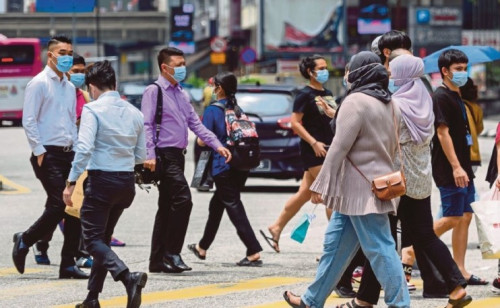
This has prompted warnings by experts for the public to remain vigilant and adhere to SOPs as authorities battle a sharp spike in daily cases nationwide.
Super-spreader could start another pandemic
Experts from the university’s Institute of Health and Community Medicine confirmed that the B.1.1.28.3 or P.3 variant has been found in eight samples taken in Kuching and Samarahan last week, and said the super-spreader P.3 variant could start a pandemic.
The public has started questioning the possibility of whether the state Disaster Management Committee is losing control in the war against Covid-19.
With the almost 32,000 infections, which are spreading fast from the epicentre in Kuching to the southern tip of Lundu, upwards to Serian, Sri Aman, and Saratok, and all the way to Sarikei and Sibu, it is unlikely that there is a light at the end of the tunnel.
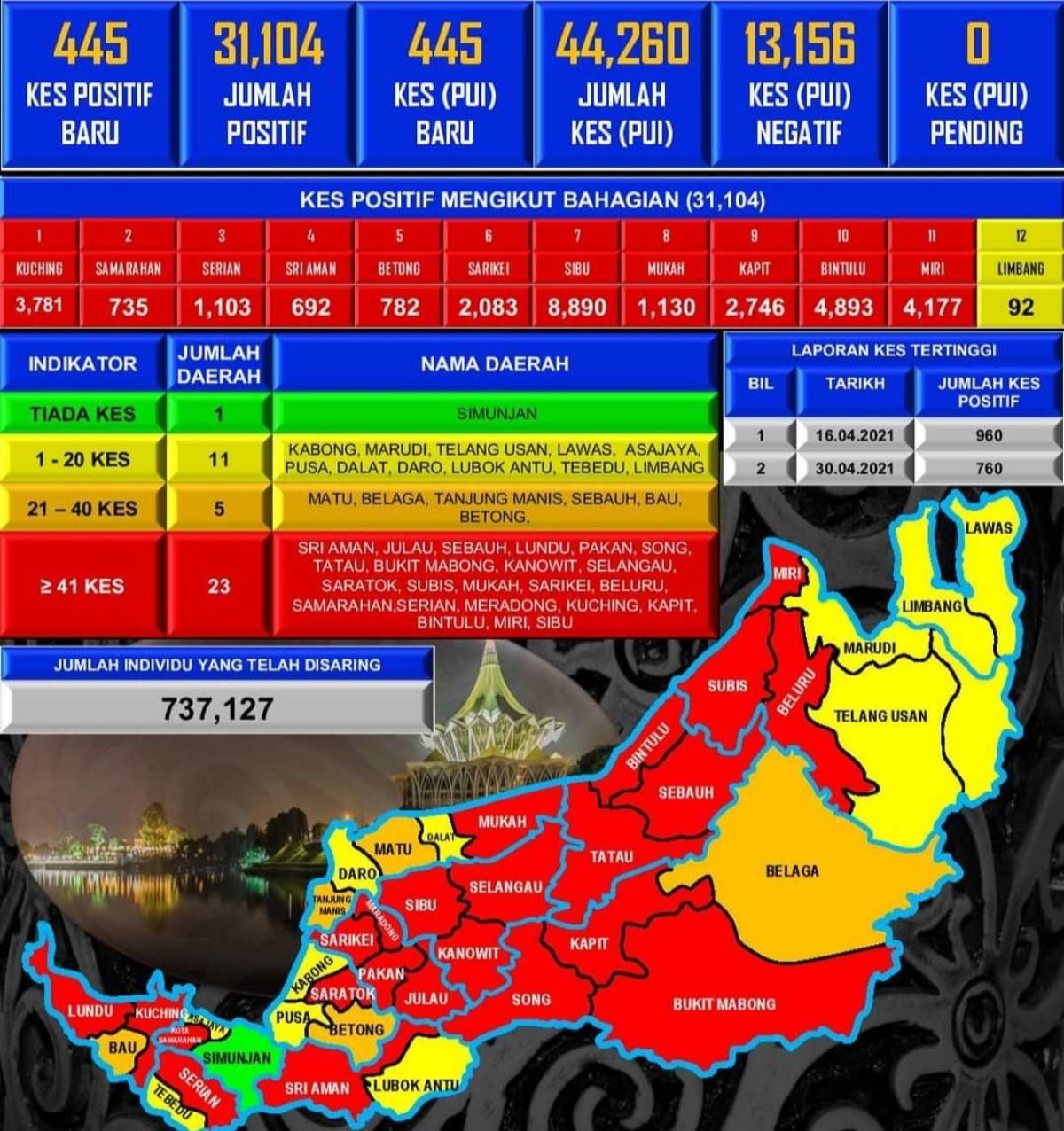
With nearly 75% of Sarawak classified as red zones, it is a far cry from just 3 red-zone districts in January.
Question is: how did things get so bad, so quickly in Sarawak?
Past decisions coming back to bite
Looking back at some decisions made to curb the spread of the pandemic, one cannot but help think that those measures could have contributed to the current crisis.
The decision to ease up on quarantining those returning to Sarawak and allowing home-quarantines instead early this year may not have been a good idea.
Another was the decision to allow airlines to operate with full passenger capacity daily when they should in fact be running with only half the passenger load.
There were also inconsistencies in the implementation of standard operating procedures (SOPs) across divisions, resulting in every division formulating its own policies on business operating hours, sectors that are allowed to operate, schools that can remain open, and permissible public activities, causing confusion.
For example, in Sibu, all public sports and recreational activities have been banned, but in Miri, football matches and motor sports are allowed even though both districts are the two worst-hit by Covid-19.
A curfew on public movement has been imposed from 8pm to 6am in Bintulu, but this has not been the case in other districts.
Travelers entering or passing through Bintulu must undergo swab tests, but other districts have not imposed such conditions.
In Miri, enforcement teams are targeting food traders operating after 10pm, but big restaurants and major food shops can still operate freely after 10pm.
So, even within the same district, SOP enforcement is somewhat chaotic.
Leave it to the professionals, not politicians
Sarawak Parti Aspirasi president Lina Soo has slammed state leaders for the way Covid-19 is managed.
“Politicians should not be in charge of managing the crisis in Sarawak.
“They should leave such matters to the professionals and experts in the various fields,” she said.
Many seem to agree with Soo, based on growing criticism against Datuk Douglas Uggah, one of the three deputy chief ministers of Sarawak, who is also state Disaster Management Committee chairman.
One cannot predict where Uggah and the state cabinet are heading in this current war, but one thing’s for sure – they are making too many blunders that have already resulted in serious consequences. – The Vibes, May 2, 2021