ON May 27, 10 DAP assemblymen issued a statement affirming the “necessity, feasibility and vision underlying the PTMP and PSI project”.
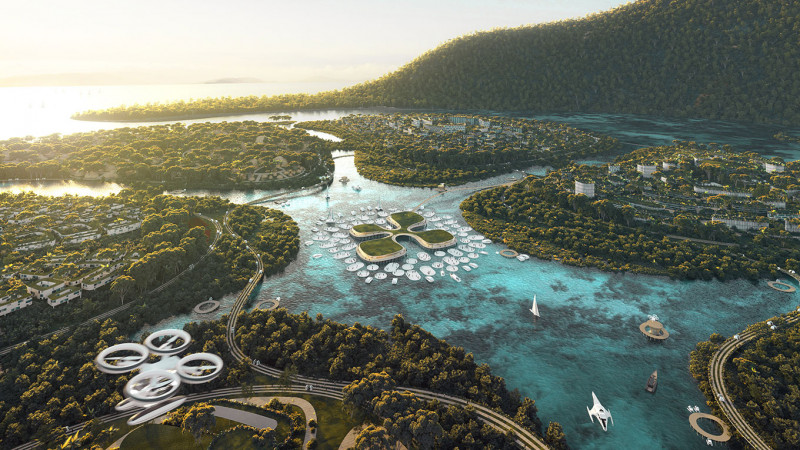
Note that the Penang South Reclamation (PSR) project, with all its social and ecological issues, is being reinvented as Penang South Islands (PSI) to make it more marketable. Nevertheless, PSI and PSR are used interchangeably here.
The DAP backbenchers accused Gerakan, PAS and Penang Forum for recycling criticism that have been answered by the state.
On PTMP
I do not dispute the feasibility of the project purely from an engineering perspective. However, I do have grave doubts about Penang state and local governments’ capability to execute and handle such mega projects, given their poor track record as attested by the financial fiasco and human tragedy in building the 5km Bukit Kukus highway. What more, for mega projects such as the proposed undersea tunnel and Pan Island Link 1 (PIL1), with 10km of tunnels running through the hills and fault lines of Penang island.
The proposed Penang Transport Master Plan (PTMP) and PSI in the present form are neither necessary nor visionary. Recognising their past folly of building mega highways that catered to cars and destroyed communities, city authorities in the United States, South Korea, and other countries are tearing down these structures today (see the New York Times article titled “Can Removing Highways Fix America’s Cities?” on May 27, 2021).
Instead of learning from the mistakes of these countries, our politicians instead seem bent on repeating them. Do our esteemed assemblymen deny the real hazards of climate change, and the growth of private vehicle use as a major contributor to it?
Are they not aware of how transport technology is changing so rapidly, and how the pandemic has altered working and travelling patterns so drastically, that it is foolish to apply outdated solutions like building highways to solve traffic and mobility problems?
Other countries are investing in congestion pricing and better public transport systems, and encouraging bicycling, while we still prioritise highway-building. Is PTMP in its present form reactionary or visionary?
The assemblymen, like the Penang government, accused Penang Forum of only criticising, and not offering alternatives. In 2016, Penang Forum proposed its “Better, Cheaper, Faster” version of a public transport system as an alternative vision and outline for PTMP.
Granted, it is not a full-blown technical report, which can be done only by transport professionals, but it provides an outline and road map for a more scaled-down and sustainable transport system. We invited the Penang government to engage world-renowned independent sustainable mobility experts to evaluate the proposal and PTMP. But, this was never done.
Penang Forum was the first to propose to the state government in 2018 to consider the trackless tram or autonomous rail transit (ART) system instead of the light rail transit system, when ART was first introduced in China.
Penang could have built the ART system in a year or two, at a tenth of the cost of the LRT. This was also rejected. Instead, Sarawak is implementing the Kuching Urban Transportation System, which uses ART, powered by hydrogen fuel cells.
The project’s civil and structural works are expected to begin in 2022. In Johor, the first ART system arrived in January for pilot testing under the Iskandar Malaysia bus rapid transit project.
Sarawak and Johor have implemented the ART system, while Penang is still whistling in the wind.
On PSR
My esteemed reps also claimed that PSR or PSI is a visionary project that will bring tens of thousands of new jobs and propel Penang to greater heights, building on the track record of former chief minister Tun Dr Lim Chong Eu.
Unfortunately, repeating past performance is no guarantee of future achievement. Moreover, the times and circumstances have changed. The dark side of unbridled reclamation – from destructive sand mining, devastation of marine biodiversity and damaging of coastlines to a carbon emission of 3.2 million tonnes annually in the PSR reclamation – is now increasingly recognised.
However, the Penang government still thinks reclamation is a costless way to acquire land. It fails dismally to recognise the richness of the area in supporting sustainable fishing livelihoods and securing food security for Penangites, and severely underestimates the ecological losses from the reclamation. SRS’ consultants in its environmental impact assessment (EIA) clearly admitted that the PSR project will result in “irreversible change” to the environment, and the “permanent loss” of physical and biological resources in the seas south of Penang island.
The original justification for PSR was to finance PTMP. Significantly, this justification and link have now disappeared. PSI is unable to finance even a small fraction of PTMP (see my article titled “Selling Penang for a Song and Dance”, which appeared on May 17).
The following needs are now presented to justify PSR: to plan for a smart city; to provide employment opportunities; to expand the Bayan Lepas Free Trade Zone; to develop and retain human capital; and, to relieve the development pressure on George Town.
I support all these lofty objectives. My point is that the state can achieve all of these by redirecting development and growth to the mainland. A major weakness in Penang that the state government recognises is the unbalanced development between the Penang mainland and island.
Too much growth has been concentrated on the island, contributing to escalating land prices and pressure. What better way to redress this imbalance than to focus its energy to develop the mainland?
Penang could also turn a statewide sustainable mobility network of BRT, modern trams or ART, and water taxis into a major economic sector. It could provide thousands of direct and indirect jobs (drivers, and maintenance, administration, technical support and IT staff), as well as employment in support sectors, such as the construction of buses and water taxis; maintenance workshops and depots; and, transport coordination.
Recycling criticisms that have been answered
Finally the assemblymen claimed that Penang Forum is merely recycling criticisms that have already been answered. Yes, the state has responded to some of our queries and criticisms. But as any teacher would tell their student, responding to a question is not the same as providing a satisfactory, or even passable, answer.
Let me repeat a few fundamental questions on PSR and PTMP that have been raised, that have not been adequately answered by the state.
1. Can the state justify its population projection for the three islands to reach 446,000 by 2030 as stated in the EIA report?
2. Can the state explain how it will fund PTMP projects, which will cost billions, when its expected revenue from reclaiming half of Island A would probably be about RM600 million in seven to 10 years’ time? This is equivalent to only about one year’s state revenue. However, the environmental damage and social losses would cost many times as much, if they are truly to be accounted for.
3. Can the state explain how the costs of PSR have escalated from RM8 billion for two islands (totalling 1,428ha) in 2015 to RM7 billion for half an island (only 485ha) in 2021? These figures alone do not speak well of Penang’s competency, accountability and transparency! – The Vibes, May 30, 2021
Lim Mah Hui is an economist, and former banker and Penang island city councillor