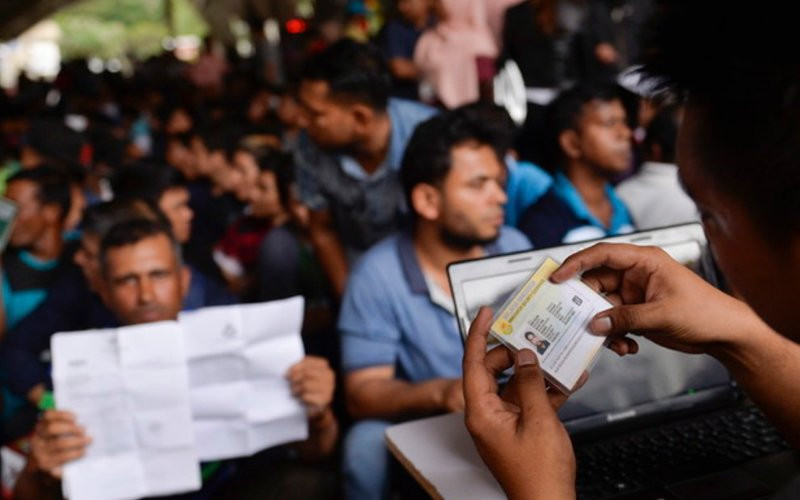
THE Malaysian Bar is concerned with Malaysia’s recent downgrade to Tier Three in the United States Trafficking in Persons (Ustip) Report 2021. We note that the report also highlights the inaction of the Malaysian government in addressing allegations of human trafficking, namely in the palm oil sector and rubber industry, as well as alleged corruption among its enforcement officials.
The Malaysian Bar therefore urges the government to take cognisance of the recommendations put forth in the Ustip report.
We wish to state our own proposals and reiterate several pertinent issues raised in the report:
a) Lack of labour inspectors. The government should reconsider the national budget in order to allocate a bigger budget to the Human Resources Ministry. This can be used to employ more labour inspectors to intensify or increase labour inspections.
b) Lack of cross-border collaborations. The Malaysian government should collaborate with other governments that send migrant workers to Malaysia in order to set up a cross-border system to investigate and prosecute trafficking syndicates, and to assist victims of trafficking upon their return home.
c) Lack of coordination among agencies in the Council for Anti-Trafficking in Persons (Mapo). The Home Affairs Ministry, which chairs Mapo, should consider different agencies to work together in a more efficient manner.
d) The holding of passports of migrant workers. The report notes that the government had convicted 26 individuals under the Passport Act 1966. The holding of migrant workers’ passports is a practice that prevents migrant workers from seeking help for fear of arrest. We therefore implore the government to enforce the Passport Act stringently to prevent employers and agents from holding the passports of migrant workers in any circumstances other than the need to renew work permits or register the migrant worker for a medical examination.
e) Physical coercion. The Malaysian Bar reiterates that the courts should recognise the existence of mental coercion as well, as not all victims of trafficking are restrained physically. Mental coercion in the form of threats or words against the victims or their family members forces the victim into submission to the trafficker without the need for physical restraints.
f) Language barriers. We urge the government to engage migrant community organisations, foreign spouses, and foreign language teachers, including embassy officials, to ensure that interpretation services are adequately provided to victims of trafficking throughout the process.
g) Insufficient contact with victims’ families. The government should permit victims to have more communication with their families, for example through video calls or by allowing family members to visit the victims, where necessary, to ensure the mental well-being of the victims.
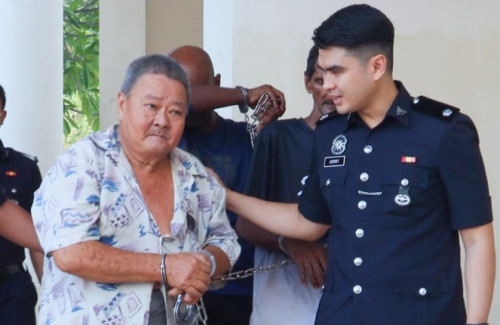
h) Handcuffing victims of human trafficking in court. This practice is disproportionate and unnecessary. The government has a duty to ensure that victims of human trafficking are treated with dignity and respect, and not as criminals. The Malaysian Bar appeals to the government to end this practice immediately, should it still exist.
i) Lack of medical and psycho-social care. The Women, Family, and Community Development Ministry responsible for shelters should work closely with the Health Ministry and Malaysian Medical Association to provide the necessary care for victims of trafficking.
j) Awareness campaigns. The Malaysian Bar commends the government for its efforts in raising awareness via electronic media and other means. Nevertheless, we hope that the government will continue looking into methods to educate migrant workers at their workplaces on issues pertaining to human trafficking. An example is by providing posters on trafficking awareness information at their workplaces.
This downgrade of our country should be viewed as an opportunity for the government to improve and do better. The Malaysian Bar hopes that the government will engage with us and other stakeholders to implement more effective policies to combat human trafficking together. – The Vibes, July 6, 2021
A.G. Kalidas is president of the Malaysian Bar


_-_AZIM_RAHMAN_2.jpg)