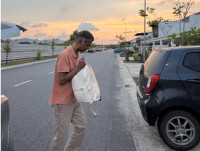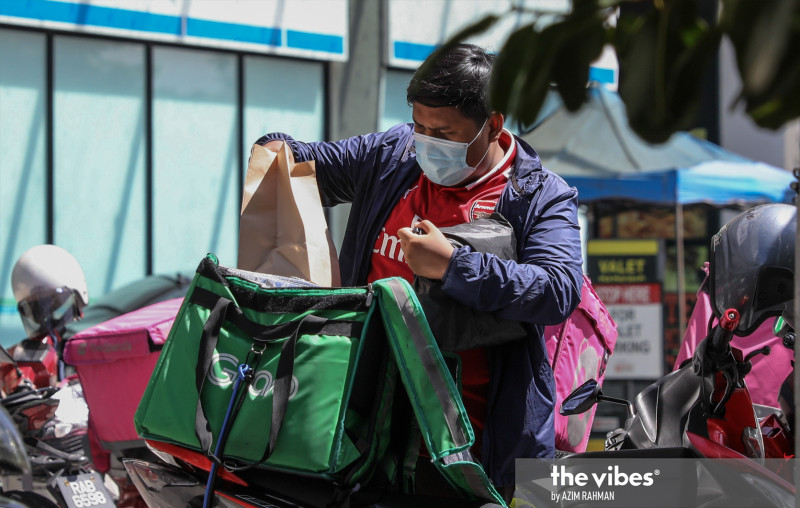
INTEREST in food delivery has heightened since the pandemic broke out last year: an army of riders attired in pink, green, orange, red and blue, the bulk on small-capacity motorcycles, criss-cross our streets to deliver packs upon packs of freshly cooked food to hungry consumers stuck at home.
Since lockdowns were enforced in March last year, industry players, clear beneficiaries of the new normal, have unwittingly been the target of some derision, criticised for somehow “preying” on the food and beverage industry.
The criticisms have been compounded by politicians, pressured by the affected, to “intervene” by capping commissions charged on restaurants by food delivery platforms.
Commissions are charged anything between 25% and 35%, but while these figures look as if the food platforms are reaping robust revenue, it unfortunately does not necessarily translate to profitability.
Take for example UberEats and DoorDash – despite a 2020 revenue growth, both companies are still struggling to find a sustainable business model.
This is because these companies operate at negative margins: revenue earned is channelled immediately as costs to delivery partners (and insurance), marketing, customer acquisition, salaries, product development, and other variables.
These platforms are constantly battling to manage their “unit economics” to ensure that the business remains viable.
Why use delivery platforms despite increased commissions?
First, the charge – will capping commissions boost a restaurant’s profits?
When United States regulators imposed a commission cap, the industry was forced to react by increasing delivery fees that immediately imposed additional surcharges and reducing delivery coverage.
The industry was forced to find alternative sources of revenue, which ultimately impacted the very ecosystem that regulators intended to protect.
While restaurant margins may improve by commission reduction in the long term, it led to an unintended consequence: decrease in orders due to price increases, coverage reduction, and, unfortunately, less work (and pay) for delivery riders.
Nevertheless, why then do restaurants opt to “onboard” the delivery platforms despite the substantial costs in commissions?
Here’s why: the delivery platforms offer a readily available and practical delivery service and help engage the crucial “last-mile” delivery to hand over food to customers, even at odd hours.
But here’s also why many restaurants bear with the commissions charged by delivery platforms like FoodPanda and Grab. The two players:
– Establish an edge, providing greater reach to and for restaurants;
– Offer last-mile delivery solutions that restaurants can’t create yet badly need;
– Increase visibility and a wider consumer base;
– Help supplement restaurants’ income traditionally earned through dine-ins; and,
– Increase visibility by digital marketing services.
What should the government do? In a nutshell, it should engage and consult industry players to gain a better understanding of the food delivery industry and its business model.
The government should also refrain from simply “assuming” how the business model functions.
It’s vital that regulators and the industry collaborate to produce a solution that helps the intended demographics – restaurants, riders and, yes, the delivery companies, too.
Although the intention to cap commissions – on the outside – may seemed plausible, it cannot help but lead to a “zero-sum game” with the unintended consequences that rippled through the US. – The Vibes, July 28, 2021
Khairil Ahmad is a consultant with Hann Partnership. He left FoodPanda Malaysia as public affairs head to pursue a path as an expert specialising in issues and problems affecting the food delivery industry. He can be reached at [email protected]