

ANY mass public transport or road infrastructure developer must refer to the local authority for planning and development policies before making proposals.
Recently, several media reports seem to highlight massive transport and road infrastructure projects without mentioning that not even one has been submitted to the local planning authority.
In Petaling Jaya, for instance, the approving authority is the Petaling Jaya City Council (MBPJ).
While such reports may sometimes be good PR or appease prospective financiers, they can give unnecessary anxiety and worry to residents, who are fearful of how such projects will impact them, their properties, and their quality of life.
In some cases, they are shocked as to why the Local Agenda 21 consultative process has not taken place, and lash out at local authorities.
Of course, the reason for this is that no application has been submitted to the local planning authority.
For the avoidance of doubt, all such infrastructure projects require planning approval and public consultation, in addition to complying with the relevant local plans and integration with transport hubs, transport master plans and transit-oriented development policies.
Applicants should ensure there is consultation and planning well in advance, and have proper and professional interaction with local authorities. Otherwise, there may be substantial inconvenience and disappointment.
Public transport or road infrastructure must be planned years in advance, with the intention made known early and not just “parachute from the sky”, because detailed local plans need to be prepared and undergo a lengthy statutory process with public participation to ensure certainty in planning.
These local plans represent a social agreement between the public and government for sustainable development.
To date, there has been no proper engagement or discussion/presentation with any MBPJ committee on any proposed detail alignment for MRT Line 3 or other upcoming large road infrastructure projects, and approvals cannot be legally considered or given until and unless all processes in law are complied with.
These processes include public engagement, as well as engagement with elected representatives. In addition there is the required compliance with MBPJ policies and impact assessment reports for sustainable development as passed by the full MBPJ board.
It is important that long-term public or other infrastructure projects be planned well in advance and such proposals officially disclosed to avoid land-use issues and a negative impact on the environment and quality of life. These issues can be addressed only when detailed plans are given well in advance to enable city planners to provide sustainable planning through local plan spatial planning.
Applicants must first undertake detailed studies and impact assessments, and get local authority input before applying for approval.
Any possible proposed alignments must be evaluated with possible alternatives and the impact assessment of each.
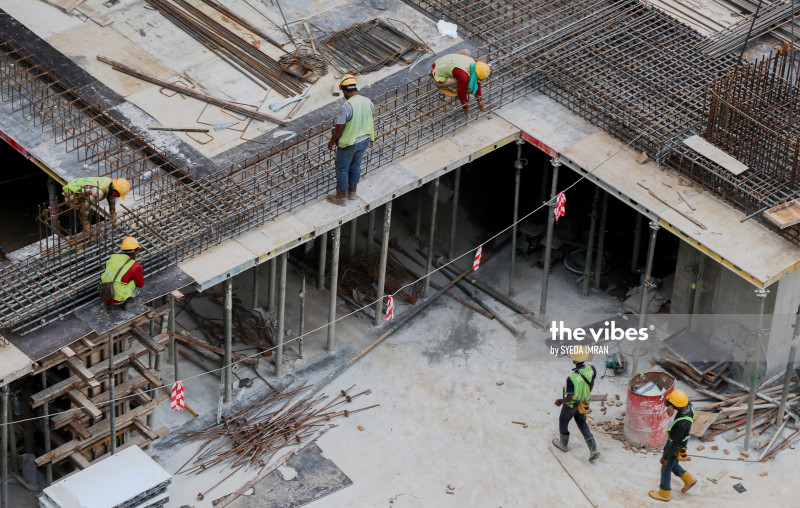
In recent times, there have been several serious construction accidents, especially concerning elevated structures built in a dense area.
Also, the total impact during the construction phase, effect on traffic flow, time loss in commuting, and impact on businesses and the public are all factors that should be addressed.
This is especially critical in brownfield development infrastructure, where there may be the acquisition of land or impact on open spaces and properties, and in some cases, the violation of the local plan.
There may be cases where, in view of the city’s present policies, certain types of transport and road infrastructure may no longer be suitable for a compact and dense area like Petaling Jaya, or will not be able to meet the city’s sustainable development goals or prioritisation of land use for other types of infrastructure.
In the end, failing to plan is planning to fail. – The Vibes, August 4, 2021
Prominent planning lawyer Derek Fernandez is an MBPJ councillor