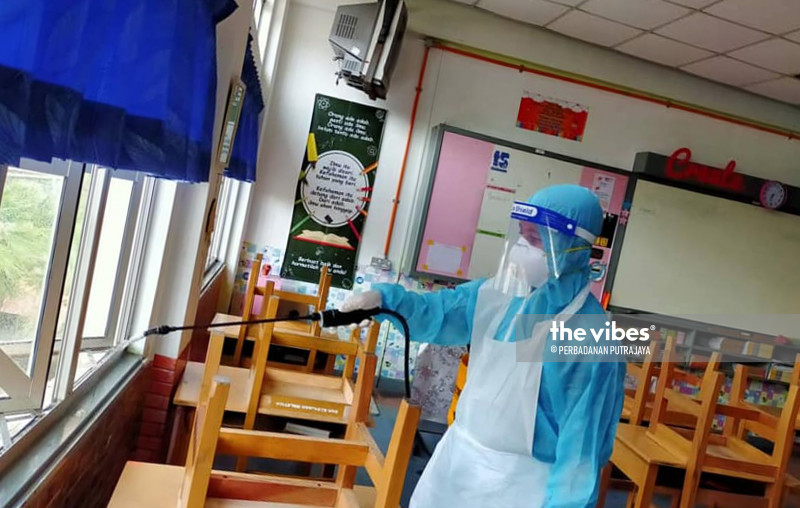
THIS morning I stood up to ask the Education Minister an urgent question on the thinking behind their sudden and “last-minute” decision to close all schools nationwide, even those in the “green areas”, affecting not just students, but also teachers and parents.
In Sarawak, since the start of the Covid-19 pandemic in March, large areas still remain green zones, mainly the rural areas where they lack the facilities and guidance for students to follow the needed programme.
This is the same in places like Pahang, Kelantan, and even Perlis, which are technically not affected by the CMCO.
Sadly, based on the written answer that was given to me, it seems that the Education Ministry does not have a comprehensive plan or policy to address the “education gap” between the rich and the poor, or between urban and rural schoolchildren, which will definitely widen due to the closing of schools and the lack of access to Internet or proper teaching equipment for the poor and those in rural areas.
The answer given for the blanket closures was basically that the number of Covid-19 positive cases seems to be increasing. However, the ministry cannot be reactive to daily numbers, as the virus will be in the community for a long period of time even until next year. They cannot just close all schools nationwide everytime there is a spike in the number of Covid-19 cases.
The victims are not only limited to the students, but teachers who are working so hard to be creative and make sure all students are not left behind when following home-based learning directives. Let's not forget parents who are burdened by this last-minute decision, especially those who are working.
Based on the answer given, the only plan the ministry has for those without proper internet access and equipment is TV Pendidikan through TV Okey and Tutor TV Astro.
In reality, many may not have a television. Such programmes only run for two hours a day with limited subjects, and are therefore insufficient as a holistic education experience for the students.
The ministry also said that they will be looking at delivering an “education package” to the students especially those living in the rural areas by post, via PIBGs or at drive-thrus in schools.
However, little was mentioned about how to address the lack of facilities, gadgets, and infrastructure.
A report has mentioned that up to 40% of students nationwide do not have the proper equipment to even attempt online learning. This statistic is definitely higher in states like Sabah, Sarawak, Kelantan, and even Pahang.
At the end of the day, even with such packages, the students will still be left behind without proper guidance. And poor B40 students who often rely on the food given in their boarding schools now have no choice but to go back home since all asrama are closed, increasing the financial burden on their families.
While I am all for preventing the spread of the virus and protecting our children, such a “reactionary” blanket, or one-size-fits-all decision has many unintended consequences and speaks volumes of the ministry's unpreparedness and lack of a proper policy to help the schools adjust to the “new normal” with proper precautions in place.
Ask every teacher and they will share with you their struggles with this home-based learning approach and getting every student involved.
At the end, my concern is how it will widen the education gap between the rich and the poor, and urban and rural students. When those left behind cannot cope or hope to catch up, they will lose interest and quit school.
The poor will continue to be caught in a cycle of poverty, and that would be a huge loss for our nation.
This was proven by a United Nations study that shows poor communities in the Klang Valley returning to the classroom dropping out at an alarming rate as a result of the Covid-19 outbreak's disruption of schools.
All ministries should be proactive in their policies by now and help the people adapt to the current new norm, not just being reactive with inconsequential blanket policies.
The Education Ministry in each district should be empowered to be part of such decisions, as they will understand local contexts and needs so that students or teachers are not affected by blanket policies that may not be thoroughly thought through.
I am deeply concerned about the cost and effect of this decision on the education and long-term growth of our children.
No child should be left behind, but with this, many will be left behind.
Education is the core of our nation, and the government should be more proactive and prepared to make sure our children are not left behind regardless of the situation.
Kelvin Yii Lee Wuen is the Bandar Kuching MP