
HUMAN rights icon Nelson Mandela’s last trip abroad as the president of South Africa was to an unlikely destination – China.
There he called for multilateral approaches to security, development, and peace in a speech at Peking University.
Yet, Mandela himself soon faced unlikely criticism on his return trip. Why had he not called out China’s own abysmal human rights in his speech?
Mandela had a ready answer that is relevant to us today. “Experience in history has shown that it’s not the individuals who change the policies of countries; it is organisations...You must respect that, but if you want to do something in regard to the domestic policy of a country, then you use international bodies or regional bodies.”
The comment is little remembered today but it may be as relevant to the world and situation we face today as US President Dwight D. Eisenhower’s famed final warning speech about the perils of the “military industrial complex”.
This warning from the late Mandela speaks down to us today as the world faces new human rights challenges. Not just in China but in Myanmar.
I don’t know if Malaysia’s diplomats are aware of Mandela’s final important statement on human rights. What I do know is that even without hearing it, Malaysia’s diplomats seem to be heeding the advice.
A little-noticed international meeting that took place in Istanbul, Turkey last month involved exactly one of those “international bodies or regional bodies” to which Mandela was referring.
In this case a meeting of the Independent Permanent Human Rights Commission (IPHRC) of the Organisation of Islamic Cooperation where Malaysia earned accolades for its approach to the issue of Muslim minorities in non-Muslim countries.
With the annual meeting of the OIC Council of Foreign Ministers taking place on March 22 in Islamabad, Pakistan, there will be a focus in particular on the human rights in Asia one would hope.
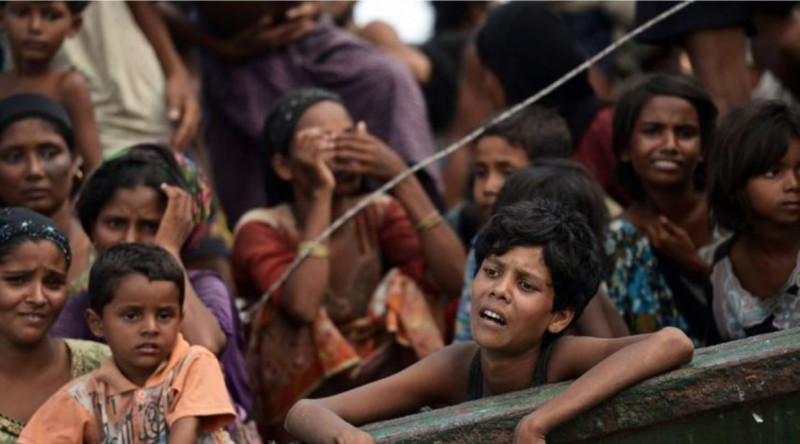
Malaysia is currently home to some 150,000 UNHCR-registered Rohingya refugees from Myanmar.
Their status as refugees and indeed the mistreatment of the Rohingya in their homeland remains a sensitive issue.
The best way to address it is through intergovernmental organisations like the OIC. A great deal of the mistreatment received by the Rohingya and other persecuted minorities is due to Islamophobia and anti-Muslim hatred.
The OIC could do more to impact that outcome by appointing a special envoy for Islamophobia who could build bridges with other faith groups and report regularly to OIC ministers.
Furthermore, the implementation of a real-time monitoring scheme by a special envoy could also prove useful. The great insight of the Mandela episode described above is that such individual actions, no matter how widespread, do not have impact unless they are institutionalised.
Last year, we saw an example of how such institutions can have an impact on such conflicts.
The International Court of Justice (ICJ) in the Hague ruled that Myanmar must take “provisional measures” to protect the Rohingya. This small but important gesture marked an important moment. Let us hope that the OIC can, in time, build on this.
After all, the Rohingya issue is more than just an international human rights concern. Within Asia, the status of so many refugees in Malaysia, Bangladesh and elsewhere is a cause of concern and puts strains on those countries and economies.
For those countries, it might be an individual problem but the best solution as Mandela understood was an international one.
The OIC must seize the opportunity next week during its foreign ministers meeting to take action and to institutionalise support for the Rohingya and other minorities.
Jim Williams is a seven-time Emmy award-winning producer and broadcast journalist. He is The Vibes US correspondent