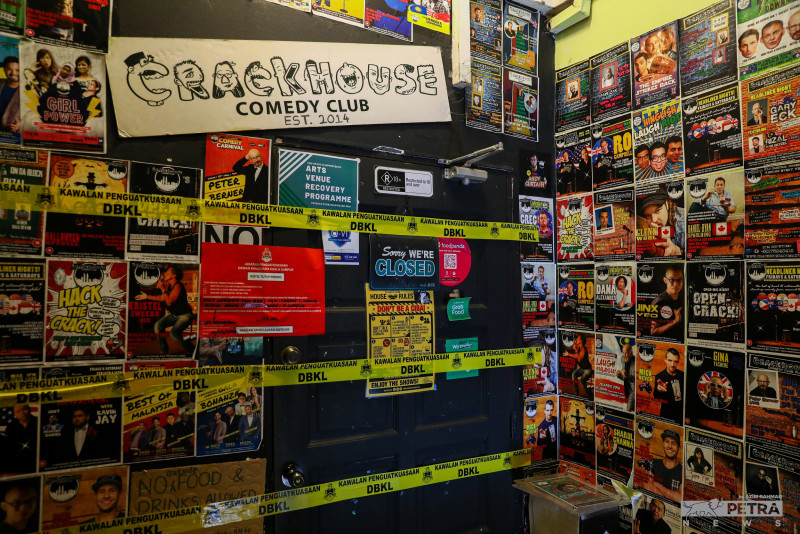
IN light of the recent controversy surrounding an open mic performance held at a comedy club in Kuala Lumpur, ReformARTsi calls on local government authorities and enforcement agencies to implement fair, clear, and consistent procedures when investigating performances and other forms of expression. Censorship and investigation into such matters must never diminish our right to freedom of expression under Article 10 of the federal constitution.
While the performance in question may have raised valid reasons for concern, the heavy-handed response by the Kuala Lumpur City Hall in immediately suspending the venue’s operations should have been taken as a last resort.
When controversial acts catch public attention, it is the duty of the government to be impartial, prioritise the protection and expression of constitutional rights, and be wary of bulldozing our freedoms during enforcement procedures.
This case is yet another example of a local authority choosing heavy-handedness and punishment over consultation, reconciliation, and improvement.
It is understood that the line for what should constitute valid expression is blurry, especially in a diverse country such as Malaysia, where sensitivities can be relative. But this is exactly why the government must take extra care when setting both the boundaries of expression, as well as how those boundaries are enforced. The government’s actions act as a precedent that trickles down to every classroom, neighbourhood, and household in the country.
It is important for investigations to include meetings between all involved parties, including the complainant. This allows each party to provide their stance on the matter in an attempt to mediate before more serious action can be taken. This also ensures that the public receives a clear picture of the incident, instead of fragmented information over time that may be misconstrued and that may fan tensions and controversy.
While the extent of the city hall’s investigation is not known, numerous previous cases involving enforcement on limits to expression have overlooked this step. A standard procedure would allow government authorities to assess the situation clearly and identify the most appropriate course of action to take. A suspension of operations should only be instituted if the venue does not cooperate.
However, in this case, the suspension of the comedy club was “to send a message that the ministry and city hall will not tolerate behaviour disrespecting the sensitivities of religion, race or sovereignty,” according to Deputy Federal Territories Minister Jalaluddin Alias.
The acts of government and enforcement agencies in suspending venue operations, villainising expression, censoring artwork, and revoking licences without just cause should not continue to be normalised.
While the government is entrusted with enforcing certain limits to expression, the manner in which these limits are enforced is just as important as the rights themselves.
It must also be reaffirmed that the law should never be used to unjustly restrict freedom of speech, especially on arbitrary grounds such as offensiveness. The right to expression must always include the right to ‘annoy’ and to be in bad taste, even if it has the potential to offend.
In a stable and functioning democracy, we should be confident in allowing different voices and spaces where healthy debate and expression by citizens may occur. We jeopardise our own future when we allow our rights to be eroded at junctures such as this. – The Vibes, July 15, 2022
ReformARTsi is a coalition of 118 Malaysian artists and 55 arts organisations advocating for policy change in the areas of finance for the arts, arts education, and freedom of expression