THE Centre to Combat Corruption and Cronyism (C4 Centre) is alarmed by the nomination of some politicians running for the upcoming 15th general election (GE15) and their ties to business.
Following the release of C4 Centre’s report, Business in Politics: Seeking Control of Malaysia’s Political System on November 2, we reiterate our concerns over GE15 candidates with business ties and urge political parties to review their choices of nominees thoroughly.
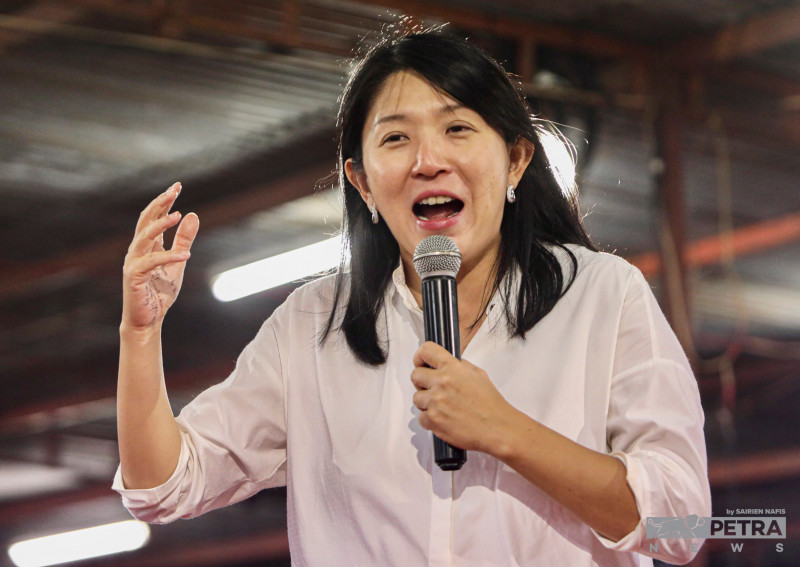
DAP secretary-general Anthony Loke announced on October 26 that the Puchong constituency would be contested by former energy, science, technology, environment, and climate change minister for the Pakatan Harapan government in 2018, Yeo Bee Yin.
She is known to be the spouse of IOI Properties Group Bhd chief executive officer Lee Yeow Seng, son of IOI Group Bhd founder, the late Tan Sri Datuk Lee Shin Cheng.
Notwithstanding the propriety of an active politician being married to a powerful businessman and the telling ways in which the business-political nexus manifests, Yeo’s nomination for a parliamentary seat in an area where her in-laws possess vast business interests smacks of potential conflict of interest concerns.
Shin Cheng, Yeo’s late father-in-law, in his lifetime had headed IOI Group Bhd and IOI Properties Group Bhd (IOIPGB).
He led the corporations to become among Malaysia’s largest developers and plantation cultivators to date. IOI Group has a total market capitalisation of RM25.58 billion as of October 2022, with IOIPGB’s total assets of RM33.43 billion in 2021.
To gauge the scale of the conglomerate’s business ownership solely in terms of its property development arm, refer to the IOIPGB records obtained from the company’s 2022 Annual Report, which covers its financial and non-financial performance during the period of July 1, 2021 to June 30, 2022.
Concomitantly, brothers Yeow Seng and Yeow Chor have a total combined real-time net worth of US$4.1 billion as of November 5, 2022, ranking themselves at number 638 on Forbes’ 2022 Real-Time Billionaires List.
In fact, the group has its hands in massive land areas across the Puchong constituency, seeing as its main investment properties include, within the Klang Valley area, the likes of Puchong Financial Corporate Centre, IOI Boulevard Puchong, Sheraton Puchong, Palm Garden Hotel, Palm Garden Golf Club, and the IOI Palm Villa Golf and Country Resort and, elsewhere, IOI Malls in Puchong, Selangor, and Johor Baru.
Its portfolios also include the IOI City Mall, Le Méridien, and Marriott Hotel, as well as One and Two IOI Square in Putrajaya.
Puchong’s current population comprises more than 400,000 residents. With the unabating number of developments there in Puchong and across the Klang Valley – a large number of which are commercial or luxury residential properties – there is growing dissatisfaction that these projects only serve the interests of property developers, have no utility for a majority of the population, raise costs of living in the surrounding areas, and contribute to environmental degradation.
As someone with a personal stake in the success of the IOI Group’s operations, Yeo’s impartiality and ability to make decisions prioritising her constituency and the lives of its residents is cast in doubt, regardless of her numerous achievements as a minister back then.
In our Business in Politics report, we took care to highlight the following considerations to form the basis of decision-making with respect to election candidates:
It reads, “On entering government, there is a stronger guarantee that the interests of companies linked to a businessperson will be embodied in policies. These businesspeople will be privy to information, even have an unfair advantage in reshaping policies to ease obtaining lucrative concessions.
How will these politicians-cum-businesspeople vote in Parliament on issues if the matter at hand does not serve their business interests?
How will they shape budget debates if their companies are unfavourably affected by government programs?
How will they vote on environmental-related policies if they have an active interest in infrastructure development, including the construction of dams and in plantations?
Other concerns arise: what will be the stand of these politicians in business when discussing welfare systems, featuring social benefits for employees, and an appropriate minimum wage which they may view as a huge cost burden for their companies?”
That Yeo was nominated to run in the constituency of Puchong in the first place indicates a glaring blindspot of political parties who, at best, simply were not aware of Yeo’s connections to business, doubtful as that may be.
At worst, such a connection could potentially become a leverage for the purposes of political funding if we still fail to heed and learn from the lessons of the past.
In lieu of a functioning Political Funding Act or policy on asset declaration, political parties must remain vigilant in ensuring that the circumstances giving rise to the expansion of the business-political nexus are limited as much as possible, especially if those parties are campaigning on an anti-corruption and reformist agenda.
The growing trend of business-in-politics and vice versa gives rise to nepotism, cronyism, patronage politics and undue influence of business on policy-making.
These issues must be prevented by all means as they ultimately lead to the impoverishment of the rakyat.
As Malaysia prepares for yet another historic general election, politicians and parties need to be reminded of Malaysia’s urgent need to curb corruption. – The Vibes, November 6, 2022
The Centre to Combat Corruption & Cronyism (C4 Centre) is a non-partisan and a non-profit entity advocating good and clean governance in Malaysia
A rebuttal to C4 Centre's claims has been made by Selangor Kinrara assemblyman Ng Sze Han as well as Yeo


.JPG)