I REFER to Jeremiah Yee’s article “Is Hajiji’s position as Sabah CM legit?”.
The learned writer argues that Datuk Seri Hajiji Noor’s appointment as the 16th Sabah chief minister on September 29, 2020, contravened Article 6(3) read together with Article 6(7) of the Sabah constitution and is therefore impugned for being unconstitutional based on the following reasons:
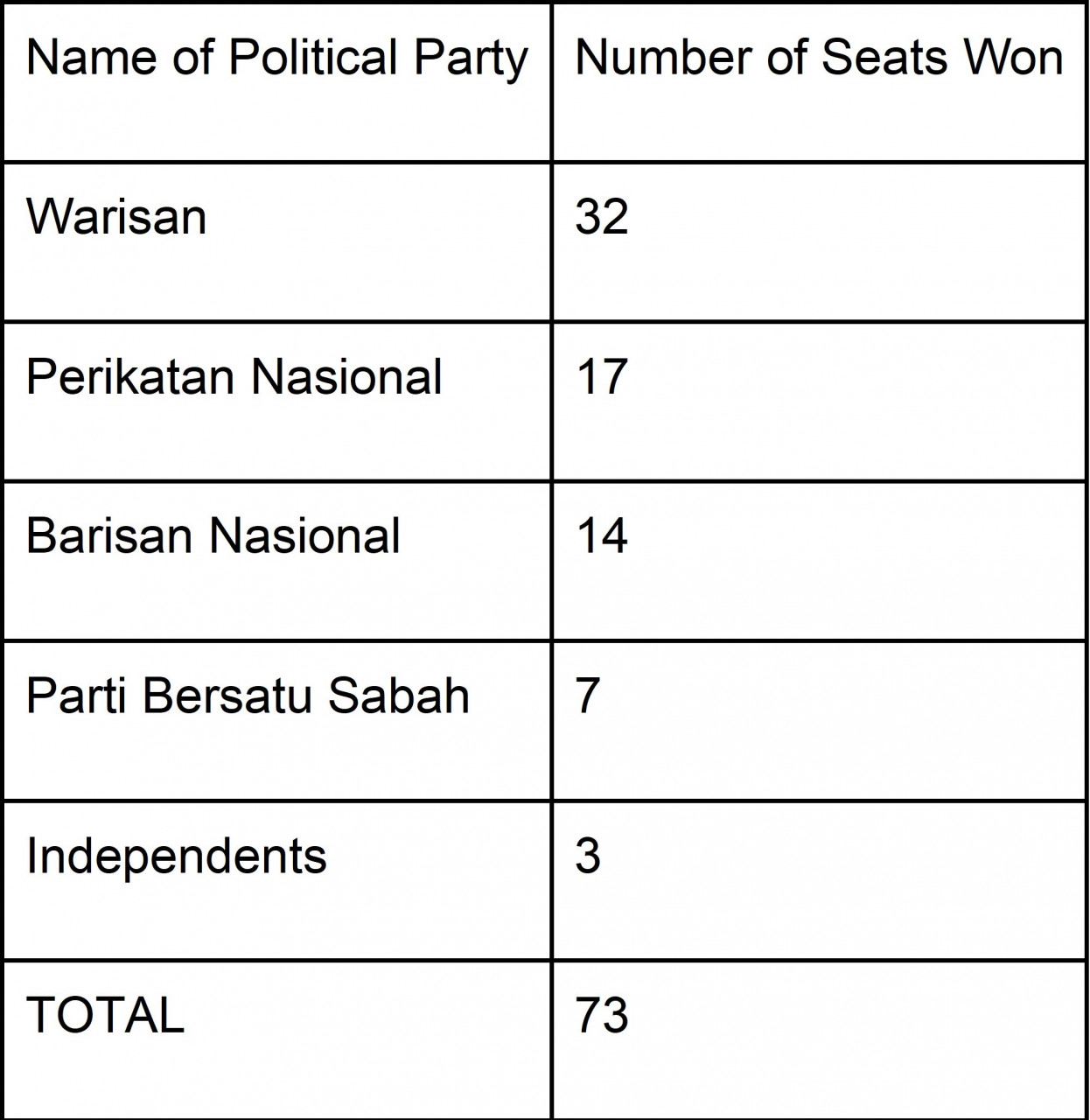
1. Hajiji’s political party i.e. Perikatan Nasional (PN, under which he contested) only managed to secure 17 seats compared to Warisan’s 32 seats.
2. The leader of both Bersatu and PN is Tan Sri Muhyiddin Yassin.
The above is premised on the 16th state polls and the official results as announced by the Election Commission, which were as follows:
For good measure, Clauses (3) and (7) of Article 6 of the Sabah constitution are reproduced below:
(3) The Yang di-Pertua Negeri shall appoint as chief minister a member of the legislative assembly who in his judgement is likely to command the confidence of a majority of the members of the assembly and shall appoint the other members mentioned in Clause (2) in accordance with the advice of the chief minister from among the members of the assembly.
(7) For the purpose of Clause (3) of this Article, where a political party has won a majority of the elected seats of the legislative assembly in a general election the leader of such political party, who is a member of the legislative assembly shall be the member of the legislative assembly who is likely to command the confidence of the majority of the members of the assembly.
The learned writer may wish to refer to the 2018 case of Tan Sri Musa Hj Aman v Tun Datuk Seri Panglima Hj Juhar Hj Mahiruddin & Anor. In that case, the plaintiff, Tan Sri Musa Aman challenged the validity of his dismissal as Sabah chief minister by Sabah’s Yang di-Pertua Negeri and the constitutionality of the appointment of Datuk Seri Mohd Shafie Apdal to replace him as chief minister.
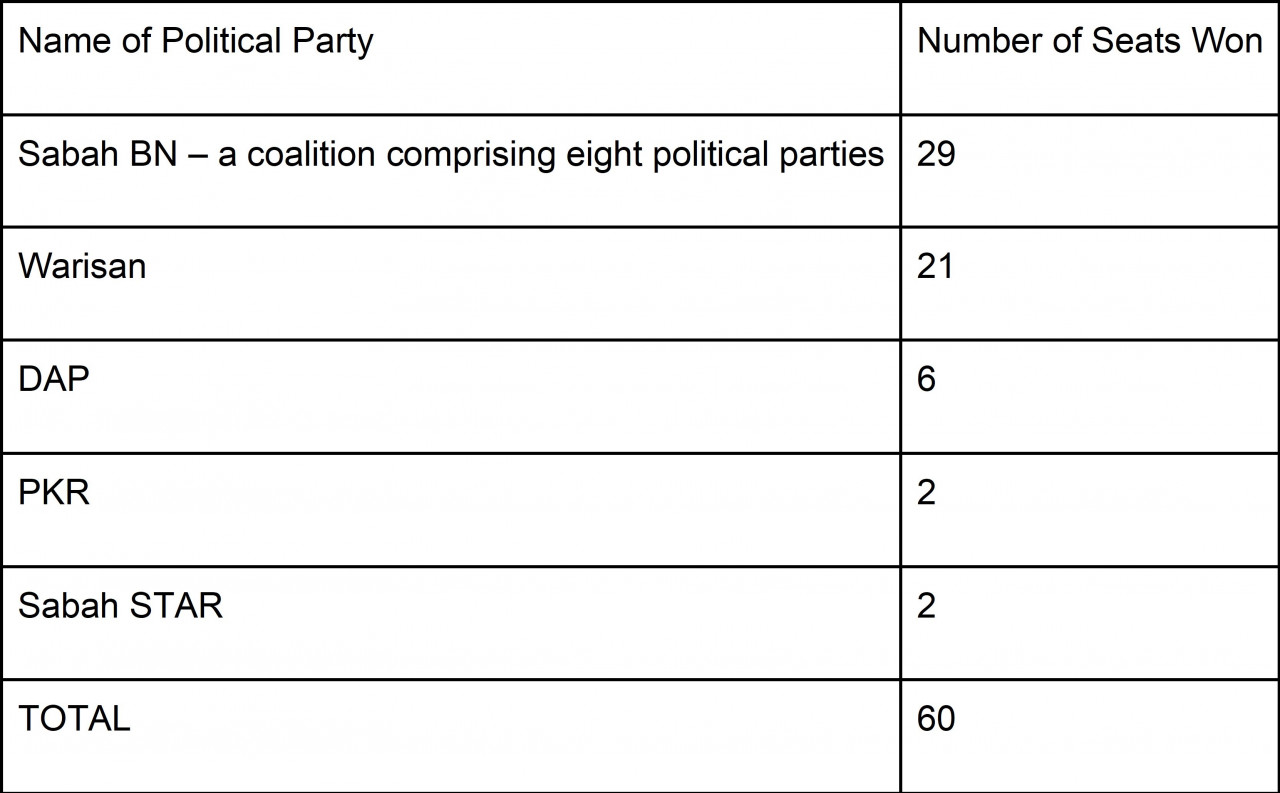
In the 14th general election (GE14) held on May 9, 2018, a coalition of eight political parties contesting under the banner of Sabah Barisan Nasional (BN) led by Musa won 29 of the 60 seats in the Sabah assembly. Another coalition of three political parties – Warisan, DAP, and PKR – led by Shafie also won 29 seats. The remaining two seats were won by Sabah STAR.
The results may be tabulated as follows:
When Sabah STAR broke the stalemate by declaring its support for Sabah BN, Musa, with the consensus of all parties involved, was formally sworn in as chief minister by the governor. Members of his state cabinet were thereafter sworn in.
Musa requested the governor to also formalise the appointment of six additional nominated members to the state assembly but the governor refused to do so. Two days later, six Sabah BN assemblymen declared their support for the Shafie camp.
After personally interviewing the six persons, and studying the statutory declarations they had deposed, to satisfy himself that their defection was genuine, the governor informed Musa that as the defection had resulted in the Shafie camp obtaining the majority number of seats in the assembly, Musa no longer enjoyed the confidence of the majority of the members of the assembly. Pursuant to Article 7(1) of the Sabah constitution, he and his cabinet should resign.
Musa refused to resign. Nevertheless, the governor proceeded to formally swear in Shafie as chief minister to replace Musa.
Musa commenced an action in the Kota Kinabalu High Court where he sought a number of declarations including that he was still the lawful chief minister; that the purported revocation of his appointment and the appointing of Shafie in his place contravened the Sabah constitution and were void; and that all acts and things done by Shafie as chief minister were equally void.
Before the high court judge, it was contended on behalf of Musa that when the governor exercised his discretion under Article 6(3) of the Sabah constitution in appointing a member of the assembly who, in his judgement, is likely to command the confidence of the majority of the members of the assembly, regard must be given to Clause (7) of the same article which described the member of the assembly who is likely to command the confidence of the majority of the members of the assembly as the leader of “a political party” which has won a “majority of the elected seats of the assembly in a general election”.
It was further contended that in the absence of a constitutional definition of the word “majority” in Clause (7), the word must be given its ordinary meaning, which means relative majority, which is consistent with the doctrine of plurality, or the most number and not absolute majority, that is, the support of at least 31 members of the 60 elected members of the assembly.
The constitution, being sui generis (unique) and a living document, should be given broad interpretation. Clause (7) is a unique feature. No other state constitution has an equivalent or similar provision as Article 6(7).
In response to the above argument, the learned high court judge said:
“If the court were to agree with the plaintiff’s contention that the word ‘majority’ in Article 6(7) means ‘relative majority’ or the most, it would mean, from the votes secured by the political parties contesting in GE14 in the Sabah state constituencies, Warisan with its 21 seats is the political party with the largest number of seats won.
“By virtue of Article 6(7), (Shafie) being an elected member of the assembly and the leader of the political party which won a majority of the elected seats of the assembly, should be the one who is likely to command the confidence of the majority of the members of the assembly and ought to have been appointed the chief minister.
“One might then ask: is (Shafie) who only had the support of 21 assemblymen likely to command the confidence of the remaining 39 assemblymen from the other parties to form a government? The answer must be in the negative.
“It is plainly clear that no single political party in Sabah had won a majority of the elected seats of the assembly in GE14 whereby its leader can claim that he is likely to command the confidence of the majority of the members of the assembly. As such, Clause (7) of Article 6 does not come into play and was not applicable when the (governor) exercised his discretion under Article 6(3) of the Sabah constitution.
“Neither Sabah BN nor the coalition led by (Shafie) won the majority of the assembly.”
In short, the word “majority” in Clause (7) does not mean the most. This suffices to counter Jeremiah Yee’s argument that Hajiji’s appointment as the 16th Sabah chief minister on September 29, 2020, contravened Article 6(3) read together with Article 6(7) of the Sabah constitution. – The Vibes, January 2, 2023
Hafiz Hassan reads The Vibes