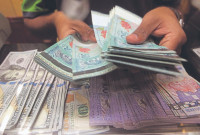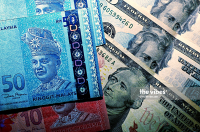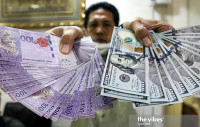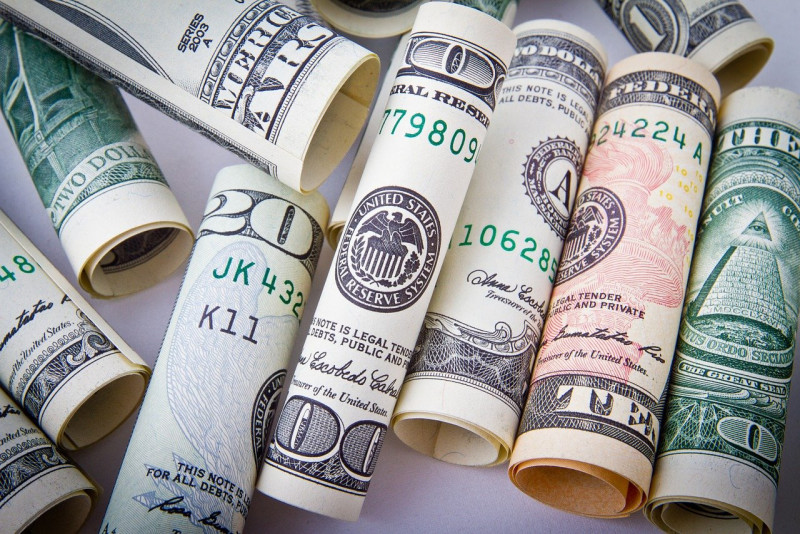
DE-DOLLARISATION is a process of substituting the US dollar as the currency used for trading oil and/or other commodities; buying US dollars for the forex reserves; bilateral trade agreements; and dollar-denominated assets.
The RM170 billion worth of trade agreements Malaysia signed with China during Datuk Seri Anwar Ibrahim’s recent state visit to the republic is “historic” not just because of the potential investment involved but also for marking the start of Anwar’s de-dollarisation policy for Malaysia.
The prime minister made his pursuit for de-dollarisation quite clear when he told Parliament on April 4, a few days after his return from Beijing, that there is no need to continue depending on the US dollar for investment.
The problem with many Malaysians, even the smarter ones, is that we are so obsessed with disputing our own prime minister’s claim that just four months into his premiership, the country could actually attract that much investment potential.
“Ah, those are just MoU” was a detractor’s favourite comeback line.
The “bigger story”, as one analyst who resides in the US told me, is that China is pushing its own currency as Asia’s “reserves”. And that with the RM170 billion trade deal with China, Anwar has started to steer Malaysia away from the USD.
Elsewhere, Anwar’s de-dollarisation has not escaped notice. Because elsewhere in the world, de-dollarisation is taking shape.
In its report on countries that are dropping the US dollar, De-dollarisation in China, Russia, Brazil and Asean, the independent Geopolitical Economy Report noted how Malaysia is “publicly advocating de-dollarisation”.
It read: “Malaysia’s Prime Minister Anwar Ibrahim met with Chinese President Xi in Beijing on March 31, where the two leaders discussed plans to weaken US dollar hegemony and even create an ‘Asian Monetary Fund’.”
This is a frontal challenge to the US-dominated International Monetary Fund, which emerged from the 1944 Bretton Woods Conference that established the dollar as the global reserve currency.
Anwar proposed the Asian Monetary Fund at the Boao Forum in China’s Hainan province.
“There is no reason for Malaysia to continue depending on the dollar”, Anwar said, in comments reported by Bloomberg.
The media outlet added that Bank Negara is developing a payment mechanism so the Southeast Asian country can trade with China using its own currency, the ringgit.
Asean has also been talking about their predicament in relation to the US dollar.
While Anwar was in China, the grouping’s finance ministers met in Bali and they talked about dumping the greenback.
“We must remember the sanctions imposed by the US on Russia,” President Joko Widodo of Indonesia was quoted as saying.
However, an Asean consensus is not quite a guarantee.
As in the past (for example, when Tun Dr Mahathir Mohamad was advocating the East Asia Economic Group, later Caucus, idea), Singapore could be the dissenting voice.
Understandably so, as Singapore is the only economy in the region that could be adversely affected by this policy, an analyst said.
“Singapore’s status as the financial centre of Southeast Asia has historically been closely tied to its connections with the West and their capital, technology and values.
“However, as China’s influence in the region grows and its currency gains prominence, Singapore could face significant challenges in maintaining its position,” he said.
But how is that good for Malaysia?
How de-dollarisation will benefit us is a national conversation that the Anwar administration needs to initiate in haste.
Right now, information is at best trickling out of the government’s communication apparatus. Wisma Putra is quiet on the matter; in the past, it would be its responsibility to take the lead.
The Investment, Trade and Industry Ministry has been rather shy, too, except for its minister Datuk Seri Tengku Zafrul Tengku Abdul Aziz’s commitment to ensuring that the RM170 billion MoUs will be converted into contracts and jobs.
So far, Anwar is walking the talk. What is the rest of his cabinet doing?
The media need to have a solid grasp on the matter in order to argue the idea of de-dollarisation and the setting up of the Asian Monetary Fund.
The financial and economic experts must help break down the mechanics of this policy so that enterprises are aware of the opportunities that they may seize.
The ordinary folk also want to know how this will improve their purchasing power and quality of life. – The Vibes, April 14, 2023
Datuk Ahirudin Attan is executive director of Petra News, which publishes The Vibes and Getaran. This article first appeared in his blog Rocky’s Bru