RIMBAWATCH is shocked and appalled by a document it recently sighted outlining plans to convert 1,625ha of the Chini Forest Reserve into timber plantations.
In particular, we raise the following concerns:
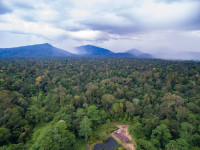
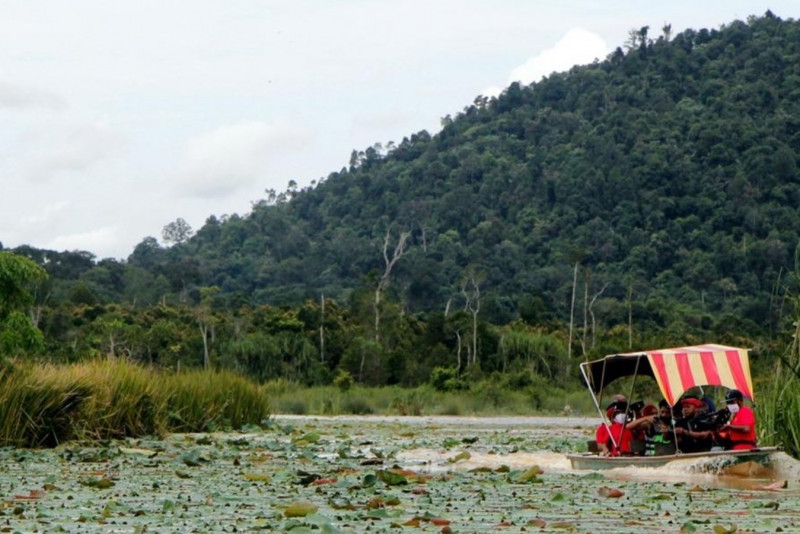
The Chini Forest Reserve is adjacent to the Chini Unesco Biosphere Reserve. In 2022, the preliminary findings of a Unesco periodical review stated that the Chini Unesco site no longer met its biosphere reserve criteria, citing “newly cleared forest areas with intensive land conversion” and the reopening and expansion of old mines. The state government has taken steps to restore the area, which includes developing the Tasik Chini Special Area Plan.
However, the forest reserve compartments which are affected by the project are, firstly, directly on the Unesco Biosphere Reserve border and, secondly, within an area proposed to be protected as a “Biosphere Peripheral Zone” in the Special Area Plan. This proposed development risks setting back attempts to rehabilitate Tasik Chini and to maintain its Unesco status.
An area of 1,625ha is of a significant size, equal to 657 football fields, or 10 times the size of Bukit Kiara in KL.
The timber plantation programme has previously been touted as a way to rehabilitate “degraded forests, encroached forests, unproductive state lands, and poorly stocked forest”.
Satellite imagery of the affected compartments of the Chini Forest Reserve between 1984 and 2022 show minimal disturbances to these forests, which remain mostly as intact primary forest. There is, therefore, no justification to replace these forests with plantations.
The customary territory (tanah adat) of Orang Asli in nearby villages, such as Kg Gumum and Kg Melai, would be negatively affected by any encroachments and conversion of natural ecosystems as these communities rely on the forest’s resources.
This project would entail the loss of carbon stocks through the conversion of natural forests.
Malaysia has made international commitments to preserve and enhance its natural carbon sinks, including forests, through frameworks such as the Paris Agreement.
The proposed project is therefore misaligned with these commitments, which could impact Malaysia’s climate mitigation ambitions.
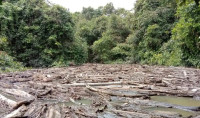
RimbaWatch underlines the fact that the establishment of monoculture timber plantations in forest reserves has become the biggest driver of deforestation in Malaysia, and in recent years was responsible for three times more deforestation than palm oil expansion.
We remind the public that this programme, referred to as “forest plantations” by state and federal authorities, is merely a method to greenwash deforestation and it has not been justified economically or ecologically.
Further, it is appalling that state authorities do not consider timber plantation projects as deforestation.
The state authorities’ reliance on “forests-on-paper” definitions ignores the fact that these projects entail the physical destruction of natural forests and their replacement with industrial plantations.
We call on the relevant authorities to:
1. Reject the idea of establishing timber plantations in the Chini Forest Reserve at any scale, and for this project to receive an automatic rejection of its environmental impact assessment from the Environment Department.
2. Classify the Chini Forest Reserve as a “protection forest” under either of the relevant categories in Section 10(1) of the National Forestry Act 1984.
3. For any logging or other concessions in the Chini Forest Reserve to be cancelled, and the land returned to the state for preservation as a high-conservation value forest.
4. For the timber plantation programmes as a whole (referred to officially as “ladang hutan” in Peninsular Malaysia, “licence for planted forest” in Sarawak, and “Forest Farms” in Sabah) to be shut down with immediate effect, and all remaining concessions to be cancelled.
5. For the relevant state Forestry Departments to issue a statement clarifying that timber plantations involve deforestation and taking responsibility for the damage to biodiversity, communities, and the climate caused by timber plantation programmes promoted and managed by those departments. – The Vibes, May 25, 2023
RimbaWatch is an environmental watchdog building an independent, timely, and open inventory of data and analytics on deforestation, climate change, and human rights issues in Malaysia