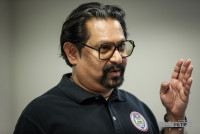

TERRY WALSH is a renowned name among the hockey circle. Not a surprise as the legendary Australian international centre forward instilled huge fear during his playing days.
He has 175 international caps and played in three World Cup campaigns and two Olympics Games.
He was a World Cup winner with Australia in London in 1986. He won a silver medal at the Montreal Olympics in 1976.
Walsh is well respected as well when it comes to coaching. And guess what, he made his debut as a national coach with Malaysia. It was in January of 1990 that Walsh was hired after Malaysia's failure to qualify for the Seoul Olympics in 1988.
Walsh had earlier guided Australia to finishing runners-up in the Junior World Cup in Ipoh also in 1989. The Australians were beaten 4-2 on penalty strokes by West Germany. They were tied at 1-1 after extra time. I was playing for Malaysia, under coach Yang Siow Ming and in this tournament we ended up sixth.
Walsh's main target was to see Malaysia qualify for the Barcelona Olympics in 1992 via the qualifiers in Auckland a year earlier. But before that, his task was to chart our fortunes at the Beijing Asian Games in 1990. He had only six months to prepare for this assignment.
Walsh arrived in Malaysia after the 1989 Asia Cup tournament in New Delhi taking over from M.Mahendran, who handled the team which finished sixth.
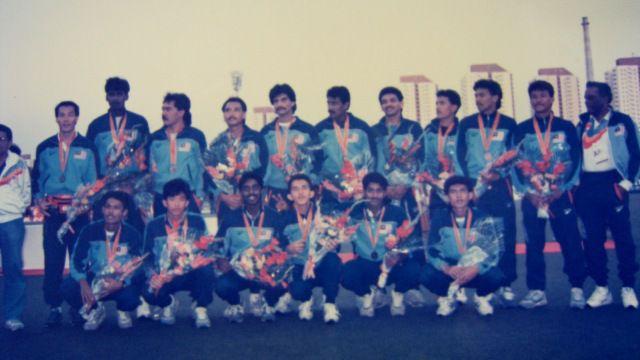
Beijing Asian Games 1990 - Bronze Medal
The Asia Cup was my first international tournament but more about this later in this article.
Back to Walsh. So, what did he bring with him to Malaysia?
With due respect to local coaches before that, it was an eye-opener. There was this vast difference in his training methods, sports science and professionalism in sports which was important. He was professional in everything -- including preparation of training sessions, games preparation and recovery, administration, communication and even attire.
For example, there was this Standard Operating Procedure (SOP), for example, before a game which had to be followed. There would be no music on the bus. However, those who wanted were allowed but must use a "Walkman".
Those who wanted to chit chat would be sitting in one section of the bus while those who preferred to be quiet, were in another corner. This was how each individual player prepared and focused while travelling on the bus to a matching venue.
He also took advantage of technology by having a lot of video sessions. And he had this special one-to-one talking session with each player to help them progress. And I always remember what Walsh said: "Small things make a lot of difference in improving both individual and team performances."
Being an ex-centre forward, Walsh also taught us things like finishing and scoring. And one of the things he was teaching us was the execution of the "Argentine Reverse Hit". Basically, the whole world was trying this exciting shot in training sessions at that time!
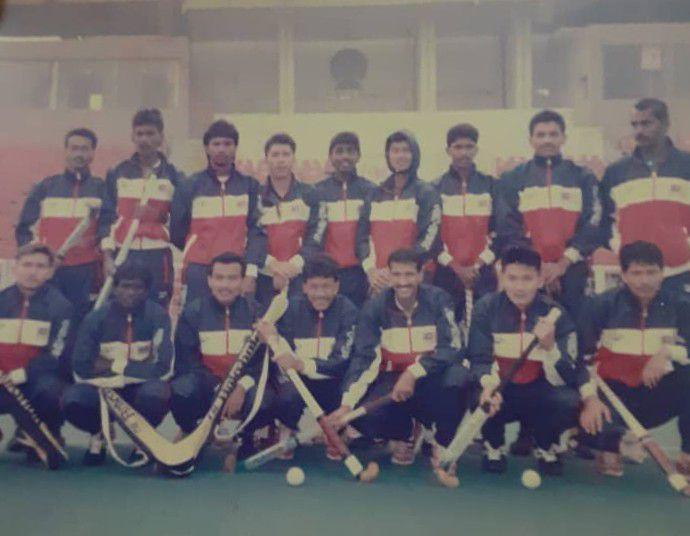
1989 Asia Cup Delhi Squad
Walsh also emphasised on the positioning of the forwards in the D. And as forwards, we improved tremendously on our finishing and the scoring rate got higher. This meant Walsh was also keeping track on hockey evolution – latest techniques and tactics which could be handy to help improve the team.
Before the Beijing Asian Games, Walsh told me: "There was this fight for a place in the final 16 between you and a senior." This was enough to spur me on and I was on the flight to China
representing the country at Asia's biggest Games. And, of course, on the right track in fulfilling my dream of being an Olympian.
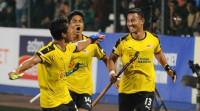
We finished third for a bronze after beating South Korea, who won the gold four years earlier in Seoul. I was selected for the Asian All-Stars squad after the Asian Games together with goalkeeper Ahmad Soffian Zulkifli and forward Nor Saiful Zaini Nasiruddin.
Also in the squad were Pakistan's Shahbaz Ahmed and Wasim Feroz and Pargat Singh of India. This Asian All-Stars side emerged champions in the 1991 Inter-continental tournament held in Kuala Lumpur.
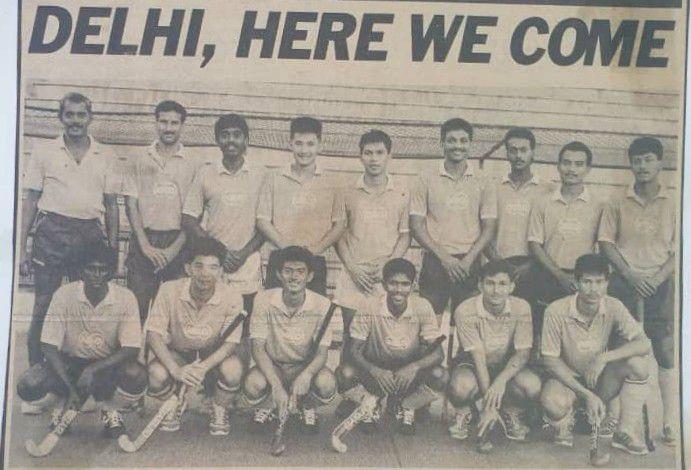
Asia Cup Delhi 1989 Squad
In short, Walsh revamped Malaysian hockey after the 1988 failure to qualify for Seoul Olympics -- philosophy, concept, structure and technology. And that winning mentality too.
He introduced this playing philosophy to Malaysia in an interesting mixture of Australian and European playing styles. Walsh educated the players a lot. I learned a lot from him which still comes in handy even now.
I received my first senior national call up after Junior World Cup in 1989 in Ipoh. The team were preparing for the Asia Cup. Mahendran took charge after coaching Indonesia for the 1987 Sea Games.
Mahendran played for Malaysia in the 1975 World Cup in Kuala Lumpur when the hosts finished fourth.
The call up was obviously a new experience for me. Before that, I used to watch the seniors in training before I started with the juniors' training sessions. I had goosebumps, all over just thinking about this moment.
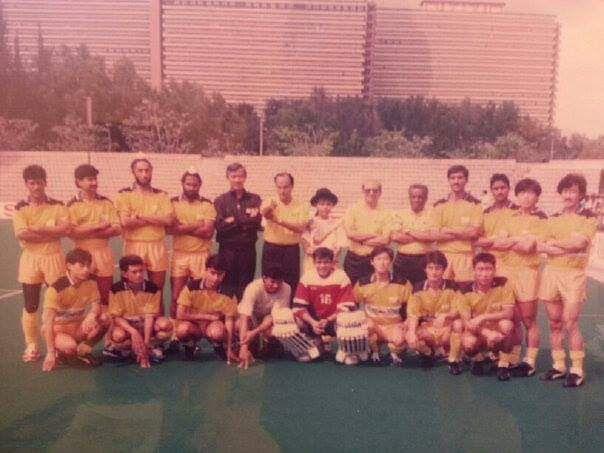
Asian All-Stars Squad - Continental Champion 1991
I found myself in centralised training with the senior team. And among others in the squad were seasoned campaigners like Sarjit Singh, Soon Mustafa Karim, S. Sivabalan, Jagjit Singh and goalkeeper Ahmad Fadzil Zainal Abidin. There were also forwards like Nor Saiful, Mohamad Abdul Hadi and Zainal Hussein.
A few other National Juniors were also called up with me. Among them were R. Shanker, Charles David, Eric Zacharias, Ariffin Ghani and Dharma Raj. The team who went to the Asia Cup was a mixed one comprising senior and juniors. This was when several seniors decided to withdraw after some crisis within the team.
My first international cap was against Australia in a two-test series in Klang in preparation for the New Delhi tournament. That was the beginning of my colourful and memorable playing career with Malaysia.